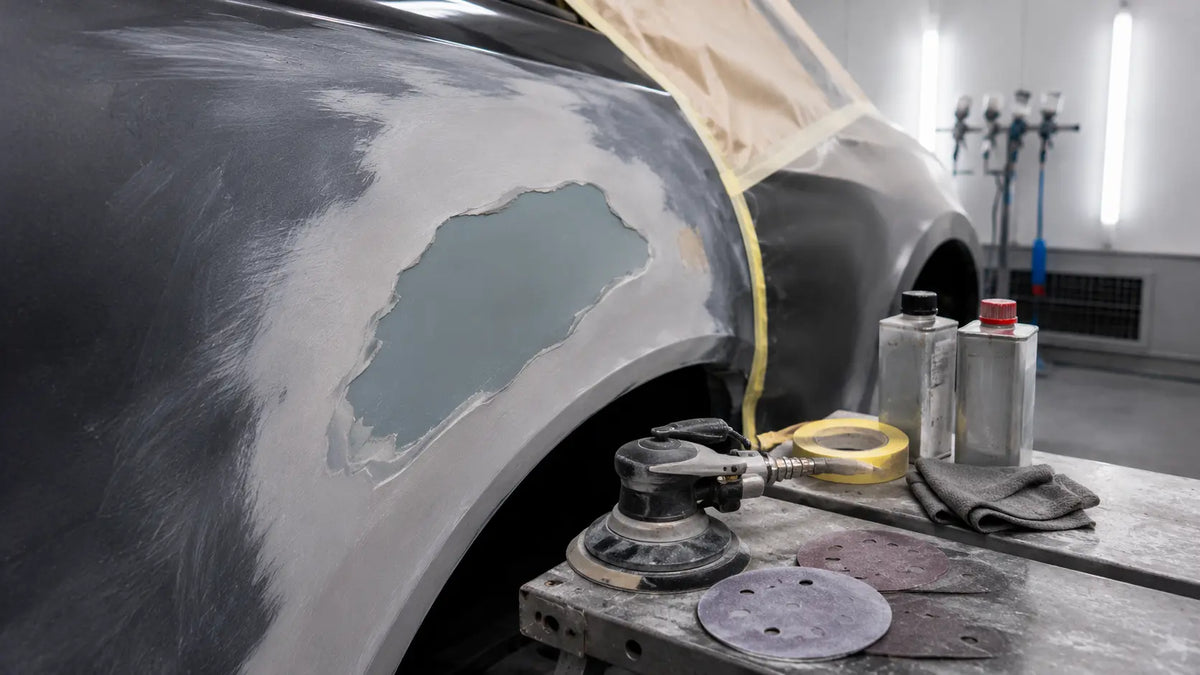
If you have sanded through primer to epoxy, identify the exposed layer before applying anything else. Intact epoxy may need only the preparation allowed by its coating system. Bare metal, exposed filler and a low spot in the surfacer need different decisions.
A small sand-through does not always require restarting the whole panel. It does require a suitable foundation for the next layer. Covering the patch with basecoat before checking that foundation can leave a visible edge or an unsuitable coating stack.
Identify What the Spot Exposes
Primer surfacer provides material for refining the surface profile. The epoxy beneath it may have a different role and different topcoating requirements. Sanding through the surfacer does not mean the epoxy has also been removed.
Use the repair record and actual products to identify the layer. Colour alone is unreliable: different materials can look similar, and the coating stack may include an earlier repair.
|
Exposed surface |
What to establish |
Possible next step |
|
Intact epoxy |
Compatibility, preparation and recoat condition |
Prepare for an approved next layer |
|
Bare metal |
Substrate type and approved corrosion-protection process |
Restore the specified treatment and primer system |
|
Body filler or putty |
Soundness, surface finish and permitted coating sequence |
Repair and prime as the system requires |
|
Uneven surfacer with a depression |
Whether the panel profile is still correct |
Restore the surfacer and level the repair |
|
Unknown or unstable old material |
Identity and adhesion |
Establish a sound compatible foundation before continuing |
Decide Whether More Primer Surfacer Is Needed
Check the shape of the repair, not just the exposed area's size. If sanding has left a depression or a sharp transition, the next colour coat will not restore that shape. Additional surfacer may be needed to rebuild the profile within the product's limits.
Use a suitable guide coat during the specified sanding process to reveal low areas, remaining scratches and edges. If reaching a low spot would require sanding through more of the surrounding coating, stop and correct the profile rather than grinding the entire area down to it.
When the epoxy is intact, the transition is smooth and the system permits the intended next coating, a full extra application of high-build primer may be unnecessary. Follow the approved local repair procedure and inspect again after preparation. Avoid creating a thick ring of material around a small spot.
Treat Bare Metal as a Separate Repair
Bare metal is not equivalent to exposed epoxy. Identify the metal and restore the pretreatment or priming required by the selected system before applying the next layers. A product's direct-to-metal permission cannot be assumed for a different primer or sealer.
For example, PPG's primer surfacer application SOP calls for an approved metal-treatment or primer step when bare metal is exposed. Use the complete process for the materials on the job; do not combine an etch, epoxy and surfacer sequence by habit.
Clean the repair with products suitable for every exposed material. A cleaner intended for an intact painted surface may not be appropriate for exposed filler. The broader paint prep before basecoat sequence helps organize the work, while the product data sheets determine these details.
Separate Leveling Grit From the Final Finish
The abrasive used to straighten primer is not automatically the abrasive finish required immediately before basecoat. Final preparation depends on whether the next layer is sealer or colour, as well as the selected products and sanding method.
PPG PD-0590 illustrates the distinction. Its primer-surfacer process includes guide-coat sanding with P280–P320 and a subsequent P400 step. It then directs the user to the primer-sealer or basecoat product data sheet for the final grade required by that next layer. It is not a universal instruction to apply every basecoat over P400.
Likewise, “finished with P600” does not establish that the repair is ready. Earlier coarse scratches, low spots, incompatible material and a sand-through can remain after a finer abrasive has passed over the area. Remove the relevant defects and preserve a suitable coating thickness.
Decide Whether Sealer Has a Role
An approved sealer can help provide a more uniform topcoat substrate where the paint system calls for it. It does not level a depression or automatically restore missing corrosion protection.
Check which exposed materials the sealer permits, their preparation and the required flash before colour. A sealer specifically approved for a metal substrate has a different scope from one intended only over prepared coatings. Use the stated film build instead of applying extra material to hide an edge.
Epoxy also has its own recoat conditions. Full cure is not always required before the next compatible coating, while material outside its window may need preparation or renewal. Confirm those conditions for the actual product rather than using a fixed waiting time.
Inspect the Repair Before Basecoat
|
Check |
Ready to proceed when |
|
Exposed layers |
Every substrate is permitted in the chosen coating sequence |
|
Panel profile |
No unresolved low spot, sharp edge or pinhole remains |
|
Abrasive finish |
The next coating's specified sanding requirement is met |
|
Cleanliness |
Residue is removed using a compatible cleaning procedure |
|
Timing |
Cure, flash and recoat requirements are satisfied |
Metallic and pearl colours can reveal differences in texture, substrate shade and application. Inspect the colour after its required flash from more than one angle. Our metallic paint application and inspection guide covers the effect checks. More clearcoat will not reliably conceal a repair outline or missing colour coverage.
Choose Equipment for the Next Material
Once the substrate repair is complete, set up the gun for the coating you will actually spray. A surfacer's nozzle requirement can differ substantially from a basecoat's.
The PRD-515 product page currently lists a 1.3 mm MP configuration and a 1.6–2.0 bar operating range. Check its suitability for the intended basecoat and air supply. These specifications should not be treated as a recommendation for spraying every high-build primer. Validate the compatible material on a test panel before the vehicle.
Use the required dust controls during sanding. For a repair involving 2K spray materials, review the 2K coating safety guidance and the product SDS for the specified spray environment and respiratory protection.
Frequently Asked Questions
Can basecoat go directly over exposed epoxy
Only where the epoxy and basecoat system permit it, with the required preparation and recoat conditions met. Sound appearance alone does not establish compatibility.
Does every sand-through need more high-build primer
No. More surfacer is needed when the profile or approved repair sequence requires it. A smooth patch of suitable intact epoxy may have a different route.
Will sealer hide a low spot
Sealer is not a substitute for restoring the panel profile. Correct the low area before using the sealer specified for the topcoat process.
Can I leave a tiny bare-metal spot before basecoat
Its size does not remove the substrate requirement. Restore the protection and preparation specified by the system before proceeding.
Udostępnij:
Asphalt Based Undercoating Pros Cons: What It Protects, What It Hides & When It Makes Sense