
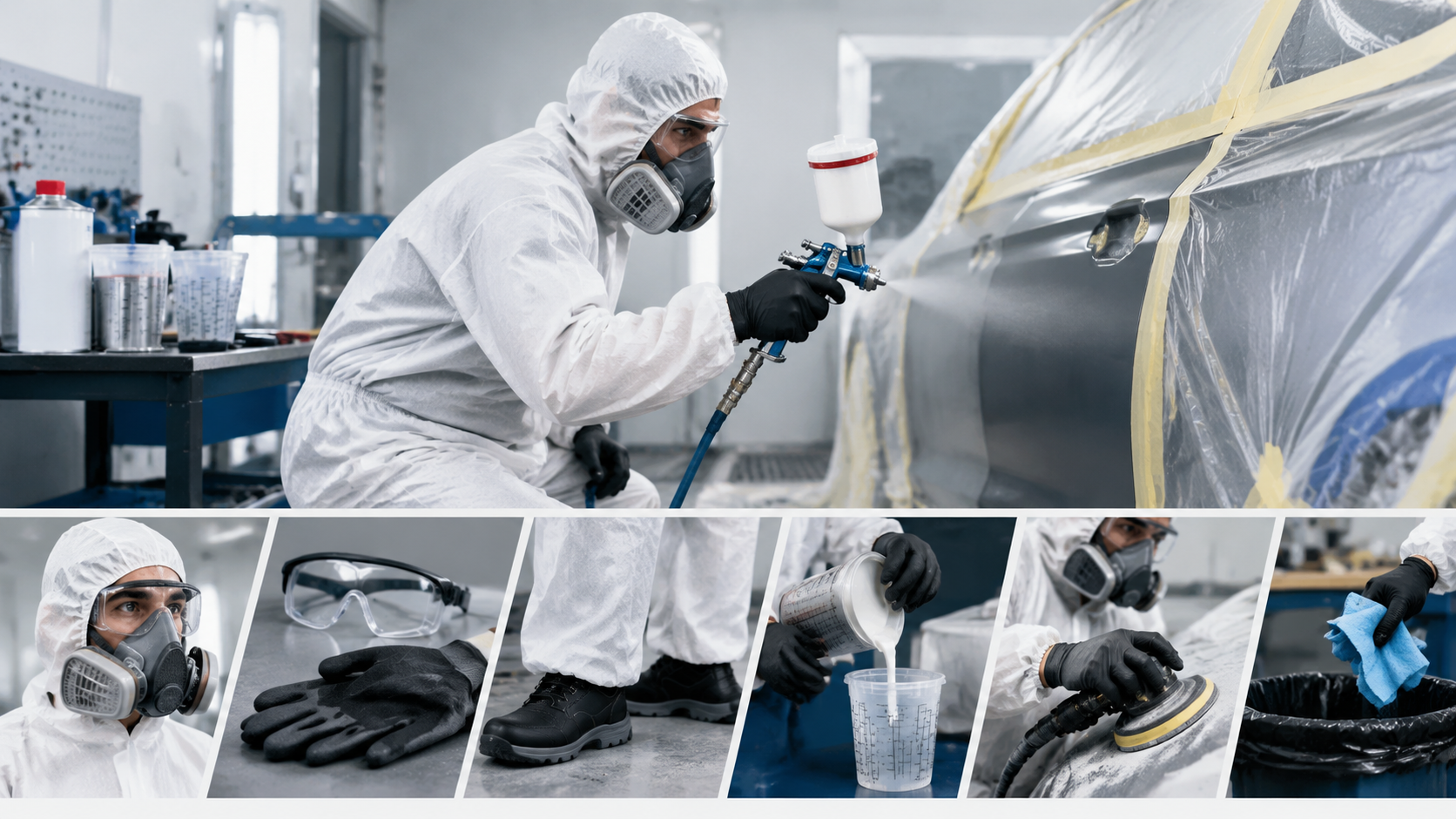
There is no single 'body shop PPE kit' that is correct from the first sanding disc to the last gun-cleaning step. Sanding filler creates a particulate problem. Mixing coatings can create skin, eye and vapor exposure. Spraying turns liquid coatings into an airborne mist. Grinding adds impact, spark and noise hazards.
Good auto body shop PPE guidelines start by asking what the task generates, what the product SDS requires and what engineering controls are already in place. PPE is important, but it works best as one layer in a larger exposure-control system.
Start With the Hazard, Not the Mask
A respirator is not a universal answer to a dirty process. The first goal is to reduce the hazard at the source: vacuum extraction for sanding dust, appropriate ventilation for vapors and spray mist, isolation of spray operations, and good housekeeping.
Then choose PPE that is approved for the remaining hazard and used correctly. That includes fit, maintenance, filter or air-supply requirements, and the limits of the equipment.
What PPE Do I Need for Auto Body Work?
|
Task |
Main exposure to think about |
Typical controls / PPE considerations |
|
Sanding body filler / primer |
Fine particulate, old coating dust |
Vacuum-assisted sanding/local extraction; suitable particulate respiratory protection as required; eye protection; gloves/clothing based on task and SDS. |
|
Grinding metal / old coatings |
Particles, sparks, noise, coating dust |
Guarding/extraction where possible; safety eyewear plus face protection as needed; hearing protection based on noise; respiratory protection based on dust hazard. |
|
Mixing primers / base / clear |
Splash, skin contact, solvent or reactive vapor |
Local ventilation; chemical-resistant gloves and eye protection; respiratory protection only as required by SDS/exposure assessment. |
|
Spraying non-isocyanate coating |
Paint mist and solvent vapor |
Approved spray area/ventilation; respirator specified by SDS and local rules; eye/skin protection. |
|
Spraying 2K isocyanate coating |
Invisible isocyanate spray mist, skin/eye exposure |
Controlled spray booth/room, clearance time, air-fed/supplied-air breathing apparatus where required, coveralls, gloves and eye/face protection. |
|
Cleaning spray equipment |
Uncured coating and cleaning solvent |
Ventilation; compatible chemical gloves/eye protection; respiratory protection if required by SDS and vapor level. |
This table is a starting framework, not a substitute for the exact SDS or your local workplace rules.
When to Wear a Respirator
When to wear a respirator depends on the hazard and the controls already in place. Sanding dust, spray mist and solvent vapor are different exposures and may require different respirator types—or, for certain spray operations, supplied air instead of a filtering respirator.
Do not choose a respirator because the job 'smells strong' or because someone online uses the same cartridge. Use the coating and hardener SDS, the workplace risk assessment and the respirator manufacturer's instructions.
Do I Need PPE for Sanding Body Filler?
Yes. Sanding body filler creates fine airborne dust, and the surrounding paint layers may add other hazardous constituents depending on the vehicle and repair history.
The better control is not simply a tighter mask. NIOSH has shown that ventilated mechanical sanders can reduce total dust concentrations dramatically compared with unventilated sanding. Source capture should be part of the body shop dust protection plan.
Is Bondo Dust Dangerous to Breathe?
'Bondo' is often used as a generic word for body filler, but the hazard depends on the exact filler and whatever coatings are being sanded with it. Dust can irritate the respiratory tract, eyes and skin, and old automotive coatings may contain additional hazardous materials.
Treat sanding as a dust-control task: connect the sander to extraction, avoid blowing dust back into the air with compressed air, vacuum the work area, and use the respiratory and skin/eye protection required for the materials involved.
Body Shop Dust Protection: Control It Before It Reaches Your Face
- Use vacuum-assisted or locally exhausted sanders whenever practical.
- Use HEPA-capable cleanup where appropriate instead of dry sweeping or blowing dust around the shop.
- Keep sanding and clean assembly/mixing areas separated as much as the shop layout allows.
- Change or remove contaminated clothing before entering clean or living areas.
- Maintain respirators and filters according to the protection program and manufacturer instructions.
If the job involves a composite panel, the same source-control logic applies before clear coating. See our guide to clear coating carbon fiber safely for the transition from prep dust to 2K coating safety.
Isocyanate Safety: This Is Where the Respirator Rules Change
Many 2K automotive primers and clear coats use isocyanate hardeners. Spraying creates a fine mist that can be difficult to see and can cause serious respiratory sensitization and occupational asthma.
For motor-vehicle refinishing, HSE guidance requires air-fed breathing apparatus while isocyanate spray mist is present. PPG also recommends supplied-air respiratory protection for spray applications involving isocyanates. A paper mask, nuisance-dust mask or ordinary cartridge respirator should not be presented as an equivalent substitute when supplied air is required.
For the dedicated respiratory/PPE discussion, read our 2K clear coat safety guide.
If your question is specifically about a home garage, use our can you spray 2K clear coat at home? guide before assuming an open door makes the setup safe.
When Should I Wear a Respirator in an Auto Body Shop?
Use respiratory protection whenever the hazard assessment, SDS or workplace rules require it after engineering controls are considered. That commonly includes particulate-producing prep work, spray operations and some solvent-cleaning or mixing tasks—but the respirator type is not the same for every operation.
For 2K isocyanate spray operations, the key question is not 'which cartridge?' It is whether the job requires supplied air and a controlled spray environment.
How to Protect Lungs from Body Shop Dust
- Capture dust at the tool with vacuum-assisted sanding or local extraction.
- Keep the workspace clean so settled dust is not repeatedly re-aerosolized.
- Use the particulate respiratory protection specified by the hazard assessment/SDS and maintain it correctly.
- Avoid compressed-air blowdown of clothing and dusty surfaces unless a controlled process specifically allows it.
- Separate dusty prep work from paint mixing, spraying and clean assembly areas where possible.
Where the PRD-510 Fits—and Where It Does Not
A spray gun is application equipment, not PPE. The PRD-510's current published specification is 1.0/1.3 mm, 1–1.5 bar operating pressure and 5.7 CFM air consumption. That can make it practical for some lower-air-demand refinishing setups.
What it cannot do is make a hazardous coating safe. Lower air demand or controlled atomization does not replace a spray booth, extraction, respiratory protection, gloves, coveralls or the SDS requirements for the material.
See the current PRD-510 LVLP specifications if you are evaluating the application side separately from the safety controls.
A Practical Auto Body Shop PPE Checklist
|
Before the task |
Ask |
|
Material |
Have I read the current SDS for the filler, primer, paint, hardener, reducer or solvent? |
|
Airborne hazard |
Will this create dust, vapor, aerosol or spray mist? |
|
Source control |
Can I extract, isolate or ventilate the hazard before relying on PPE? |
|
Respiratory protection |
Is the respirator type approved for this exact exposure, and is supplied air required? |
|
Skin / eyes |
Are gloves, coveralls and eye/face protection compatible with the material and task? |
|
After the task |
How will I clean tools, remove PPE and keep contamination out of clean areas? |
FAQ
What PPE do I need for auto body work?
It depends on the task. Sanding, grinding, mixing, spraying and solvent cleanup create different hazards. Start with the SDS and hazard assessment, use engineering controls first, then select task-appropriate respiratory, eye, skin, hearing and foot protection.
When should I wear a respirator in an auto body shop?
Wear one when required by the task hazard, SDS or workplace program. The type must match the exposure; a dust respirator, vapor cartridge and supplied-air system are not interchangeable.
Do I need PPE for sanding body filler?
Yes. Control dust at the source with vacuum-assisted sanding where possible, and use suitable respiratory, eye and skin protection for the materials being sanded.
Is bondo dust dangerous to breathe?
Body-filler dust can irritate the respiratory tract, and the surrounding coatings may introduce additional hazards. Avoid inhalation and use source extraction plus appropriate PPE.
How to protect lungs from body shop dust?
Capture dust at the tool, use effective cleanup and ventilation, keep dusty operations separated, and wear properly selected respiratory protection when required.
Final Takeaway
The best auto body shop PPE guidelines do not start with a shopping list. They start with the job: what is being sanded, mixed, sprayed or cleaned; what the SDS says; what can be extracted or isolated; and what exposure remains after those controls are in place.
For dust, capture it before it fills the room. For 2K isocyanate spray mist, treat supplied-air respiratory protection and the spray environment as serious requirements. PPE works best when it is the last layer of a well-controlled process, not the only layer.
Udostępnij:
Fix Rough Paint Texture Without Repainting: Orange Peel, Dry Spray & Wet Sanding Guide