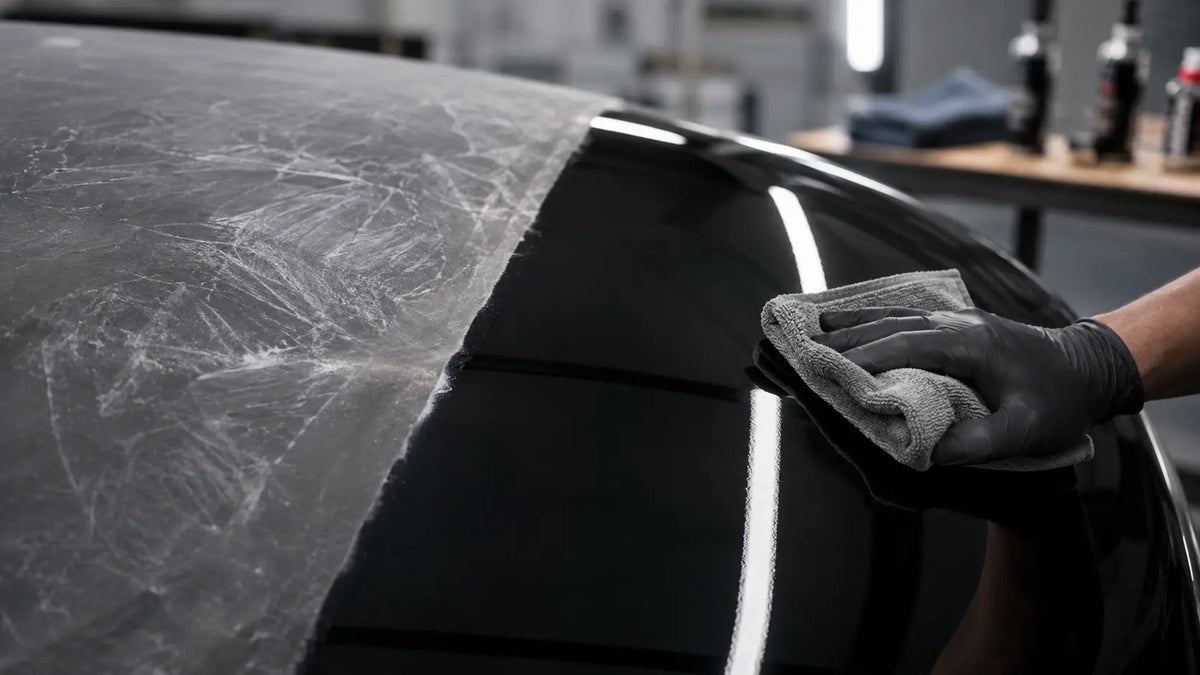
Clear coat that stays sticky needs a diagnosis before another layer goes on. To remove uncured clear coat, first check whether the product was mixed correctly and whether its specified drying time has passed. A slow-drying film and a 2K clear mixed without hardener need different responses.
For a confirmed mixing failure, follow the coating manufacturer's removal procedure. The basecoat can remain only if it survives removal and meets the system's repair and recoat requirements.
Why Is Clear Coat Still Tacky After 24 Hours
Check the product schedule, panel temperature, film thickness and mixing record. Twenty-four hours is not a universal cure deadline.
|
What you find |
What it suggests |
What to do next |
|
Correct components and ratio, but a cool panel |
Drying may be slower than the stated reference conditions |
Use the product's approved drying guidance |
|
Heavy coats or short flash intervals |
Solvent release may be delayed |
Assess film build and the prescribed recovery procedure |
|
Reducer used in place of hardener |
A conventional 2K clear lacks its required curing component |
Contact the coating maker and plan removal |
|
Wrong hardener or uncertain ratio |
Cure and film performance are unreliable |
Verify the mix before trying to refinish |
PPG's slow-drying guidance includes heavy application, poor conditions, component mixing and reducer or hardener selection among the possible causes. The product data sheet still determines the drying schedule for the clear on your panel.
If the hardener was left out
A conventional two-component automotive clear relies on the specified hardener being mixed into the resin at the correct ratio. Reducer changes application properties; it does not replace that component. A film may lose some solvent and look less wet without developing the intended cure or strength.
Confirm the mistake from the containers or mixing record, then obtain the repair guidance. Another day of waiting cannot be relied on to supply the missing component.
If the clear was mixed correctly
Check whether the panel and material were inside the required temperature range, whether the film was applied too thickly and whether flash time was sufficient. Use the approved drying procedure before declaring the coating a failure. Do not reach for a strong solvent just because the surface is not ready to polish.
Can You Spray Hardener Over Sticky Clear Coat
That is not a dependable repair for clear mixed without its required hardener. Spraying it on top does not mix the component through the existing film at the correct ratio. A new coat can also cover a weak layer without making that layer sound.
Keep the failed film exposed for assessment. Do not add clear, hardener, accelerator or unapproved heat in an attempt to make the surface feel dry.
How to Remove Uncured Clear Coat
Confirm the scope of the repair
Identify the clear, hardener, reducer if used, basecoat and any primer beneath it. Record how much material was applied and what remains soft. Give that information to the coating supplier when asking for a removal method.
Solvents and uncured coating waste need appropriate handling. Use ventilation, chemical-resistant gloves and eye protection specified for the materials, keep ignition sources away and contain contaminated waste as directed. For the later spray stage, review the 2K clear coat safety guide.
Test the proposed method before treating the panel
Test the approved method on a representative panel or small area for damage to the basecoat, primer or substrate. One successful wipe does not establish that the whole panel will be unaffected.
Stop if color smears, edges lift or the substrate is attacked. At that point the repair scope may need to include the damaged lower layers.
Remove failed material in controlled sections
If solvent-assisted removal is approved, follow its contact and cleanup instructions. Use suitable tools and clean cloths, replacing them before they spread softened material back across the panel. Avoid gouging the substrate or flooding seams and trim with liquid.
Mechanical removal also depends on the film's condition. Soft coating can clog abrasives or smear instead of cutting cleanly. The supplier's repair procedure should establish when and how it can be worked.
Inspect what remains
Check for sticky residue, damaged color, lifting edges, scratches, exposed primer or bare substrate. Clean and prepare the remaining sound layer as the coating system requires. Our paint prep before basecoat guide covers the preparation sequence after the removal decision has been made.
Remove failed material and unapproved residue before recoating.
Does Lacquer Thinner Remove Clear Coat
It can soften some uncured coatings, but its ability to dissolve material does not make it the right removal product. Lacquer thinner formulations vary, and a strong solvent can damage basecoat or primer as well as the clear.
Reducer is not automatically an approved repair cleaner, and acetone can attack finishes and plastics. Choose a product by documented compatibility, rather than availability or a result reported on another car.
If no selective removal process is supported, plan to rebuild the affected layers.
Do You Need to Respray Basecoat After Removing Clear Coat
Inspect the basecoat after removal and check its recoat requirements. A color layer that looks intact may still have been chemically disturbed.
|
Condition after removal |
Repair direction |
|
Adhered, uniform basecoat with an approved recoat path |
Assess for retention under the manufacturer's procedure |
|
Smearing, lifting or dissolved color |
Remove unstable material and reapply basecoat as required |
|
Metallic or pearl appearance disturbed |
Restore the effect layer before clearing |
|
Primer, filler or substrate exposed |
Rebuild the required undercoat and color layers |
|
Residue or adhesion condition cannot be verified |
Stop and establish a sound surface before recoating |
Follow the basecoat's delayed-recoat instructions for sanding and cleaning.
Repainting Without Repeating the Mixing Error
Keep the clear, hardener and reducer in clearly labeled containers. Check their product codes before pouring and measure using the system's mixing scale or specified weighing method. Record the ratio and the time mixed. Do not add the “missing” component to material that is already beyond its usable life.
Apply correctly prepared material only after the panel is ready. Use the coat sequence, flash intervals and curing schedule for that clear. For the working-pressure check, see spray gun air pressure regulation.
The PC-415 is offered with 1.3 and 1.8 mm configurations and a published 1.6–2.0 bar operating range. Choose a setup that matches the coating and gun guidance. The gun can support application control; it cannot cure a defective mixture.
Frequently Asked Questions
What happens if you mix 2K clear coat without hardener
It may fail to develop its intended cure, durability and chemical resistance. Confirm the product and mixing error, then follow the coating maker's removal and refinishing instructions.
Will heating sticky clear coat fix it
Approved drying conditions may help a correctly mixed product. Heat cannot be assumed to correct missing or incompatible hardener. Use only the product's specified recovery process.
Can another clear coat seal the sticky layer
Covering an uncured, weak film is not a reliable repair. Remove the failure as required and establish a sound surface before applying new material.
Which solvent is safe for removing uncured clear coat
There is no universal choice. The coating stack and substrate determine what can be used, how it should be tested and what must be refinished afterward.
Udostępnij:
2K Paint Over 1K Primer Reaction and How to Fix It
How to Fix Burn Throughs Before Painting a Car