
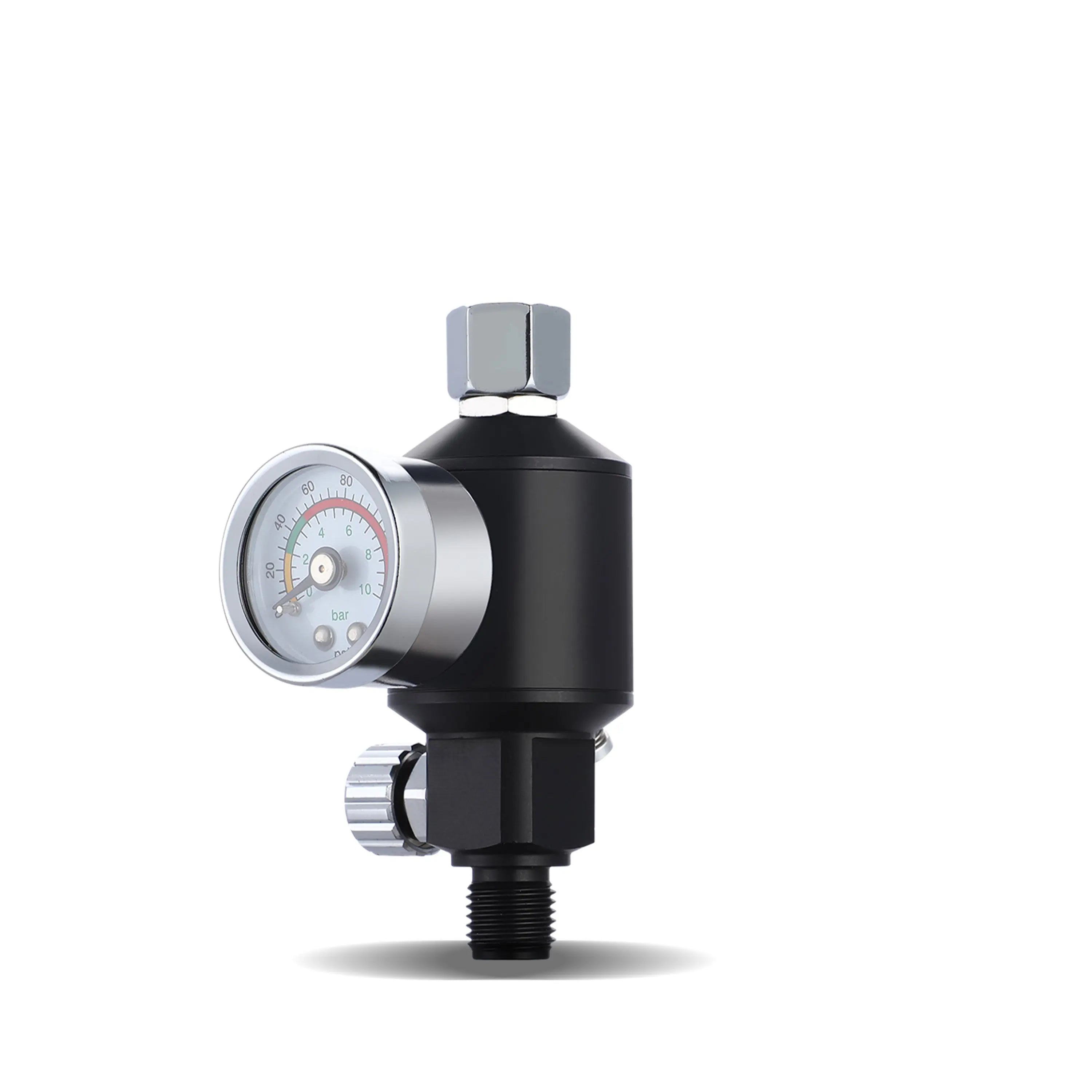
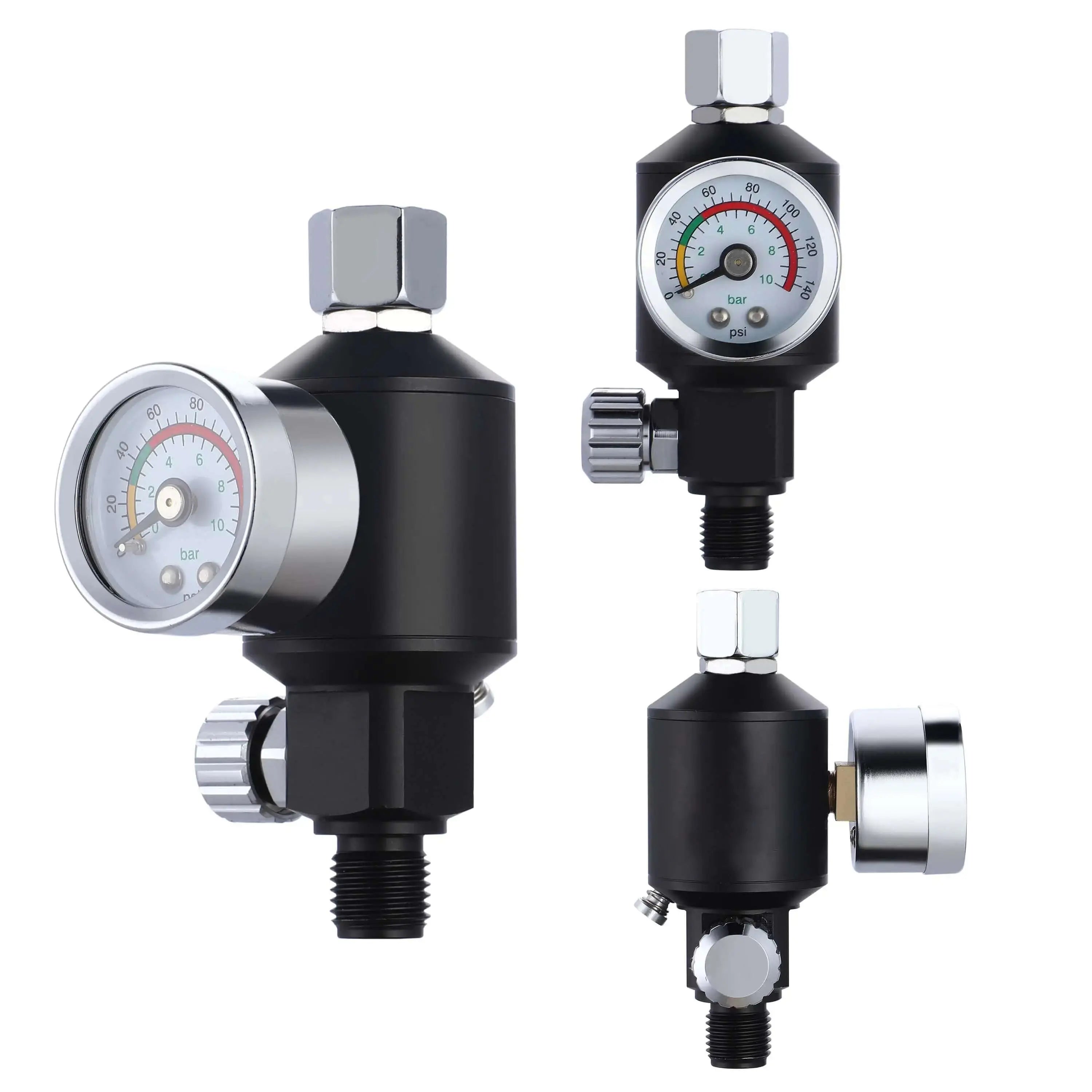
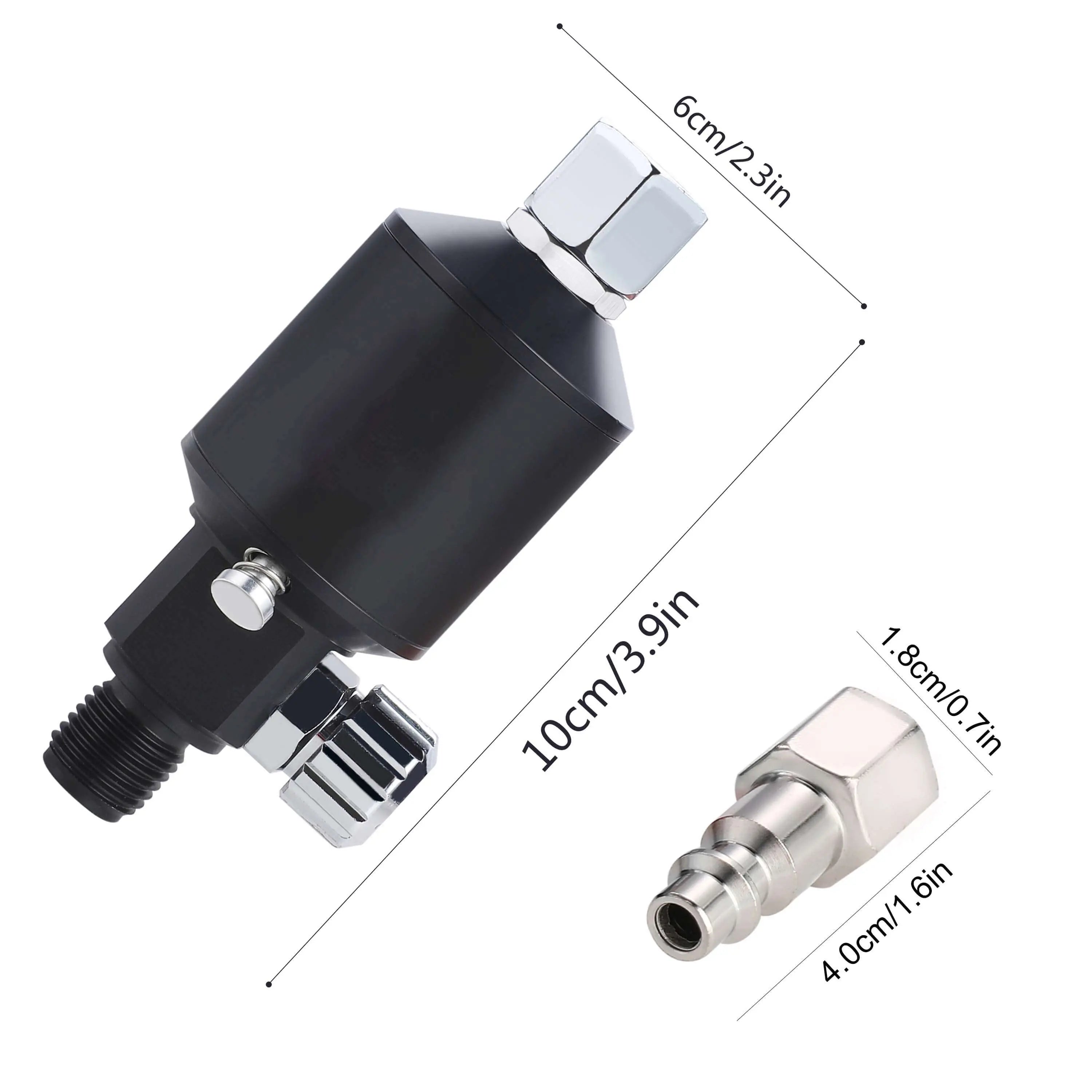
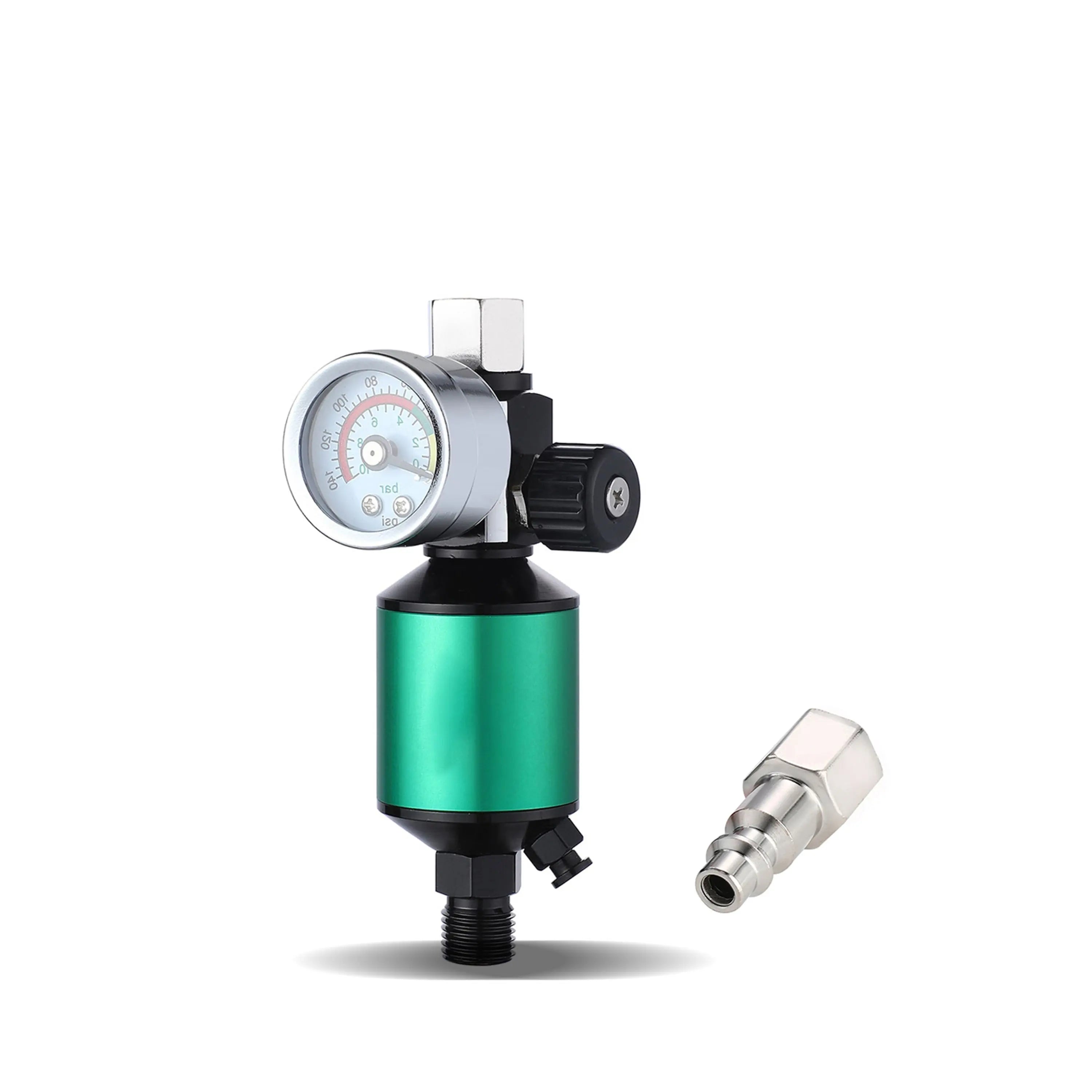
Filter Regulator (Black)
Dirty Air Ruins Finishes. Unstable Pressure Wastes Paint. Fix Both. Before You Spray
Filter Regulator (Black)
You may also like
FAQs-Filter
Q1: How often do I need to replace the filter element?
A: Filter replacement frequency depends on your air quality and usage volume. In a typical home workshop environment with a standard compressor: inspect the filter element every 3 months, replace every 6 months. In a production shop environment with daily use: inspect monthly, replace every 2–3 months. Visual indicators that the element needs replacement: visible discoloration or saturation of the filter media, water droplets appearing downstream of the filter during spraying, or any detectable pressure drop across the filter housing (gauge reads lower than expected given your compressor setting). Do not wait for visible water in the line — by that point the element is already failing.
Q2: What's the difference between a filter and a water separator? Do I need both?
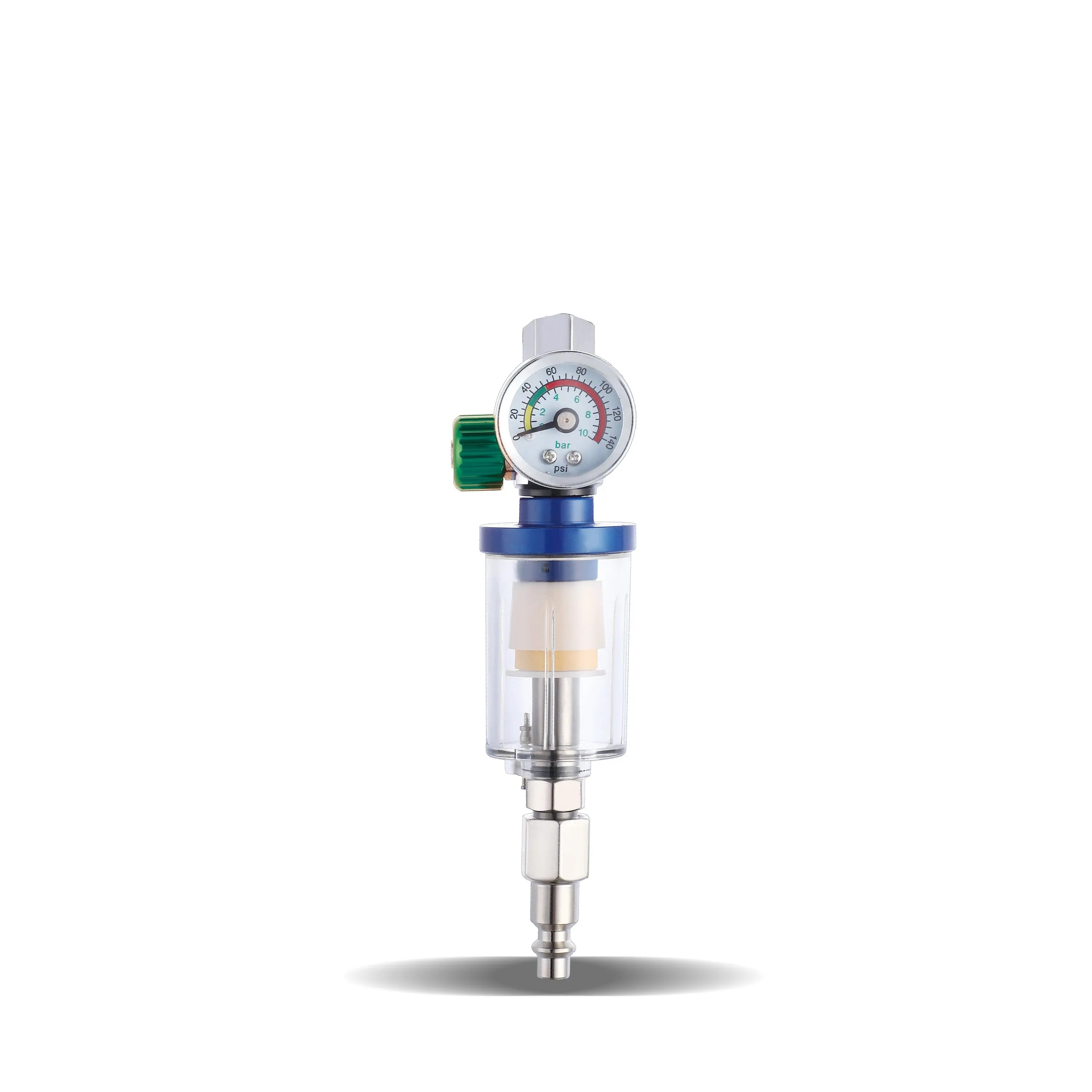
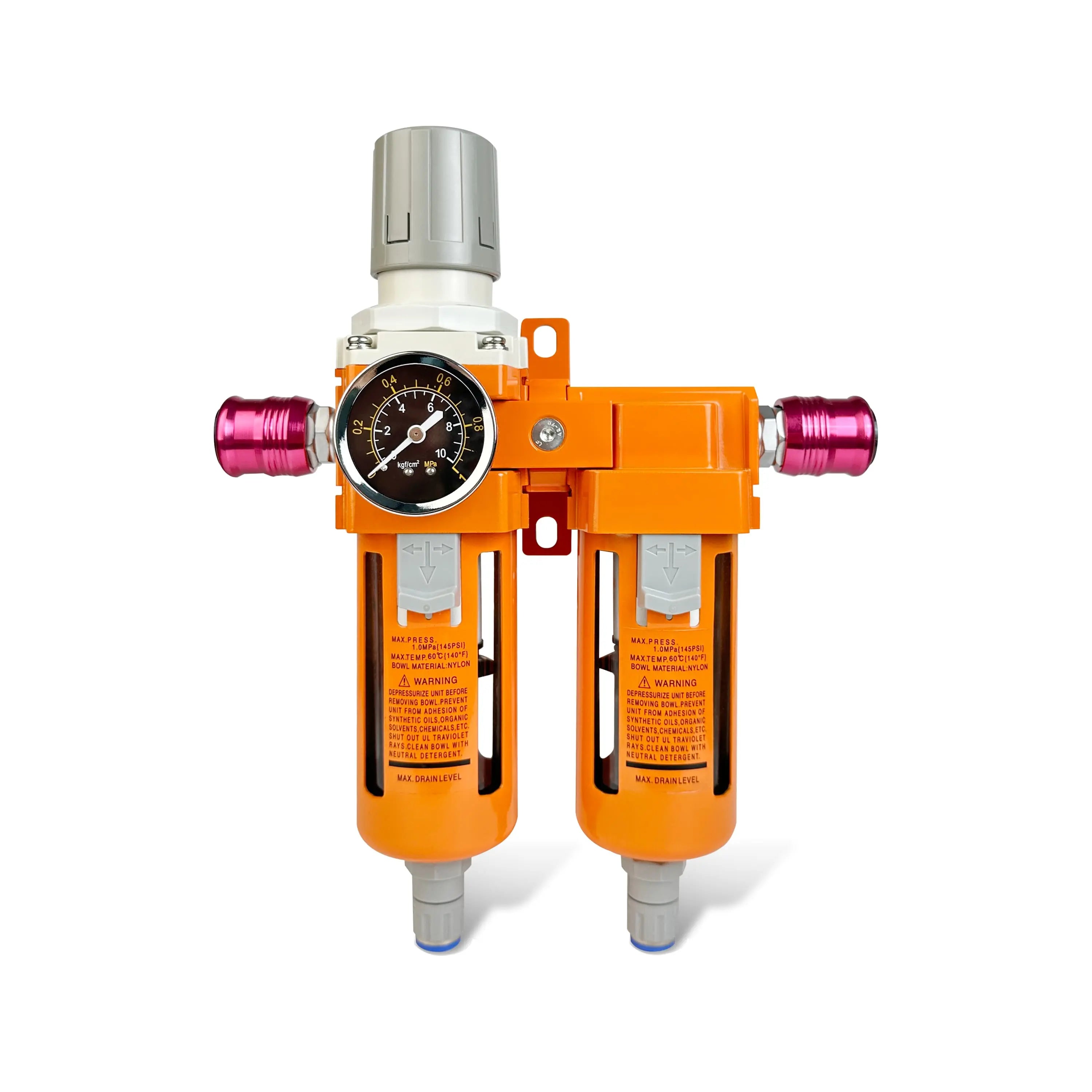
A: A basic filter removes particulate contamination (rust, pipe scale, compressor oil aerosol) from the air stream. A water separator — also called a moisture trap — specifically targets water droplets and water vapor. Most Porphis filter units combine both functions in a single housing: a coalescing filter element that captures both particulates and coalesces water droplets for drainage. If your unit has a drain valve at the bottom of the bowl, it has water separation built in — drain it at the start of each spray session. If your unit is particulate-only filtration, add a dedicated water separator upstream. In humid climates or during summer spraying, water separation is not optional — it is the difference between consistent finishes and unpredictable contamination defects.
Q3: Do I actually need a pressure gauge and filter if my compressor already has one built in?
A: Yes — and this is the most important question to answer correctly. The gauge and filter on your compressor measure and clean air at the compressor outlet, which may be 3–6 meters of hose away from your spray gun. Pressure drops across the hose length, and moisture condenses in the hose as compressed air cools during travel. The reading at your compressor is not the pressure at your gun, and the filter at your compressor does not catch moisture that forms in the hose. A gun-inlet gauge and filter installed at the end of the hose — directly before the gun — gives you accurate pressure at the point that matters and removes moisture at the point where it causes finish problems.