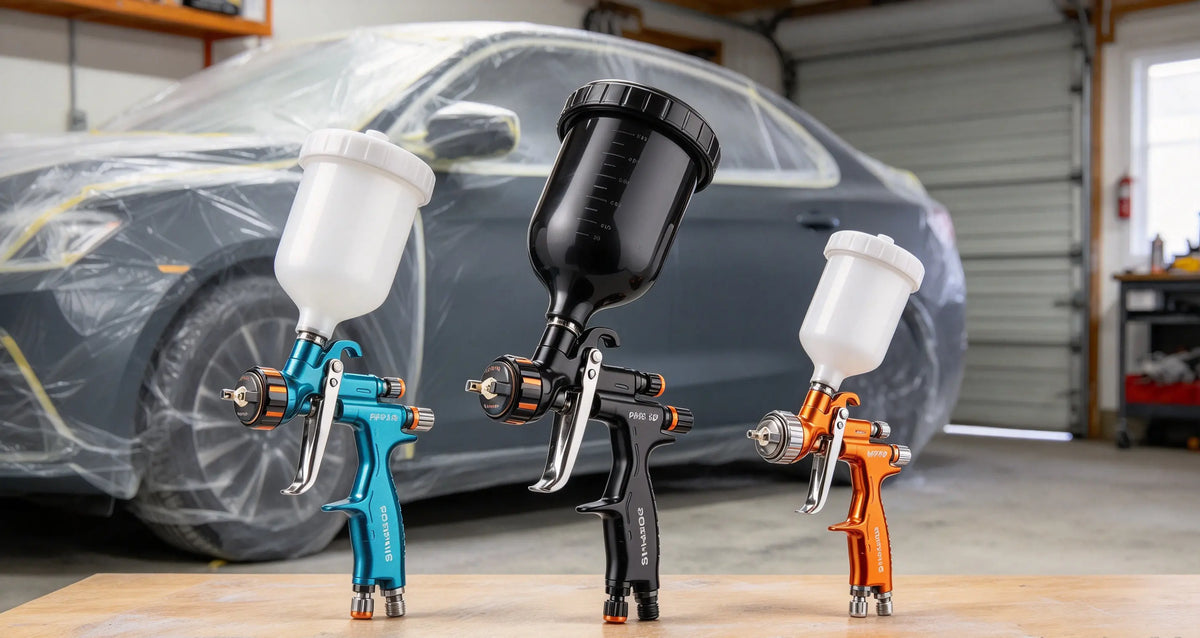
For most DIY automotive projects, one to three spray guns is a sensible range. The right number depends on how often you paint, how many coating systems you use, the size of the job, and how much cleaning time you are willing to accept between products.
A single gun can work for an occasional repair. Two guns usually give a home painter the best balance between cost and workflow. Three dedicated guns make a full vehicle respray easier to repeat, especially when the basecoat contains metallic or pearl pigment and the clear coat is the last surface you want to contaminate.
|
Project |
Practical setup |
Why it works |
|
Small repair or occasional DIY |
1 compatible gun |
Lowest entry cost; cleaning is the main trade-off. |
|
Several panels or regular repairs |
2 guns |
Keep primer residue away from the finishing gun while sharing a compatible gun between base and clear. |
|
Full vehicle respray |
3 dedicated guns |
Less switching, less cleaning between stages, and a repeatable setup for each material. |
|
Separate waterborne and solvent systems |
2–3, depending on the products |
Dedicated equipment can reduce compatibility and cleaning risks when the coating systems differ. |
One Spray Gun: The Lowest-Cost Setup
One gun is reasonable when the job is small, the coating system is compatible, and you are prepared to clean the fluid passages thoroughly every time you change materials. It is often the right choice for a bumper, a small panel, or a first project where buying three complete setups would leave the budget better spent on preparation and safety equipment.
The compromise is time and discipline. Primer can leave heavier solids in the nozzle and passages. Basecoat can leave pigment behind. Clear coat exposes anything that remains. A quick solvent flush may make the cup look clean while residue is still hiding around the needle, fluid nozzle, or air cap.
Two Spray Guns: The Practical Middle Ground
For many home painters, two guns are the most useful arrangement: one for primer and surfacer, and one for basecoat and clear coat. Primer is the material most likely to bring heavier residue into the fluid path, so keeping it separate protects the finishing gun without requiring three separate guns.
Basecoat and clear coat can share a gun only when the equipment is suitable for both materials and the gun is cleaned completely between them. If the basecoat is metallic or pearl, inspect the passages carefully before loading clear. A small amount of pigment can become a visible speck in the final finish.
Three Spray Guns: A Workflow Investment
Three guns are useful when you paint often, refinish several panels at once, or want a repeatable full-vehicle workflow. A dedicated primer gun, basecoat gun, and clear-coat gun reduce interruptions and make it easier to keep each setup close to the settings that worked on the test panel.
This is an investment in consistency, not a requirement for a good repair. A poorly mixed product, unstable air supply, dirty panel, or rushed flash time can still ruin a finish with three expensive guns.
Can One Spray Gun Handle Primer, Basecoat, and Clear Coat?
Yes, when the gun is approved for all three products and the cleaning procedure is followed. The question is not whether the gun can physically spray each coating. The question is whether it can be returned to a clean, compatible condition before the next coating enters the fluid path.
If you use one gun, treat every changeover as a small maintenance job:
- Empty the cup promptly and handle leftover material according to the coating instructions.
- Flush with the cleaner specified for that coating system; waterborne and solvent-borne products do not share one universal cleaning method.
- Clean the cup, fluid nozzle, needle, air cap, and other passages identified in the gun manual.
- Inspect for pigment, primer, dried material, and solvent residue before reassembly.
- Test the spray pattern on a suitable surface before returning to the vehicle.
For the preparation step, link the article to paint prep before base coat.
Is a Separate Clear Coat Spray Gun Worth It?
For regular work, it often is. Clear coat is the final protective layer, so contamination becomes highly visible after the material cures. A dedicated clear gun also lets you keep a repeatable nozzle, fluid, and fan setup instead of changing adjustments every time you switch products.
A separate clear gun is especially useful for metallic and pearl finishes, multi-panel repairs, and anyone who values shorter changeover time. It does not replace correct mixing, a clean spray area, or the right flash time.
Choosing an LVLP Spray Gun for Primer and Clear
An LVLP gun can be a good fit for spot repairs, smaller panels, and detail work where compressor capacity is limited. LVLP means low volume low pressure, but the label alone does not tell you whether a gun will atomize a particular primer or clear coat. Material viscosity, solids content, nozzle size, air demand, and fan width all matter.
|
What to match |
Why it matters |
|
Nozzle and material |
A heavy primer may need a larger setup than a fine finishing material; start with the coating TDS. |
|
Sustained air delivery |
Use the compressor’s continuous output, not only tank size or maximum pressure. |
|
Fan width |
A mini gun suits detail work; a full-size gun is usually more efficient for broad panels. |
|
Cleaning access |
Easy disassembly and visible passages reduce the chance of hidden residue. |
|
Pressure control |
A regulator and stable air line help keep atomization repeatable. |
For a compact detail option, see the MPH-338 LVLP mini spray gun. Treat it as a small-area tool, not an automatic substitute for a full-size gun on an entire vehicle.
What Is the Best Spray Gun Setup for a Home Garage?
The best setup is the one that matches the work you can actually complete safely. Buying more guns than the job requires can waste money; forcing one unsuitable gun through every stage can waste material and time.
|
Setup |
Recommended equipment |
Best for |
|
Small repairs |
1 compatible gun; compressor; regulator; moisture filtration; mixing and cleaning supplies; suitable PPE |
Learning, small parts, and occasional panels. |
|
Regular repairs |
1 primer gun; 1 finishing gun; stable air system; dedicated mixing supplies; cleaning equipment |
Several panels and repeat work. |
|
Full respray |
Dedicated primer, basecoat, and clear-coat guns; air system sized for sustained spraying; filtration and PPE |
A complete vehicle or long spray sessions. |
If you are tuning the air side of the setup, use the spray gun air pressure regulation guide alongside the gun manufacturer’s instructions.
Cleaning a Spray Gun Between Basecoat and Clear Coat
A clean-looking cup does not prove that the gun is ready for clear. Pigment and dried material can remain in the passages and release during the next application. Use the coating and equipment instructions as the controlling procedure, then check the following points before reloading:
|
Step |
What to do |
Why it matters |
|
1. Empty |
Remove unused material promptly and dispose of it correctly. |
Prevents material from drying in the cup or fluid path. |
|
2. Flush |
Use the cleaner approved for the material. |
Reduces residue without introducing an incompatible solvent. |
|
3. Disassemble as directed |
Clean the cup, nozzle, needle, air cap, and specified passages. |
Targets the areas where pigment and primer hide. |
|
4. Inspect |
Look for specks, dried film, staining, and blocked openings. |
Catches contamination before it reaches the finish. |
|
5. Reassemble and test |
Confirm normal operation and check the pattern if appropriate. |
Verifies that cleaning did not create a new spray problem. |
Never blow solvent or paint mist toward yourself or another person with compressed air. Follow the product safety data sheet and use the respiratory, skin, eye, and ventilation controls required for the materials you are spraying. For two-component products, review the 2K clear coat safety guide before using a 2K clear system.
Frequently Asked Questions
How many spray guns do I need for a DIY car paint job?
One gun can be enough for an occasional repair if it is compatible with the coatings and cleaned thoroughly. Two guns are a practical compromise for regular work, while three dedicated guns make a full respray easier to manage.
Can I use one spray gun for primer, basecoat, and clear coat?
Yes, provided the gun is suitable for each material and the passages are cleaned according to the product and gun instructions between stages.
Is it worth buying a separate clear coat spray gun?
It is often worthwhile for metallic finishes, multi-panel work, or frequent painting because it reduces pigment-contamination risk and keeps the final-stage setup consistent.
Can an LVLP mini gun paint an entire car?
A mini LVLP gun can be useful for details and small areas. Its narrower fan and lower coverage rate generally make it inefficient for a complete vehicle.
Do I need a separate gun for waterborne basecoat?
Not automatically. Follow the coating manufacturer’s compatibility and cleaning guidance. Separate equipment can simplify maintenance when you switch regularly between systems.
Final Recommendation
Buy for the workflow you expect to repeat. Use one compatible gun when the job is occasional and you can clean it carefully. Choose two guns when you want a sensible balance between cost and changeover time. Move to three dedicated guns when a full respray or regular production makes the extra equipment worthwhile.
The number of guns is only one part of the result. Suitable atomization, stable air, clean preparation, controlled flash time, and a safe spray environment matter just as much as the shopping list.
Udostępnij:
Matte Paint Scratch Repair: Can You Polish It, Spot Repair It, Respray It or Wrap It?
Can I Apply Epoxy Primer Over Old Paint?