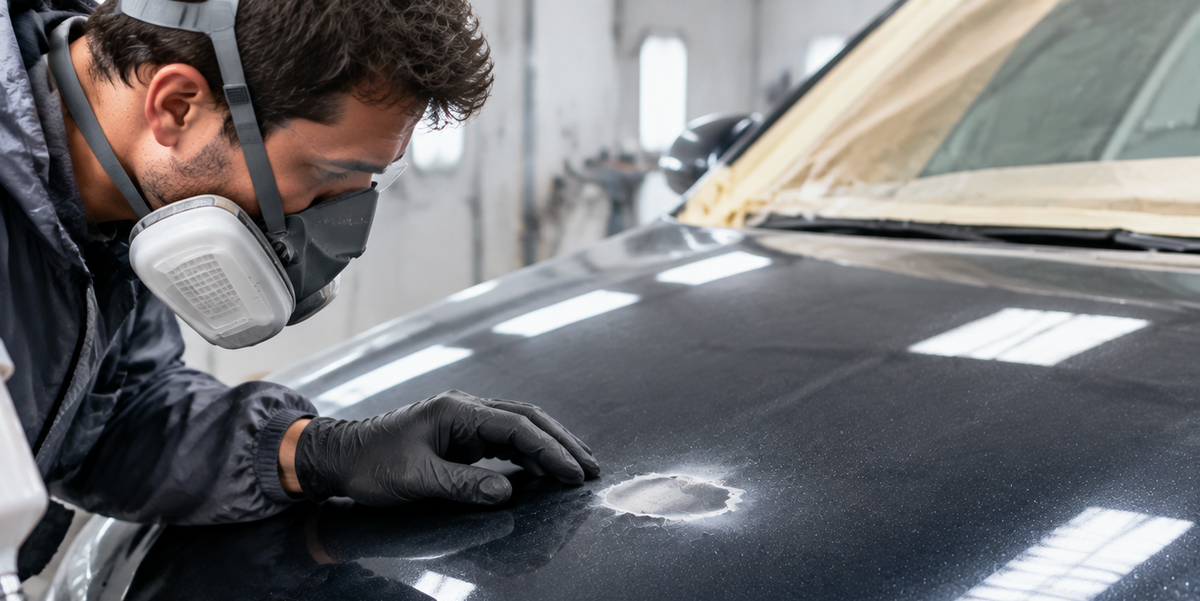
Stop sanding or polishing if a pale patch appears on a body line or the metallic color starts to look different. A mark within the clear may be sanding haze. Once you cut through the clear and disturb the basecoat, more buffing cannot put either layer back.
Inspect the clean, dry panel under good light before deciding what to do. The repair is different if the clear is simply thin, the metallic color has changed, or a lower layer is exposed.
Work Out Which Layer Is Affected
Look at the spot straight on and at a low angle. A uniform haze after sanding and a patch that changes color at the edge are different clues. Neither proves how much clear is left. Color on a polishing pad is a reason to stop and check the coating stack, especially if the panel could have tinted clear or a single-stage finish.
|
What you find |
What it may mean |
What to do next |
|
Even haze, with no obvious change in color |
Abrasive marks or polish residue on clear |
Check the finish and film condition before making another pass. |
|
Thin clear with the color still intact |
Part of the protective clear film has been lost |
Ask whether the sound surface can be prepared and recoated within the approved system. |
|
A color change or disturbed metallic effect |
The abrasive may have reached or damaged the color layer |
Confirm the layer, then plan to restore the color where required. |
|
Primer or bare substrate is exposed |
More than the clear and color are missing |
Restore the specified underlayers before applying color and clear. |
If the mark looks like a dull veil instead of a missing layer, first diagnose haze after wet sanding and buffing. If primer, filler or metal is showing, use the appropriate process to repair sanding burn-throughs before painting. Do not keep sanding just to make the edge of the spot look even.
Restore What the Abrasive Removed
Prepare the repair with the cleaner, abrasive and procedure approved for the coating that goes on next. Feather the transition as required and leave sound material around it. If you cannot establish what is under the old finish, check the repair history or have a refinisher inspect it before recoating.
If only the clear film is compromised and the color remains sound, the system may allow preparation and fresh clear without replacing the color. A break all the way through the clear leaves basecoat exposed, even when the spot has not changed shade. Verify whether that exposed basecoat can be cleared in its present condition. If it is scratched, discolored or outside the permitted recoat condition, renew it as directed.
When metallic basecoat is disturbed, spraying clear over it usually leaves the change visible. Match the color on a spray-out card first. Restore coverage where needed and keep the blend gradual, rather than putting another heavy coat over the center of a small patch. Look at the sample and repaired area from straight on and from the side. The guide to consistent metallic paint application explains why the effect can shift when the distance and overlap change. Use a control coat only if the coating procedure calls for it.
Decide Where Color and Clear Will End
A small spot may need color in only part of the panel. That does not determine where the clear can stop. Plan the color blend within sound prepared paint, then check the vehicle maker's procedure and the clear coat data sheet for the coverage required. Some OEMs, including Ford for exterior panels in its clearcoat position statement, specify full-panel clear. This can be the right plan even when the color repair stays local.
Place masking outside the planned color transition. Soft-edge tape can be useful at an approved opening or edge, but it does not make a clearcoat blend in the middle of an exposed panel acceptable. Finish and inspect the repair only after the coating has reached the stage specified by its technical data sheet.
Avoid a Second Burn Through
Be especially conservative at creases, corners and panel edges. They can have less film to work with and concentrate pressure from a sanding block or polishing pad. Use the least aggressive approved process that can address the defect, inspect frequently and stop if the depth is uncertain. A deeper scratch is not always safe to sand flat.
A typical magnetic or eddy-current gauge on a metal panel reads the film stack above the substrate. It can help flag a thinner area on comparable panels, but it does not tell you how much of the reading is clear. Do not treat a single thickness number or a fine sanding grade as permission to keep going.
Set Up for the Refinish Stage
If the repair calls for new color or clear and you are choosing a gun, compare the coating's nozzle requirement with the available configurations. The PORPHIS PRD-725 MP spray gun is offered in 1.3 mm and 1.4 mm. Verify the material and air supply before buying, and test the selected setup on a panel before applying it to the repair.
Questions About Clear Coat Burn Through
Can I fix a burn through with polish
Polish can refine defects within sound clear when the film allows it. It does not restore a missing coating layer. If the abrasive reached the basecoat or lower, repair the affected layers before finishing.
Can I blend metallic basecoat without painting the whole panel
It can be possible when the surrounding finish is sound, a test card matches and there is room to taper the color. Follow the vehicle and coating instructions for how much of the panel must receive clear.
What sanding grit prevents burn through
No grit prevents it on its own. The condition and thickness of the film, the abrasive system, pressure and location all matter. Use the approved finishing process and treat uncertainty at edges as a reason to stop.
Compartilhar:
How to Repair Peeling Clear Coat