HVLP Spray Gun

The PORPHIS HVLP (High Volume Low Pressure) Spray Gun delivers maximum transfer efficiency by moving a high volume of air at low pressure — pushing more paint onto the surface and less into the air. Operating at 15+ CFM and 30PSI, HVLP guns produce a soft, controlled spray pattern ideal for water-based topcoats, lacquers, and fine finish work where overspray control and surface smoothness are the priority. A go-to choice for furniture finishing, cabinetry, and architectural woodwork.
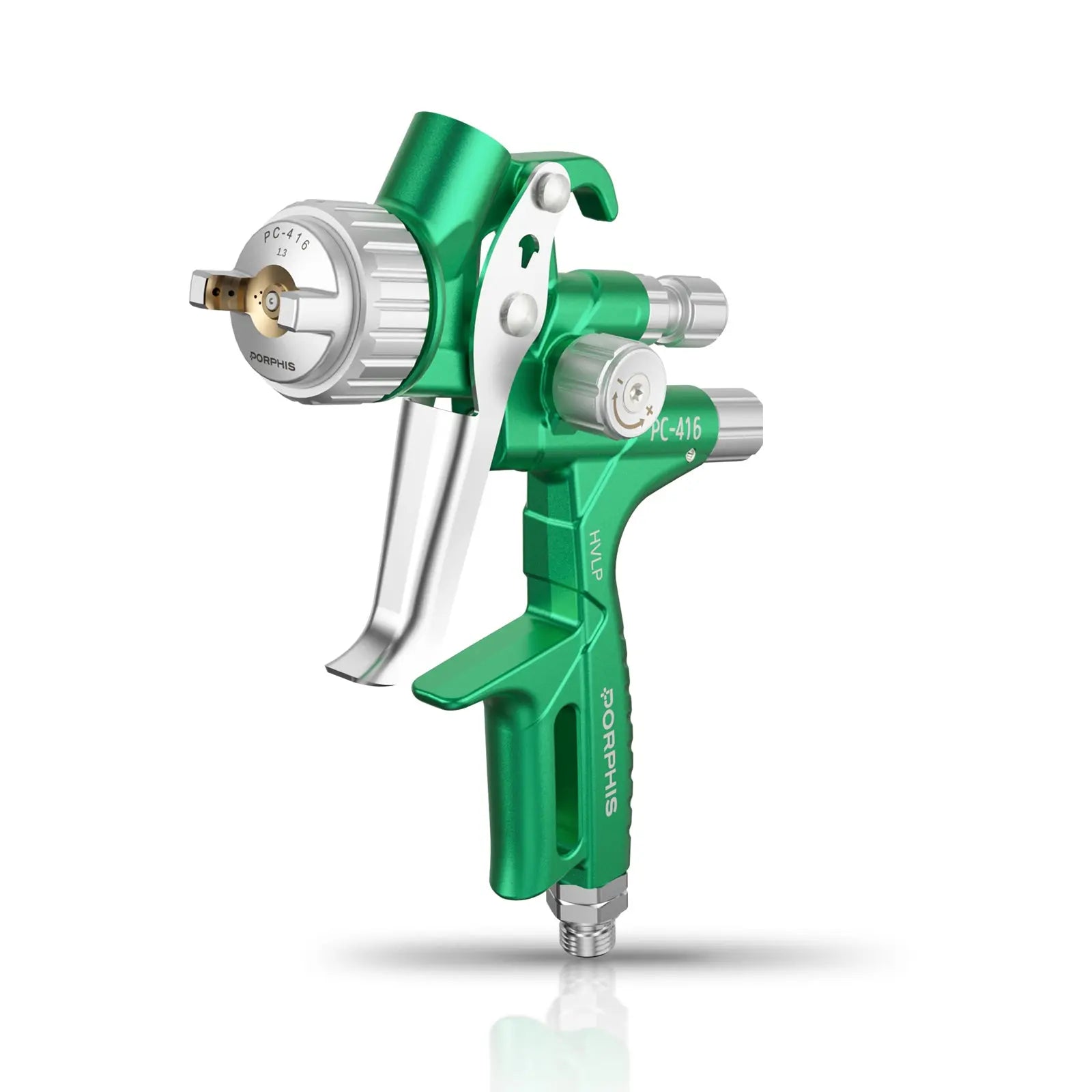
PC-416 HVLP Paint Gun PORPHIS

PC-416 HVLP SPRAY GUN

Comprehensive warranty: 1-YEAR
Warranty policy: >>CLICK HERE<< to learn more about.

SHOP NOW

FAQs

Q1: What does "Big Pattern" mean in practice, and how does it save me time on large panels?

A: The PC-416's wide fan pattern covers significantly more surface area per pass compared to standard-width spray guns. On a full door panel or hood, fewer horizontal passes are needed to achieve complete coverage — which means less time spent on each panel and less risk of overlap lines from too many passes. For large projects like full vehicle resprays or furniture pieces, the wide fan reduces your total spray time by a meaningful margin. It's the difference between making 8 passes across a hood and making 5.

Q2: How low is "low pressure" and why does it matter for base coat specifically?

A: The PC-416 operates at the low end of HVLP pressure range — typically 1.4–1.8 bar at the gun. For base coat application, this matters because lower pressure means slower droplet velocity, which translates to less paint bounce-back off the panel surface and less overspray drifting to areas you don't want painted. Base coat is also where metallic and pearl pigment orientation is set — and lower, more consistent pressure keeps metallic flakes laying flat and parallel to the surface instead of standing at random angles, which is what causes mottling.

Q3: The PC-416 has an ergonomic design — what specifically is different about how it feels to hold?

A: The PC-416's grip angle and body balance point are engineered to align with a natural wrist position during horizontal spray passes. Conventional guns often have a grip angle that forces slight wrist deviation — fine for 30 minutes, noticeable after 3 hours. The PC-416's ergonomic body geometry reduces this deviation, meaning your hand holds its natural position rather than compensating throughout the session. Combined with the lightweight body, painters doing extended base coat sessions report significantly less wrist and forearm fatigue compared to heavier or poorly balanced guns in the same category.

Q4: How does the Variable Fluid Flow technology on the PC-416 help when switching between different panel sizes mid-job?

A: When you move from spraying a large hood to a tight A-pillar or mirror housing, you need to reduce fluid flow to avoid flooding the smaller area — but you want to maintain your air pressure setting for consistent atomization. The PC-416's variable fluid flow system lets you adjust material delivery independently of air settings, meaning you can dial back the flow for tight sections without resetting your entire gun configuration. In practice, you're making one small adjustment per section change rather than fully recalibrating. For jobs with mixed panel sizes, this saves significant setup time and reduces the risk of runs on smaller surfaces.

Q5: I've heard HVLP guns with big fan patterns can have uneven distribution — heavy in the center, light on the edges. Is this a problem with the PC-416?

A: It's a legitimate concern with cheaper HVLP guns, and it's worth asking about. The PC-416's low-pressure atomization system is tuned to distribute material more evenly across the full fan width — the lower velocity droplets have more time to spread before hitting the surface, which naturally improves edge density compared to high-pressure systems. For base coat, where film build consistency across the panel directly affects color uniformity, this even distribution matters. We recommend doing a test pass on a white card before starting the job to verify your fan shape and adjust distance accordingly.

Q6: I'm worried about runs and sags when applying base coat over a large area. Does the low pressure help prevent this?

A: Yes — this is one of the most practical advantages of low-pressure HVLP for base coat. Lower air pressure means less material is being forced onto the surface per unit time, giving you more control over film build per pass. Combined with the wide fan (which distributes the material over a larger area), the PC-416 naturally lays down thinner, more controlled coats per pass compared to high-pressure guns. Runs and sags almost always come from too much material in one spot too quickly — the PC-416's operating characteristics make this significantly less likely, even for less experienced painters.

Q7: How does the PC-416 compare to the PC-415 in the same series? Which one should I choose?

A: Both guns share the PC-41 series body architecture, but the technology inside is different:

PC-416 (HVLP) — Lower pressure, wider fan, optimized for base coat coverage. The priority is even, efficient coverage with minimal overspray. Best choice if base coat is your primary application and you want low-pressure control.
PC-415 (MP) — Multi-Point atomization, faster spray speed, more versatile across base coat and clear coat. The priority is atomization quality and efficiency across the full coating system.
If you spend most of your time on base coat application over large surfaces, the 416's wide fan and low pressure give you a more comfortable, controlled experience. If you want one gun to take you from primer through clear coat, the 415 handles the full range.

Related Videos

E-Guides