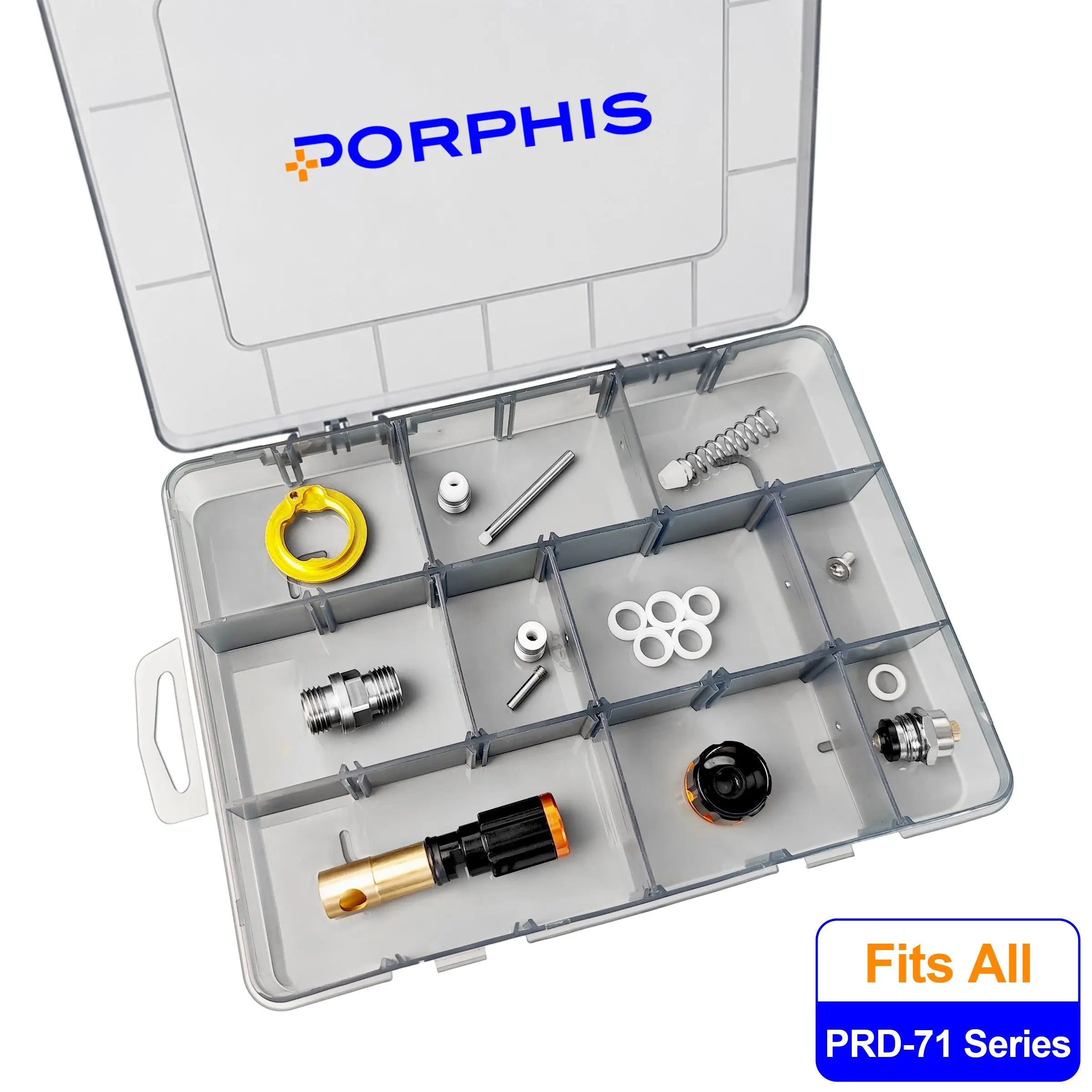
HVLP Spray Gun

The PORPHIS HVLP (High Volume Low Pressure) Spray Gun delivers maximum transfer efficiency by moving a high volume of air at low pressure — pushing more paint onto the surface and less into the air. Operating at 15+ CFM and 30PSI, HVLP guns produce a soft, controlled spray pattern ideal for water-based topcoats, lacquers, and fine finish work where overspray control and surface smoothness are the priority. A go-to choice for furniture finishing, cabinetry, and architectural woodwork.
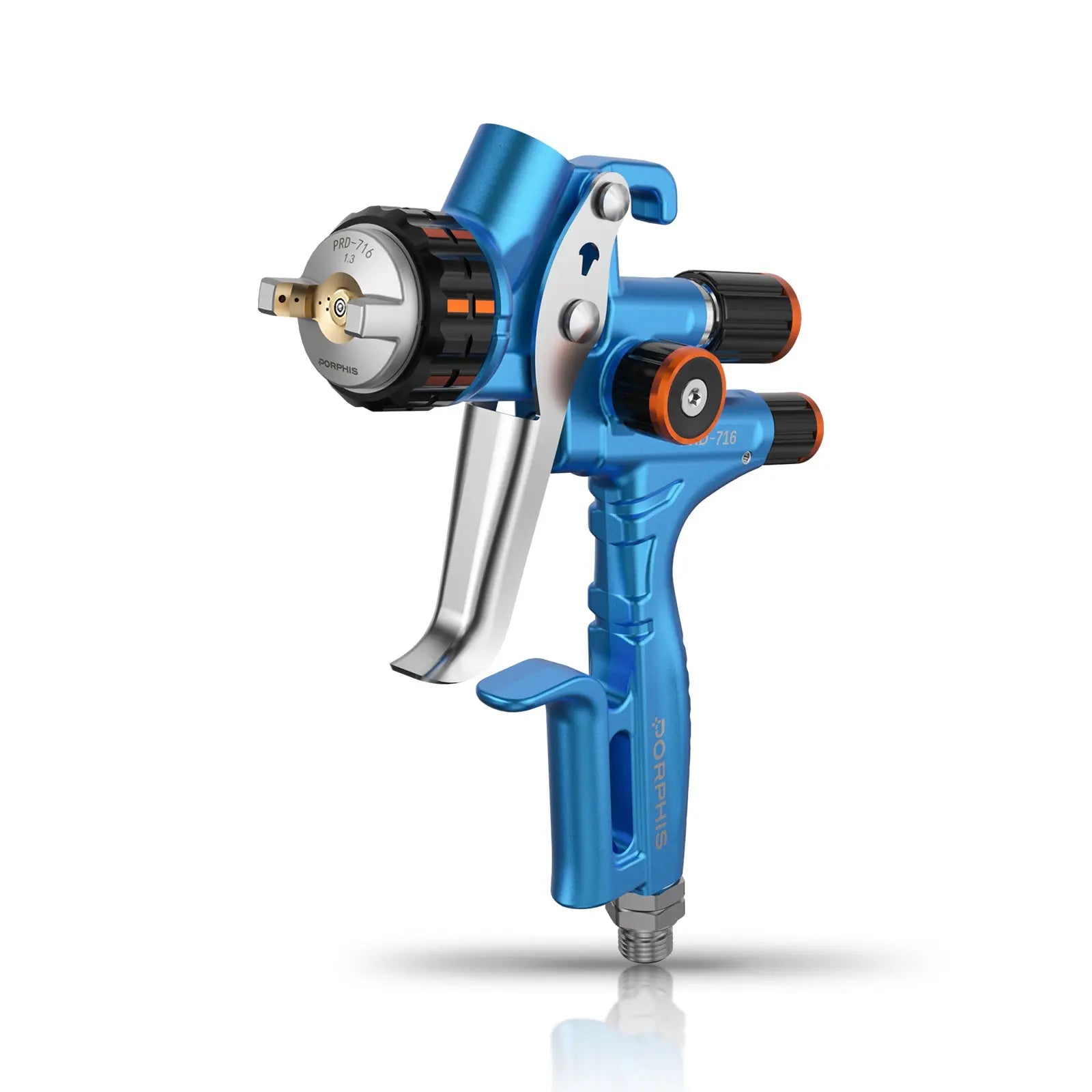
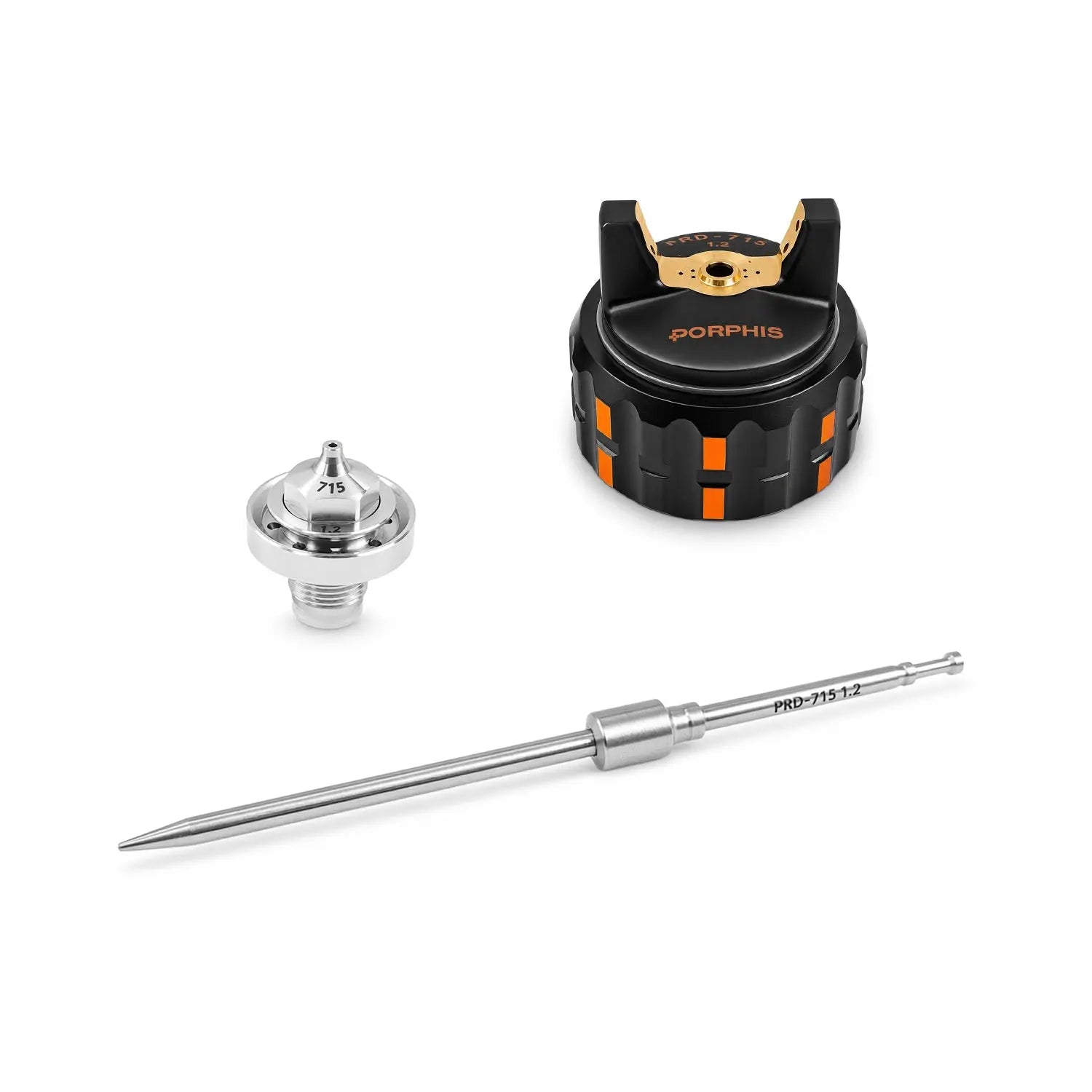
PRD-716 HVLP Spray Gun PORPHIS

PRD-716 HVLP SPRAY GUN

Comprehensive warranty: 1-YEAR
Warranty policy: >>CLICK HERE<< to learn more about.

SHOP NOW

FAQs

Q1: What's the real difference between HVLP and a standard spray gun? Will I actually notice it?

A: HVLP (High Volume Low Pressure) operates at lower atomization pressure — typically under 10 PSI at the air cap versus 25–45 PSI for conventional guns. The practical result: paint droplets travel slower and hit the surface more accurately, instead of bouncing off and becoming overspray. In real use, most painters switching from conventional to HVLP notice two things immediately — the spray booth looks cleaner, and they're using noticeably less paint to cover the same area. The PRD-716 reduces overspray rate by up to 30%, which on a full car respray can translate to meaningful material savings per job.

Q2: I spray base coat all day in a busy shop. Is the PRD-716 built for that kind of volume?

A: Yes, and this is specifically what the PRD-716 was designed for. Its high-strength composite body with modular assembly has been tested for long-term, high-frequency operation. The low-resistance internal flow path keeps spray pressure stable across extended sessions — you won't notice pressure inconsistency after hour three that you'd feel with cheaper guns. For shops running multiple vehicles per day, the reduced cleaning time between jobs (less overspray means less contamination) adds up quickly over a week.

Q3: Does HVLP work well with metallic base coats? I've heard low-pressure guns can cause metallic flake orientation issues.

A: This is a legitimate concern and it's good that you're asking. Metallic flake orientation is sensitive to air pressure and distance. The PRD-716's optimized atomization airflow at 1.6–2.0 bar with a 20cm spray distance is specifically tuned to deliver consistent flake lay-flat without the "mottling" or "tiger striping" that can occur when pressure is too low or distance too inconsistent. Key tip: maintain a steady pass speed — the HVLP delivery system is less forgiving of erratic hand speed than high-pressure guns.

Q4: Can I use the PRD-716 for primers and sealers, or is it strictly for base coat?

A: The PRD-716 is optimized for base coat, where HVLP's transfer efficiency advantage is most pronounced. For standard viscosity primers and sealers thinned to manufacturer spec, it will perform adequately. However, for high-build primers or thick polyurethane sealers, we recommend the PRD-715 (MP nozzle, faster spray speed) or PRD-817 (VS Split Nozzle, maximum atomization fineness). HVLP technology excels at efficient base coat coverage — that's where the PRD-716 earns its place in a professional's gun rack.

Q5: My shop has strict VOC regulations. Does the PRD-716 actually help with compliance?

A: HVLP technology is specifically recognized by most environmental regulatory bodies (including SCAQMD in California and equivalent EU standards) as a compliant spray method due to its minimum 65% transfer efficiency requirement. The PRD-716 meets HVLP transfer efficiency standards, meaning more of your paint ends up on the vehicle and less becomes airborne VOC emissions. If your shop operates under VOC compliance requirements, using HVLP equipment like the PRD-716 is one of the most straightforward steps toward demonstrating compliance.

Q6: How does cleaning the PRD-716 compare to a conventional gun? I've heard HVLP guns are harder to clean.

A: HVLP guns have a reputation for being harder to clean because the air cap has more precision-machined passages. With the PRD-716, the key is flushing immediately after use before paint has a chance to dry in the fluid tip. The process: pour solvent into the cup, spray through until clear, then remove and soak the air cap and nozzle separately for 5 minutes. The PRD-716's fluid passages are designed with smooth internal geometry to minimize paint trapping — most users complete a full clean in under 8 minutes. Letting paint dry in any spray gun is the real cleaning problem, not the technology type.

Q7: I'm comparing the PRD-716 to the PRD-715 and PRD-717. Which one should I choose for my workflow?

PRD-716 (HVLP) — Your primary work is base coat. You care about paint savings, VOC compliance, and efficient large-panel coverage. You want less overspray in your booth.
PRD-715 (MP) — You split your time between base coat and clear coat. You want faster spray speed and a forgiving all-rounder that handles both well.
PRD-717 (Split Nozzle) — You're a clear coat specialist who wants the finest possible atomization and the best finish quality in the series. The split nozzle technology sets it apart.
Most shops keep a 716 for base and a 717 for clear. If you can only have one gun, the 715 is the most versatile.

Related Videos

E-Guides

Quick Start-up

View & Download