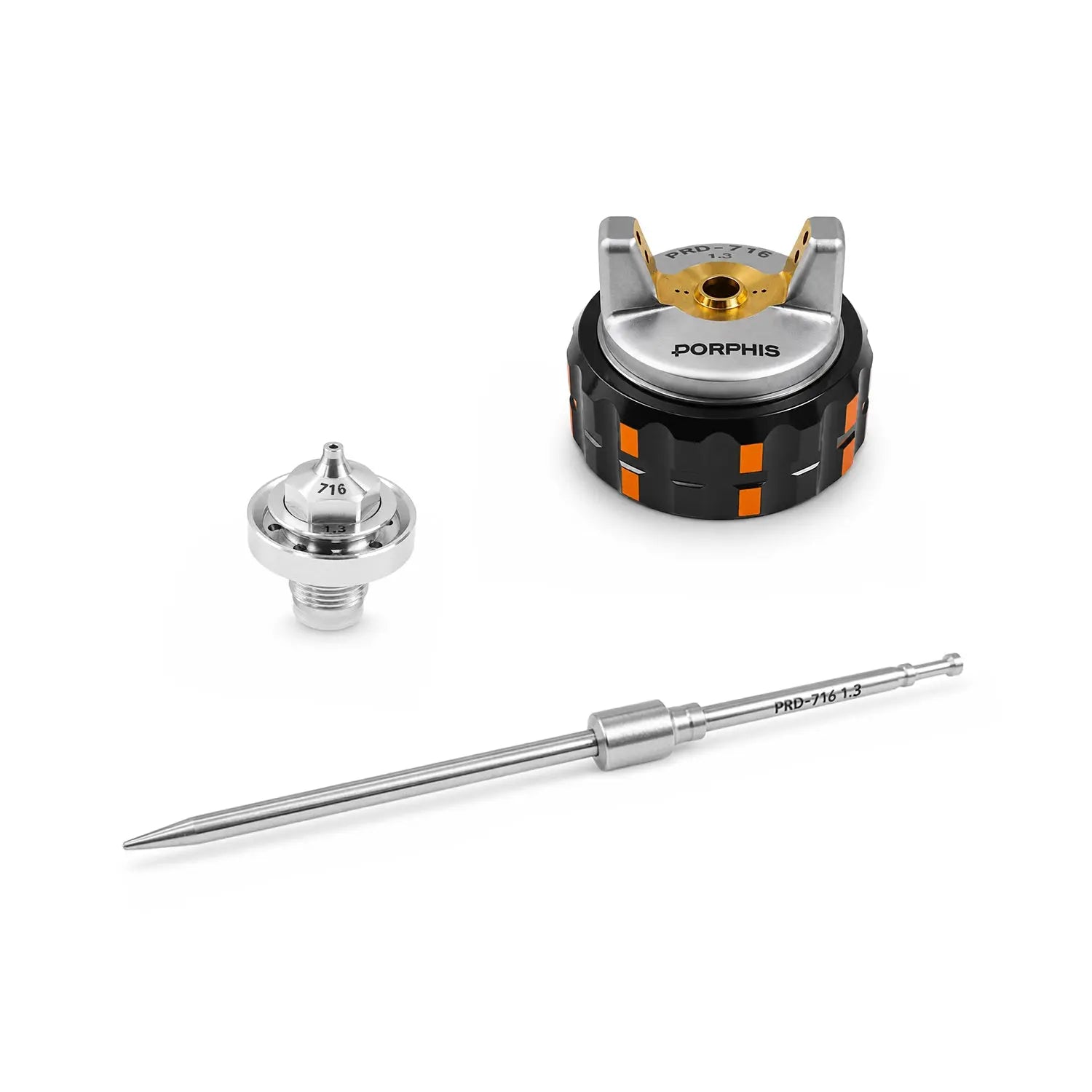
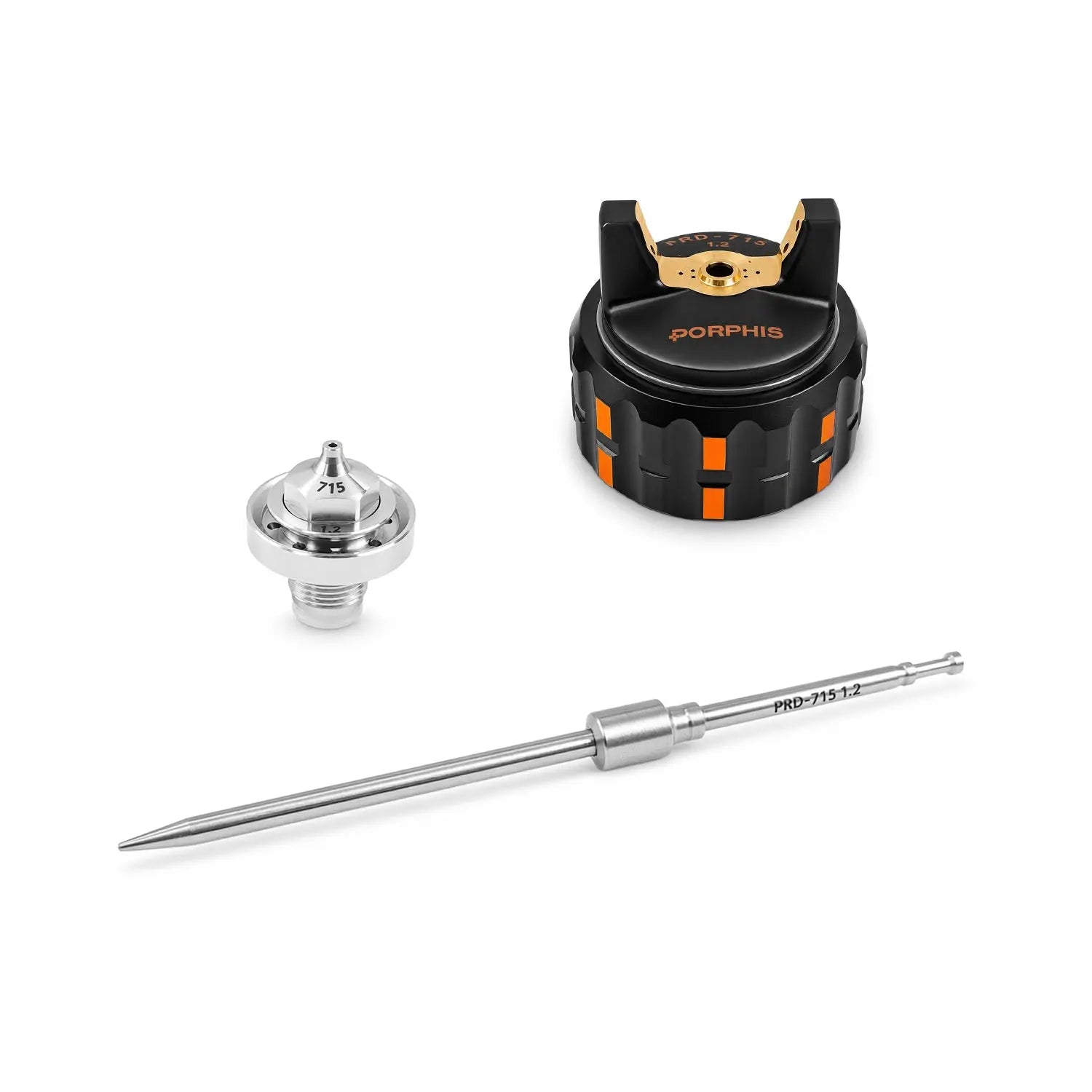
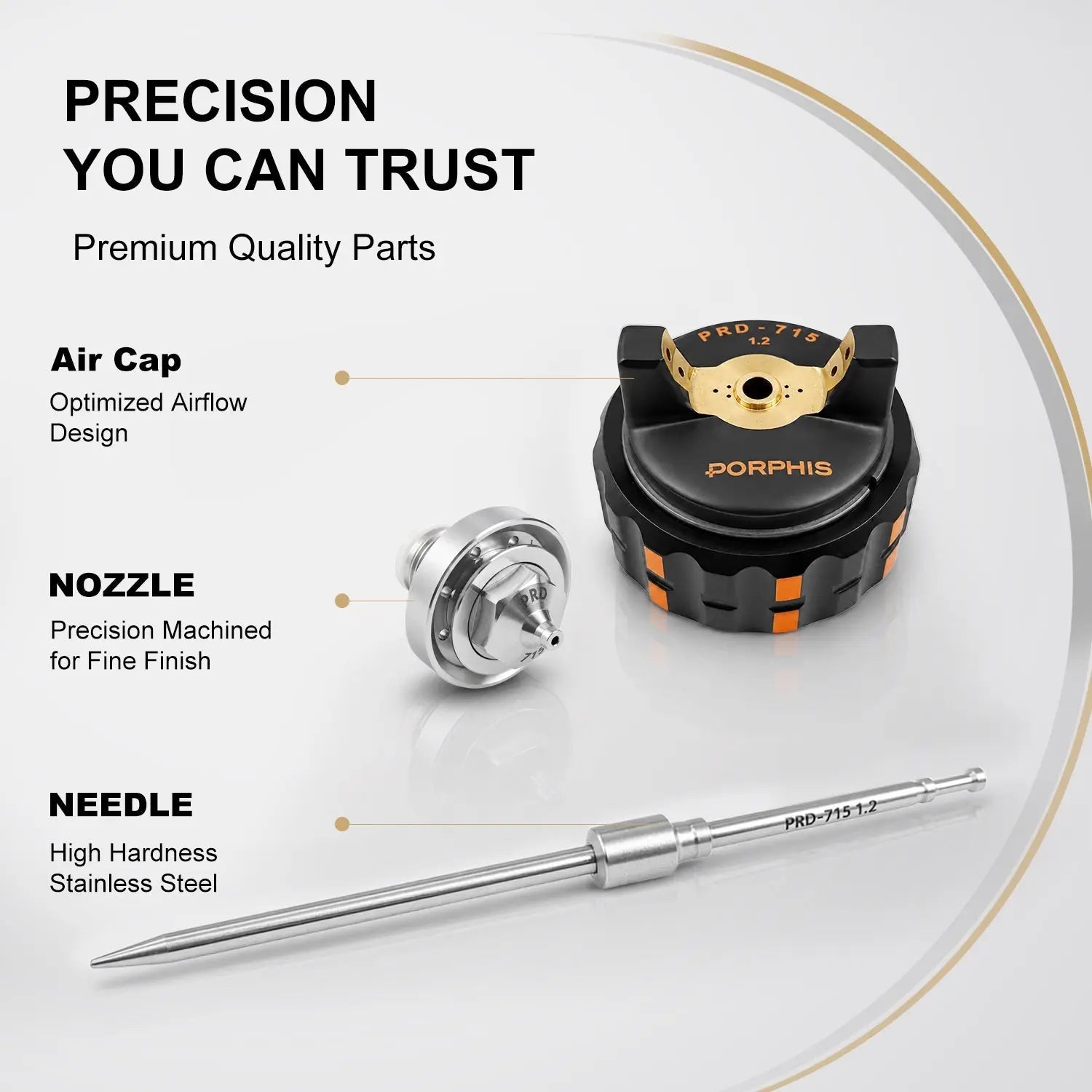
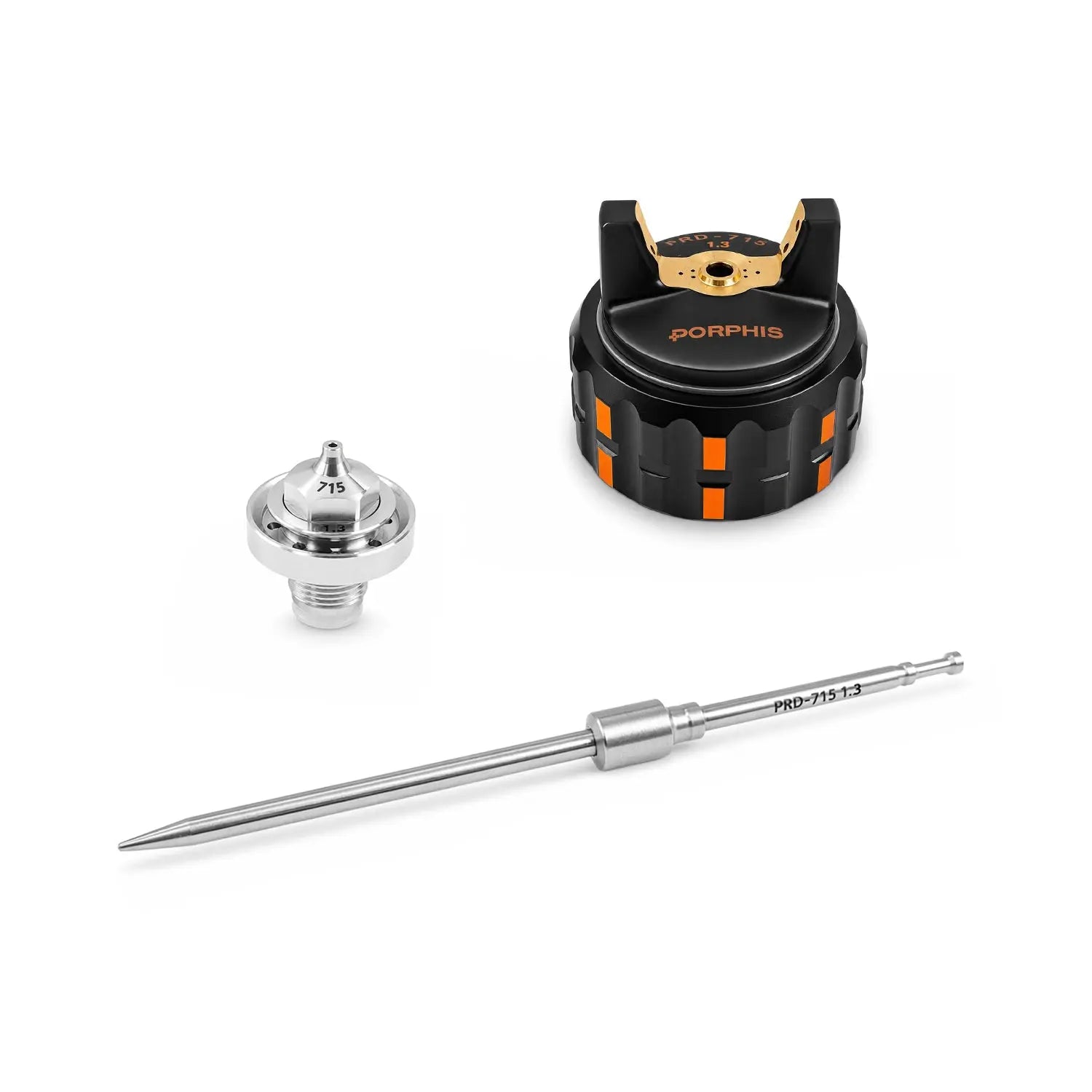
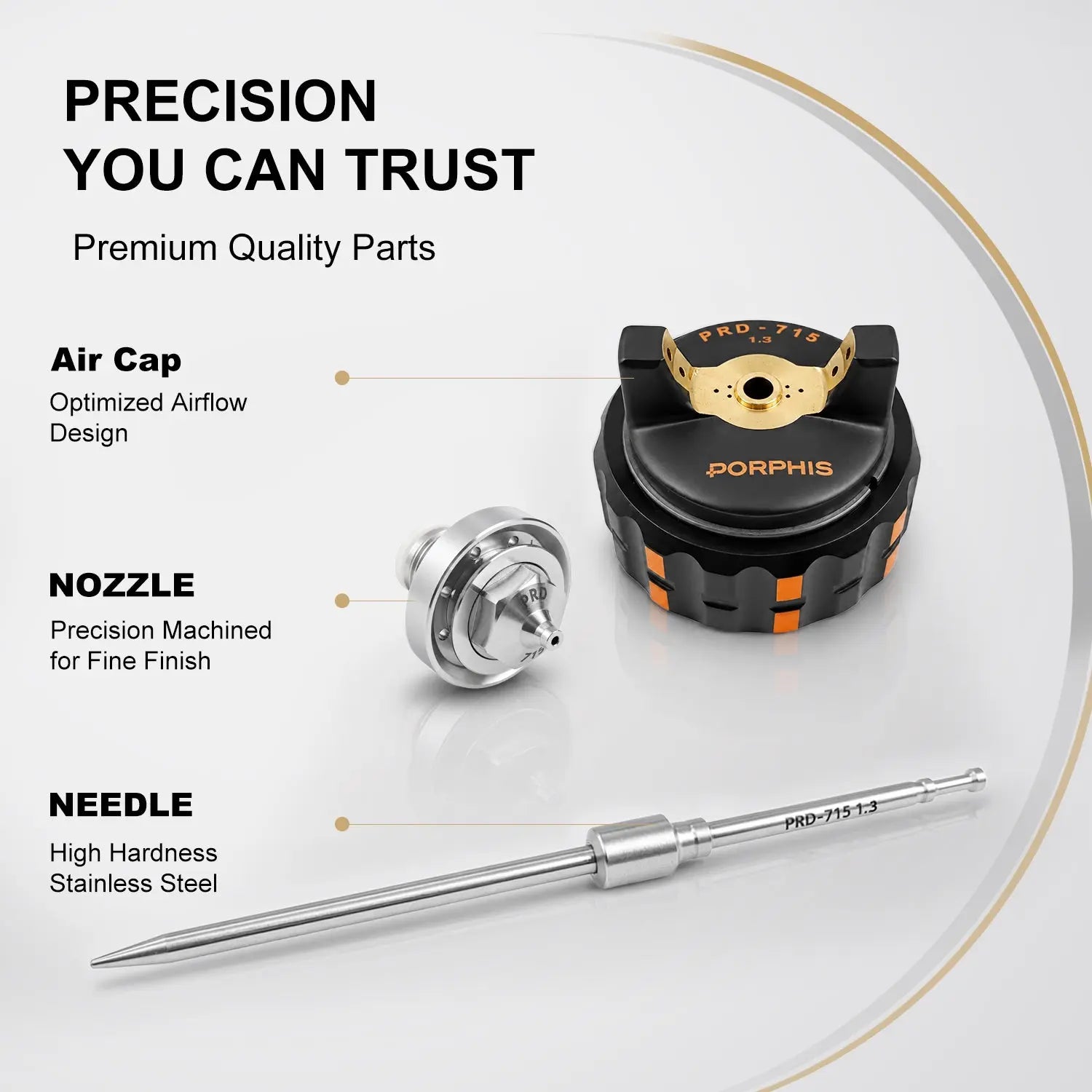
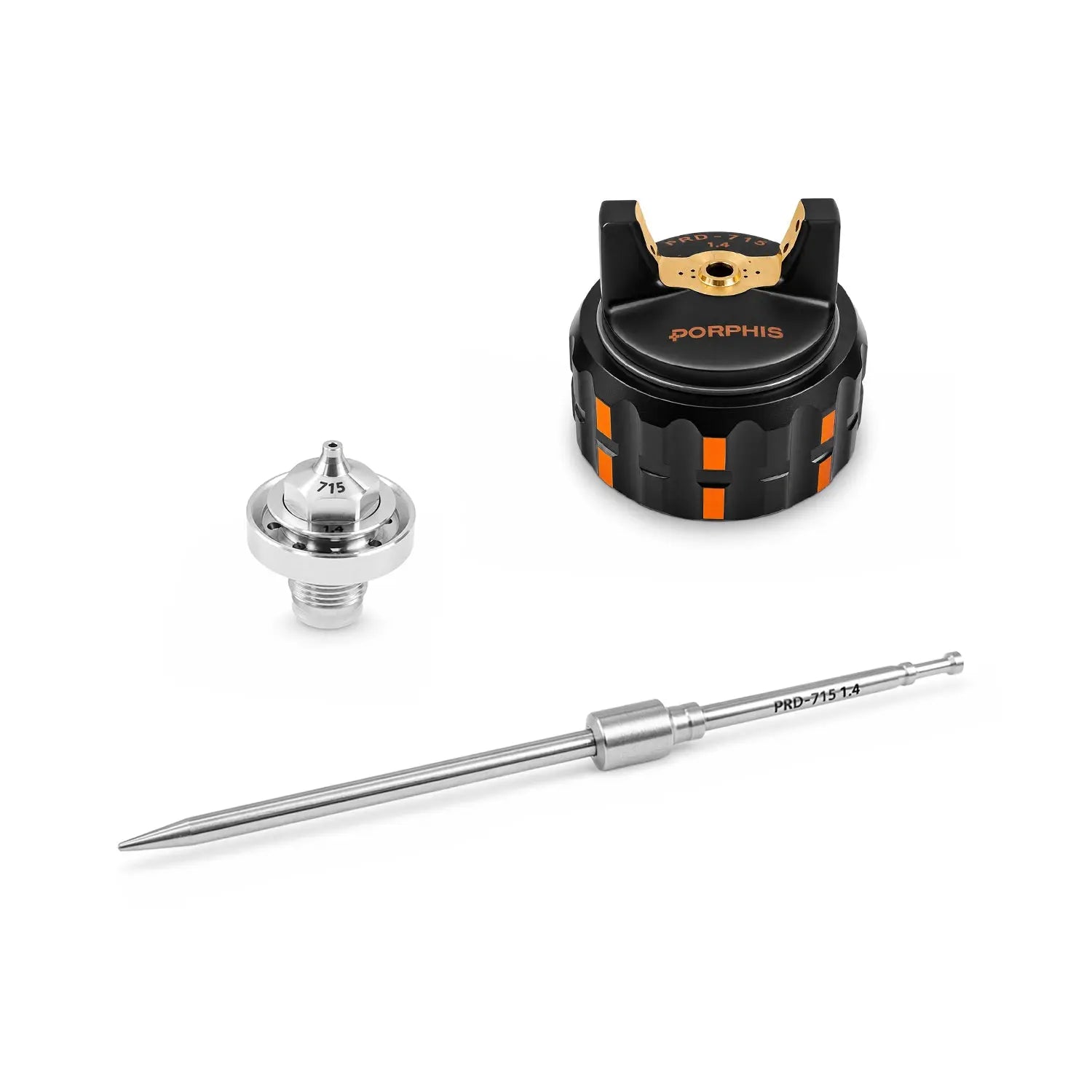
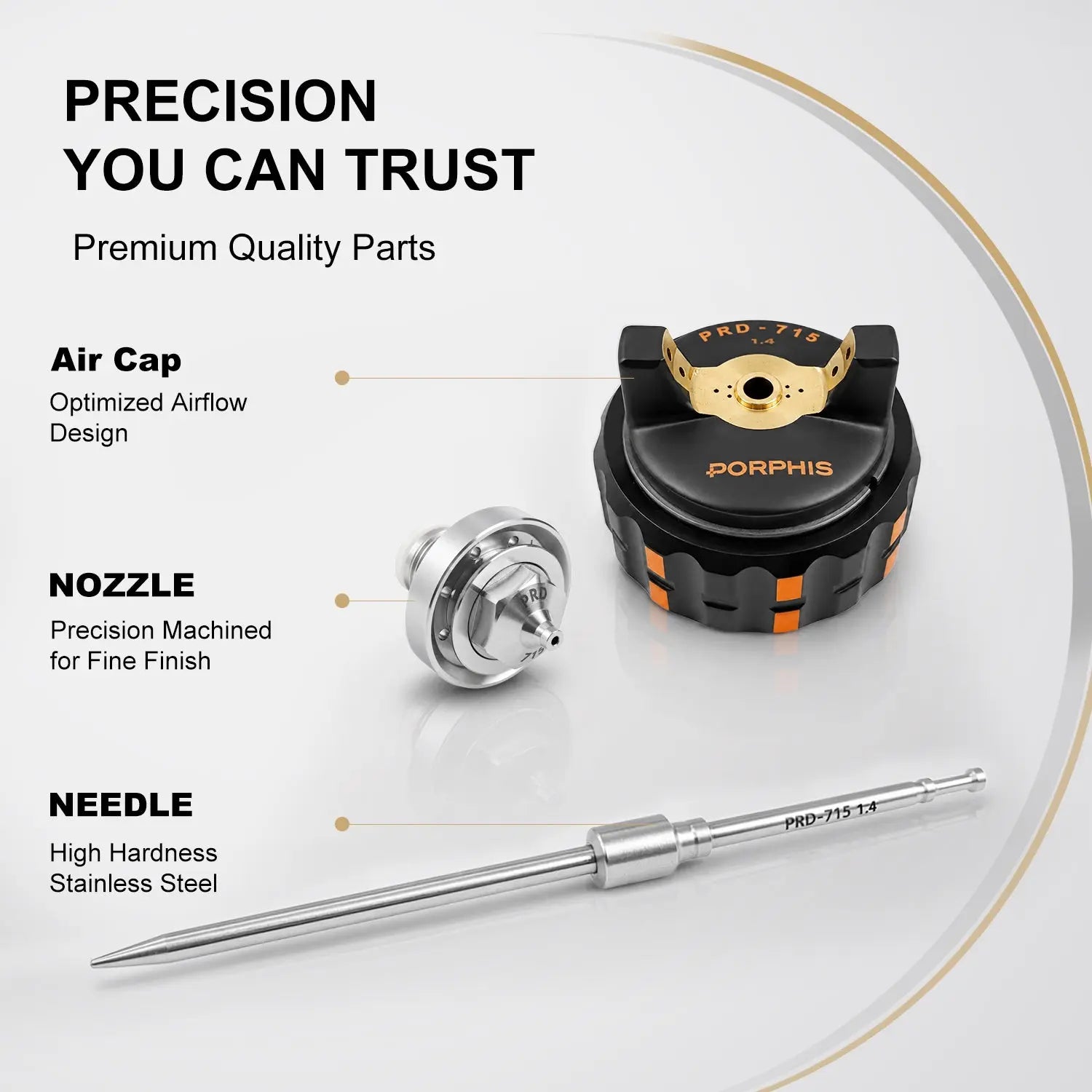
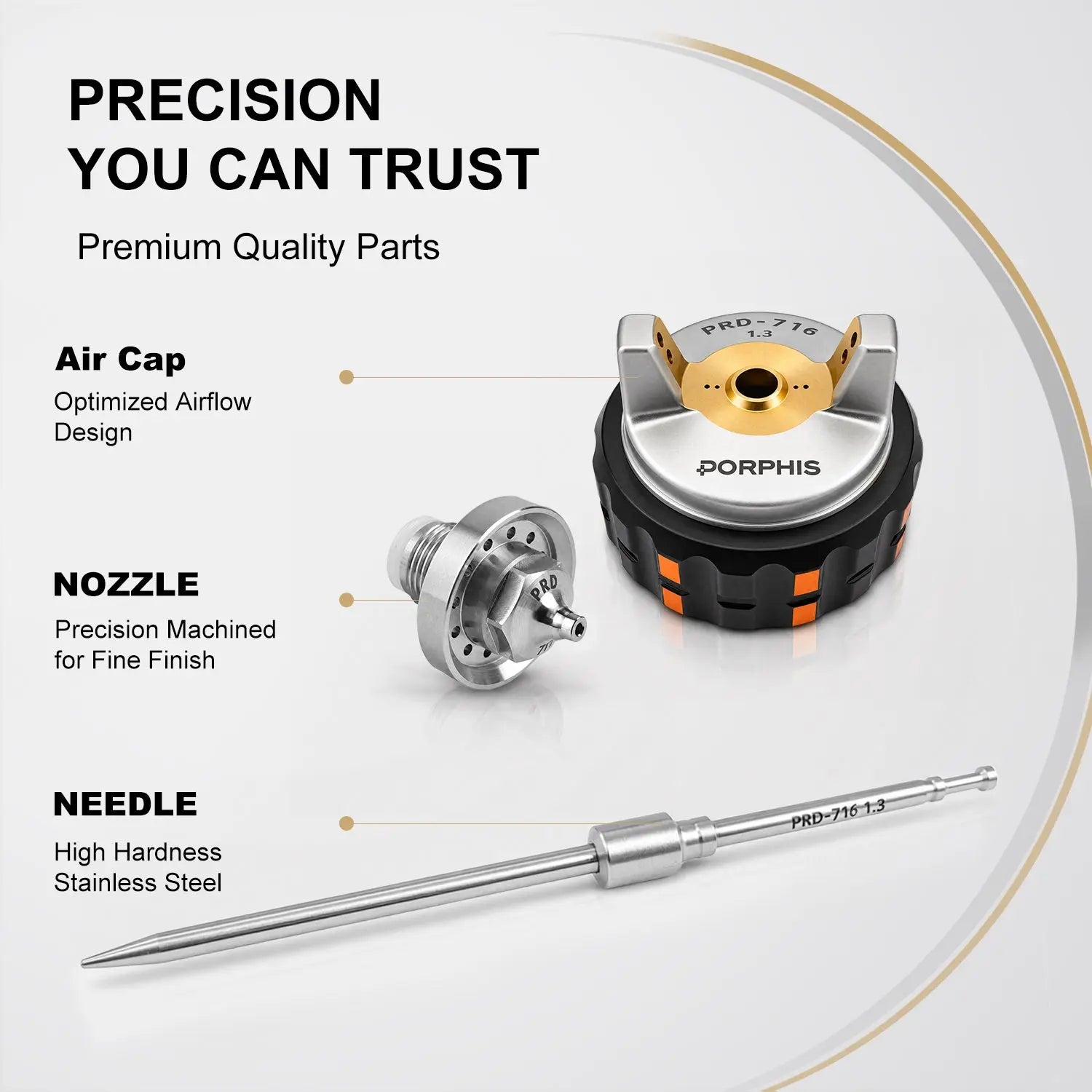
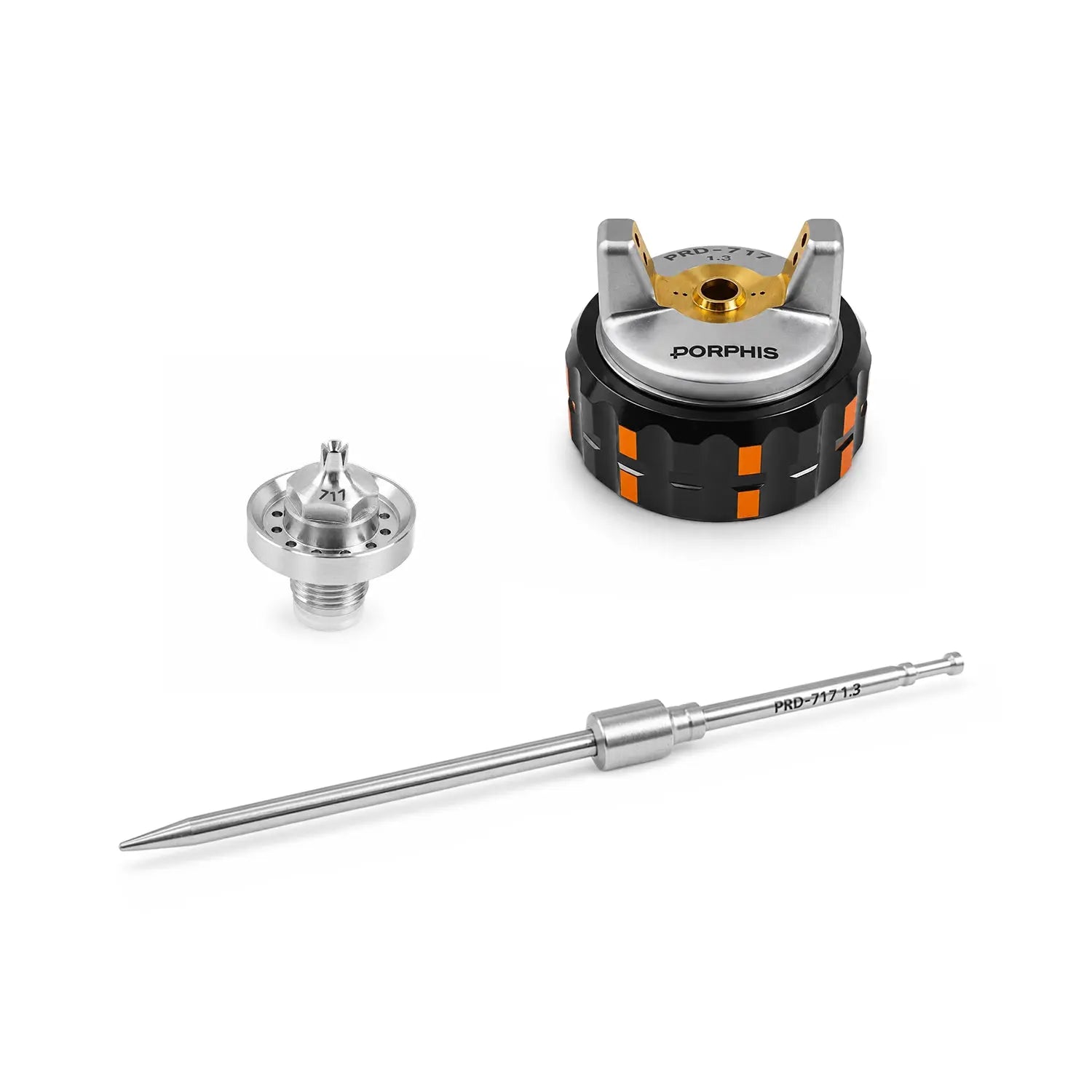
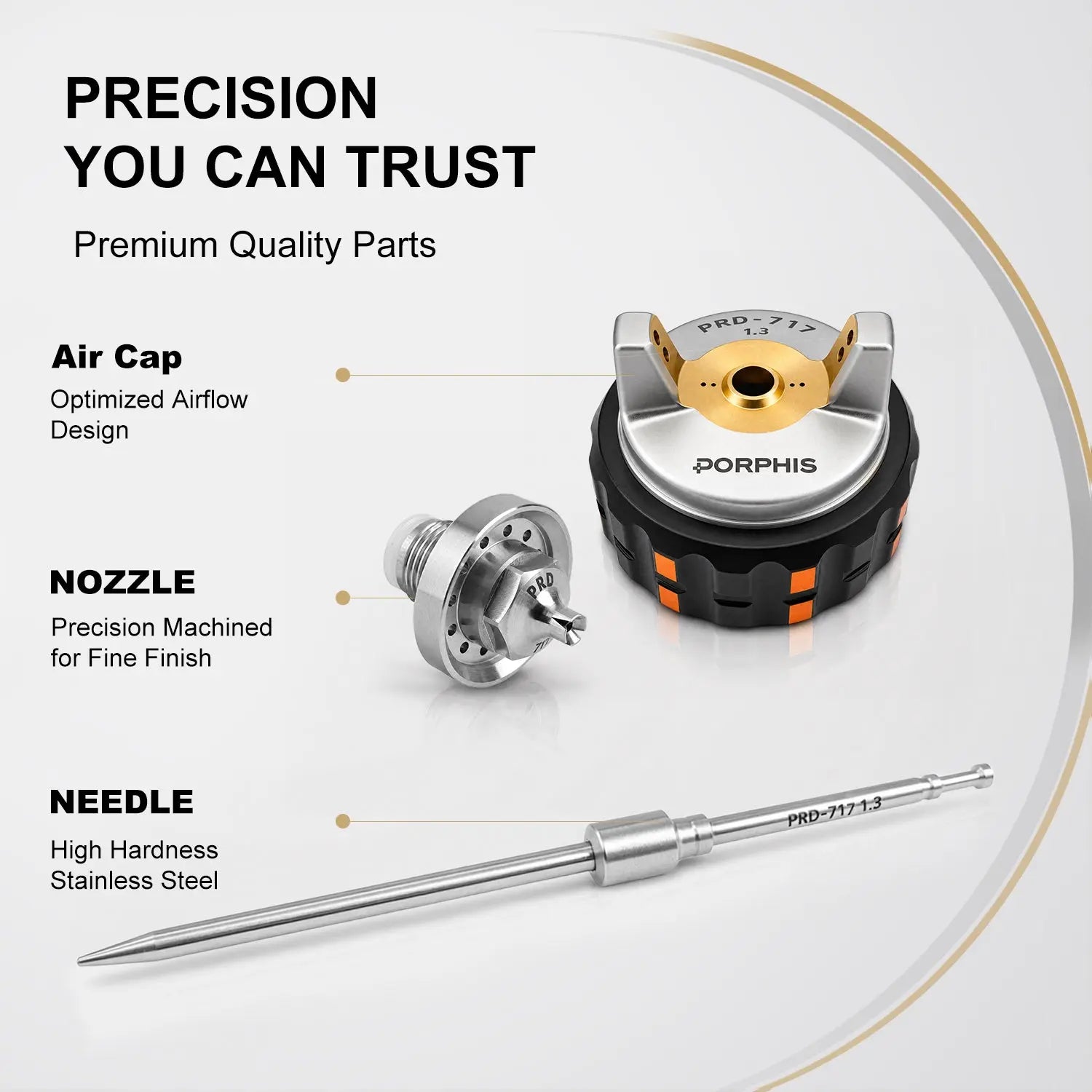
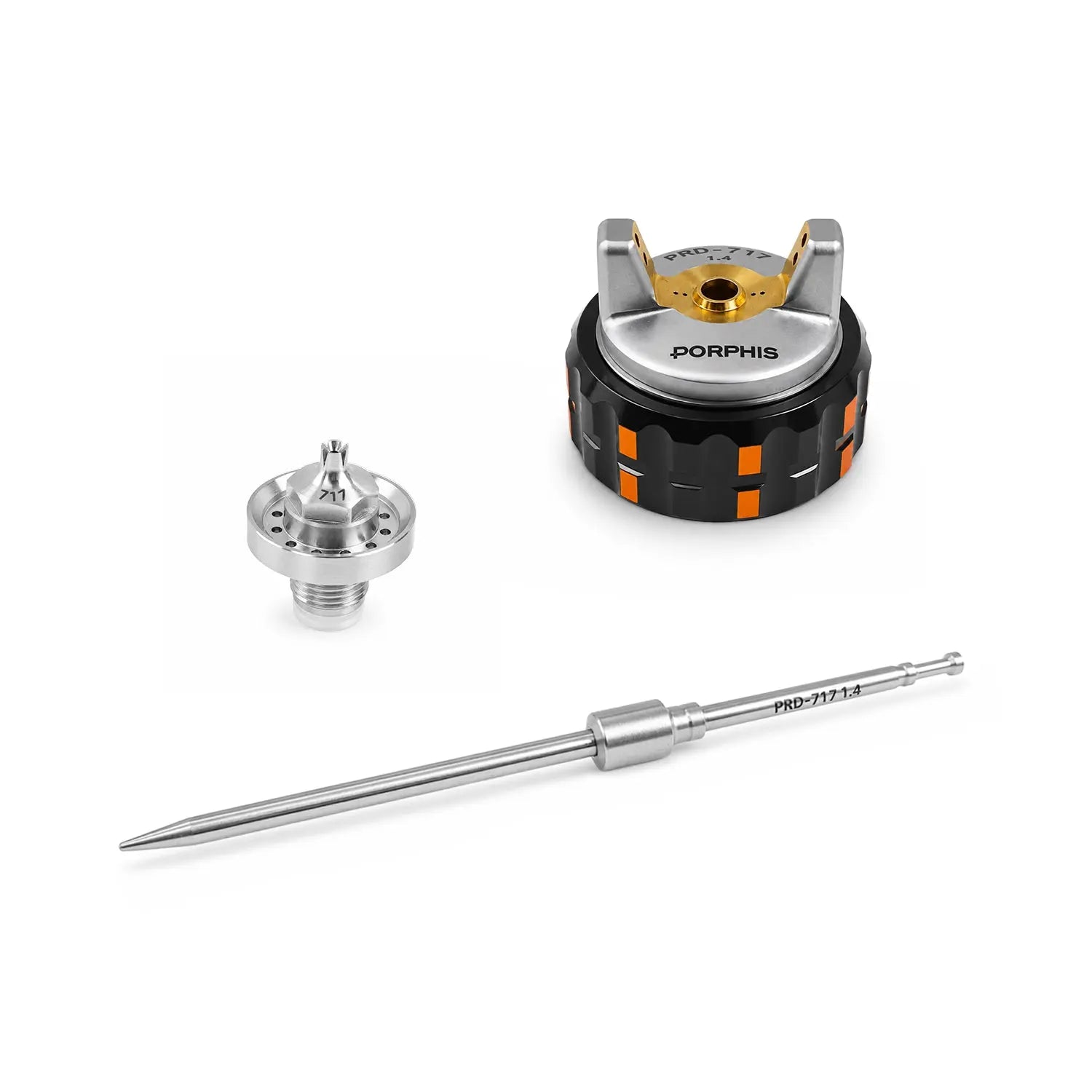
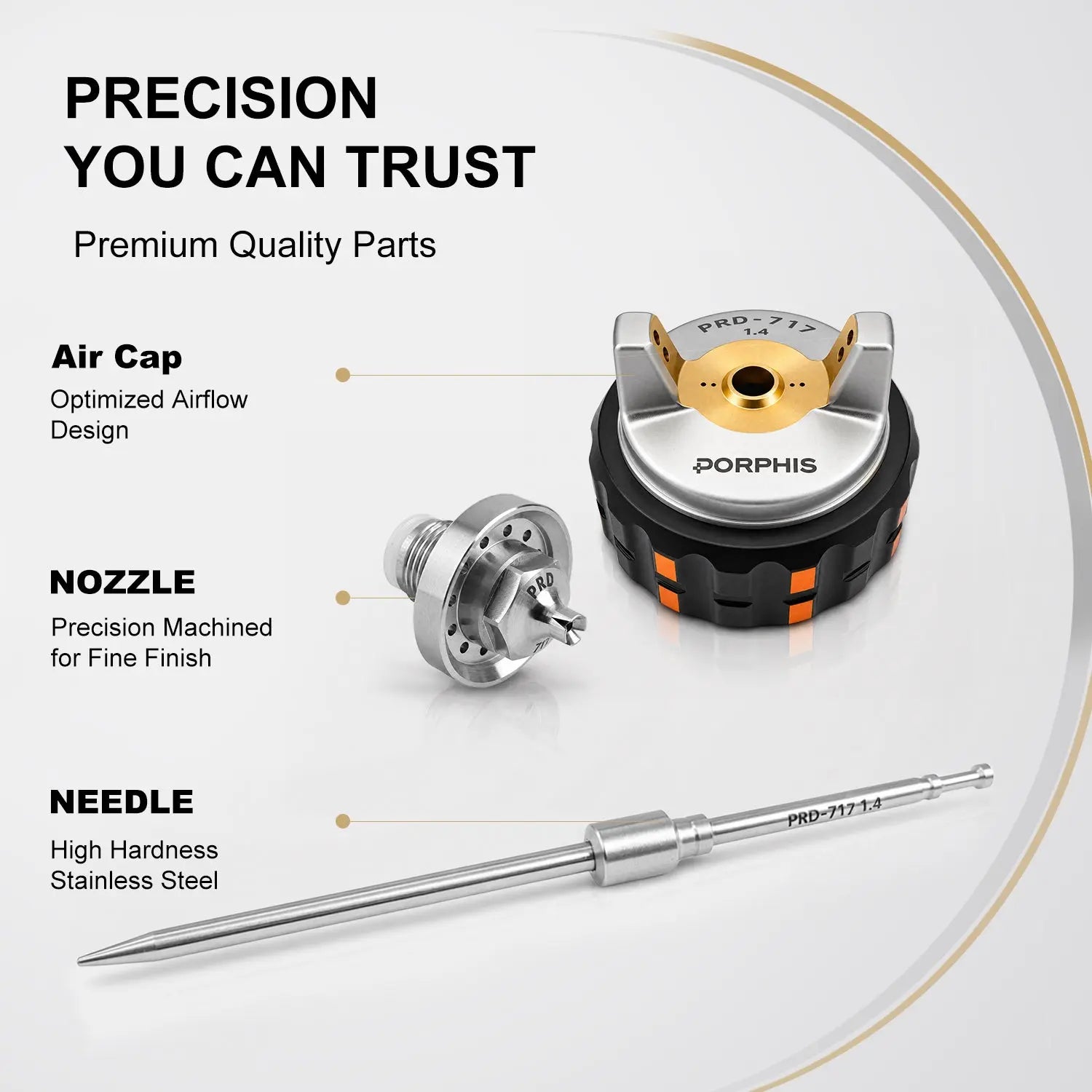
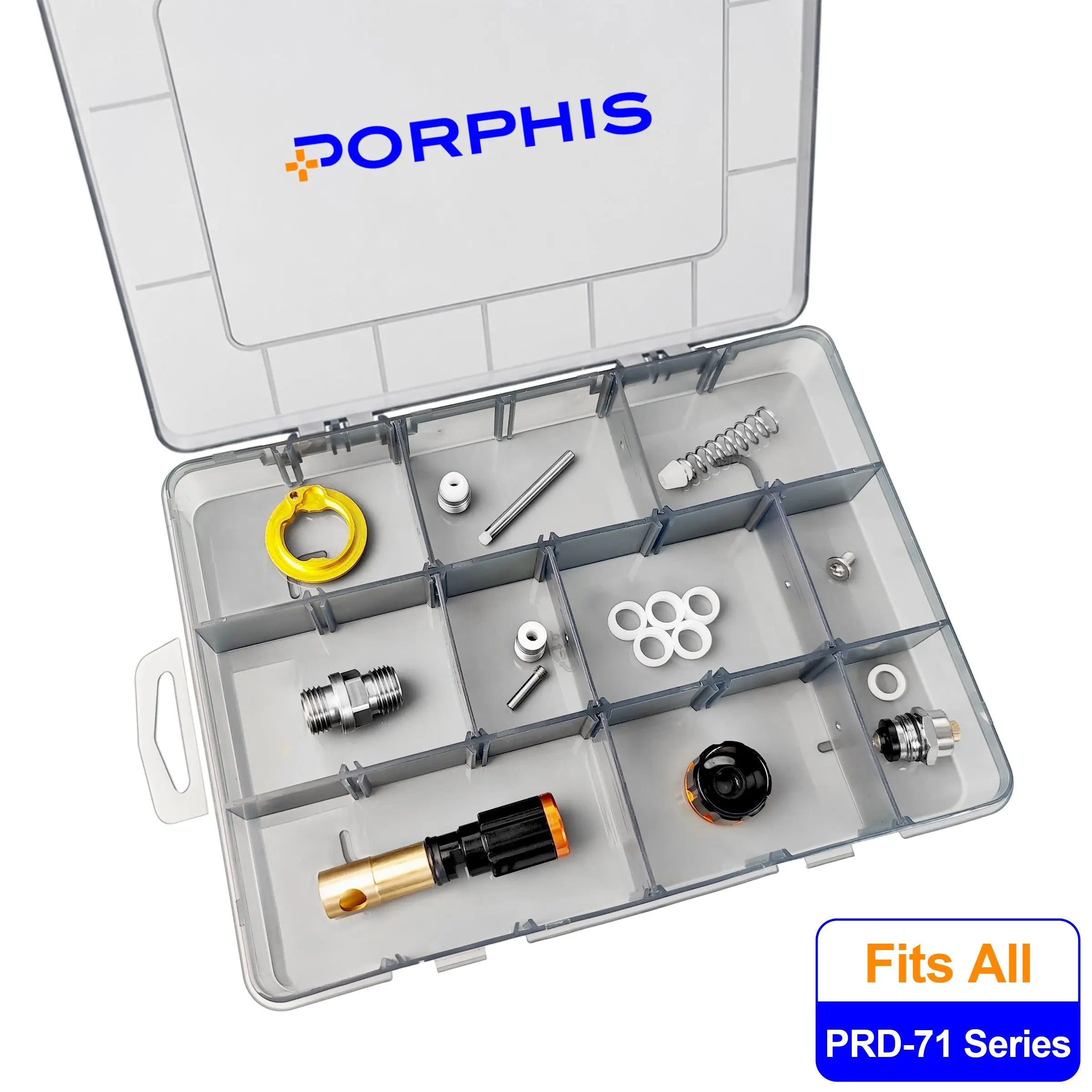
PRD-71 Series Nozzle Needle Cap Kit
Change Your Nozzle. Change Your Material. One Gun. Every Job.
PRD-71 Series Nozzle Needle Cap Kit
More Accessories
FAQs - Nozzle Needle Cap Kit
Q1: How do I know which nozzle size to switch to for my next job?
A: Nozzle size selection follows material viscosity:
1.0mm — Touch-up and spot repair. Fine detail work, very thin materials only.
1.3mm — Clear coat, waterborne base coat, thin lacquers. The most versatile size for finish work.
1.8mm — Standard primers, sealers, base coats at normal thinning ratios. The workhorse size for most production spraying.
2.0mm — Higher-viscosity primers and sealers requiring less thinning.
2.5mm — High-build polyurethane primers, thick fillers, high-solid materials.
When in doubt: if the material flows like water, go smaller. If it flows like honey, go larger.
Q2: Will changing nozzle sizes affect my air pressure and fluid control settings?
A: Yes — when you change nozzle size, reset both settings before spraying on your actual workpiece. Larger nozzles pass more material and require slightly higher air pressure to maintain atomization quality. As a starting point: increase inlet pressure by 0.2 bar per nozzle size step up (e.g. if you ran 1.8 bar for 1.3mm, start at 2.0 bar for 1.8mm). Adjust fluid control back by a quarter turn to avoid flooding the larger passage initially. Always do a test pass on a card or scrap panel after any nozzle change — do not go straight to the job.
Q3: How do I know when my nozzle tip needs replacing rather than just cleaning?
A: Three signs your nozzle tip has worn beyond cleaning:
Asymmetric fan pattern — one side heavier than the other, doesn't correct with air cap rotation
Spitting at low fluid settings — atomization breaks down before the fluid control is fully closed
Visible wear at the fluid exit point — the nozzle orifice should be a perfect circle; any elongation or chipping means it's time to replace
A worn nozzle tip cannot be corrected by cleaning. The dimensional change at the fluid exit is what causes the pattern problem, and no amount of solvent restores the original geometry.
Q4: Is the needle included in the nozzle kit, or do I need to order it separately?
A: Porphis nozzle kits include the matched needle and nozzle tip as a set — they are factory-paired for dimensional compatibility. Mixing needles and nozzles from different kits or different manufacturers is one of the most common causes of fluid tip leaking and pattern inconsistency. Always replace needle and nozzle together. If you're sourcing replacement parts individually, confirm the needle diameter matches the nozzle size precisely — even a 0.02mm mismatch at the tip creates a leak path.
Q5: Can I use Porphis nozzle kits on non-Porphis spray guns?
A: Porphis nozzle kits are dimensioned and threaded for Porphis spray gun model series. Thread pitch and body diameter vary between manufacturers — a Porphis nozzle tip may physically fit the thread of another brand's gun but will not seat correctly at the air cap, creating air leaks and pattern distortion. We strongly recommend using manufacturer-matched nozzle kits for any spray gun. For non-Porphis guns, consult that manufacturer's parts compatibility list.