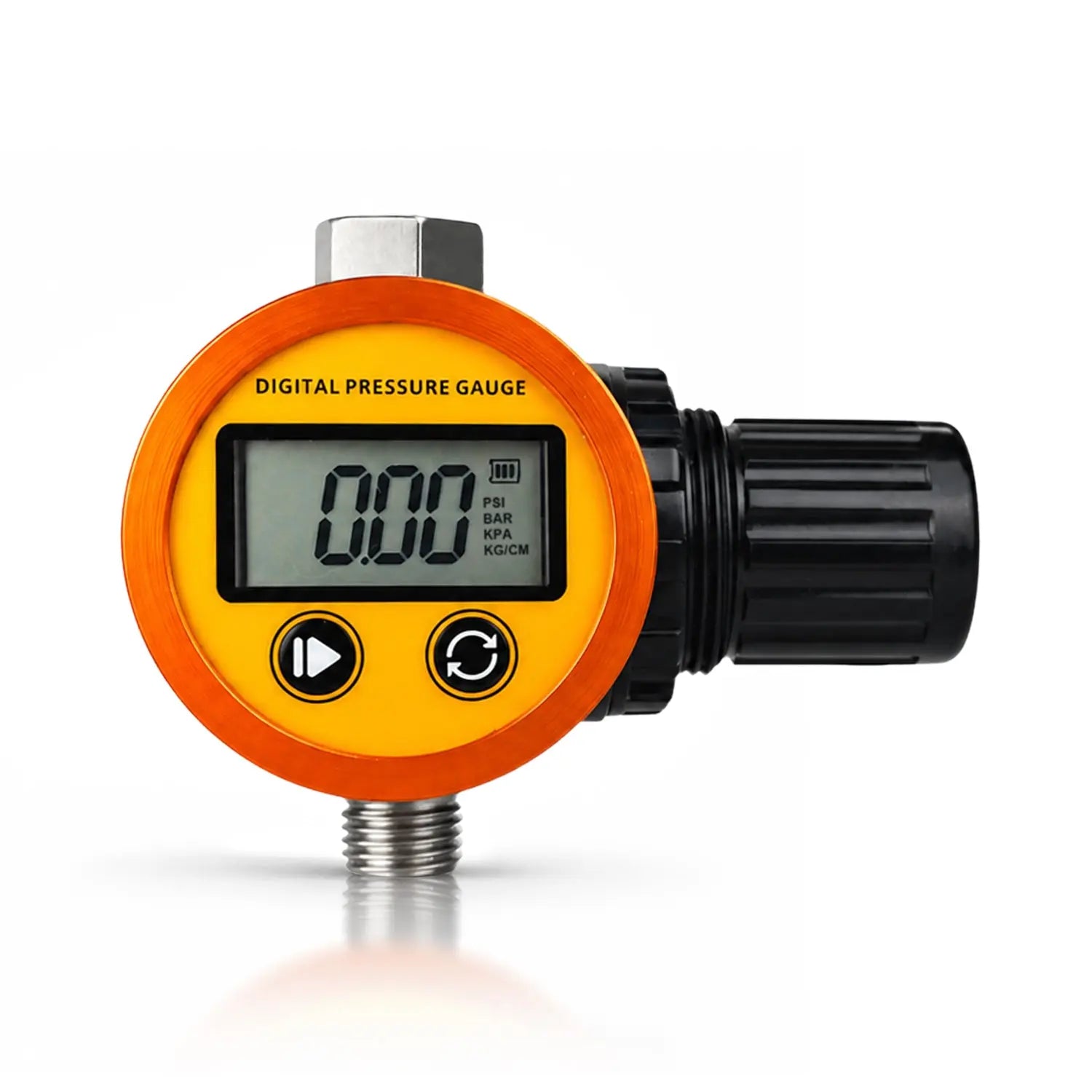
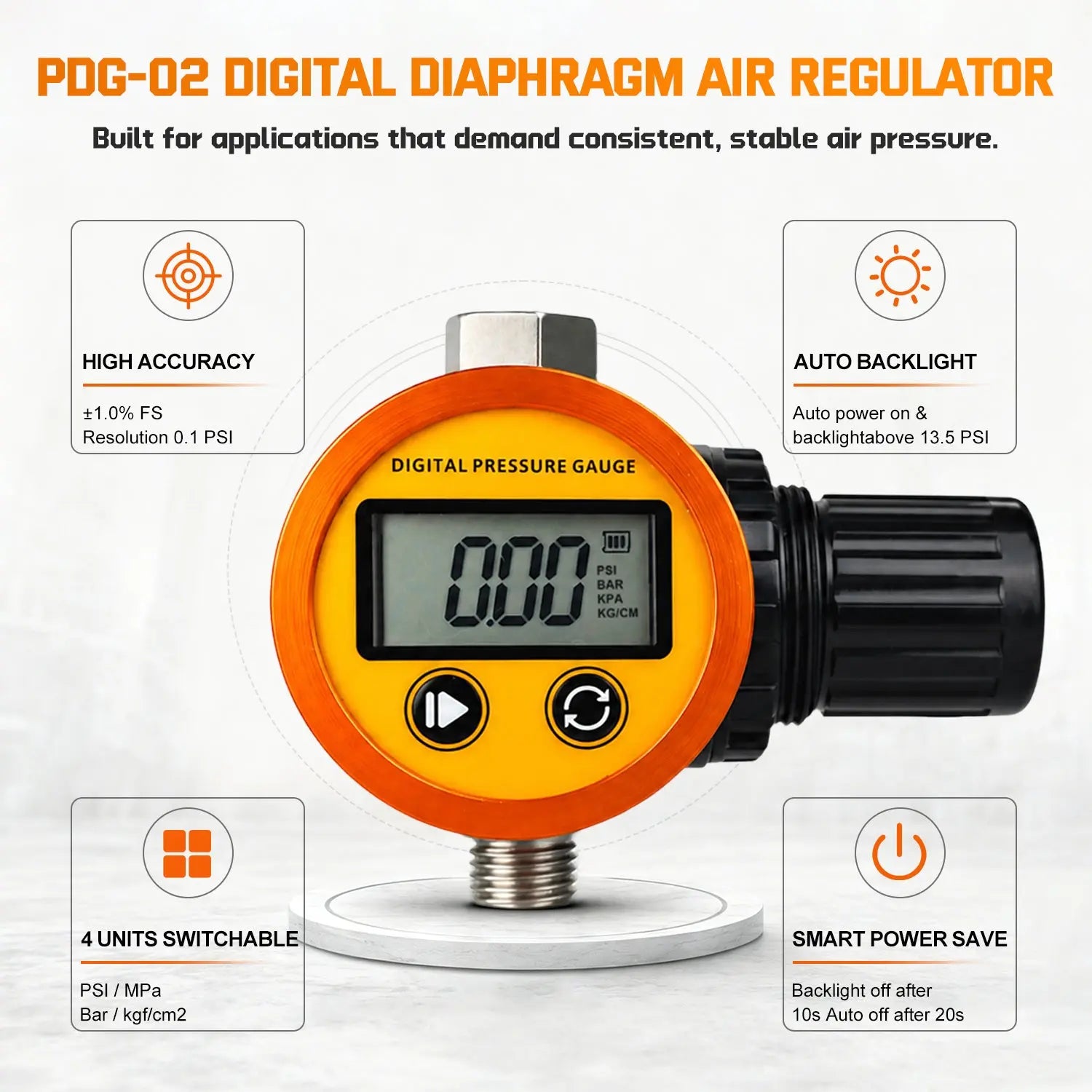
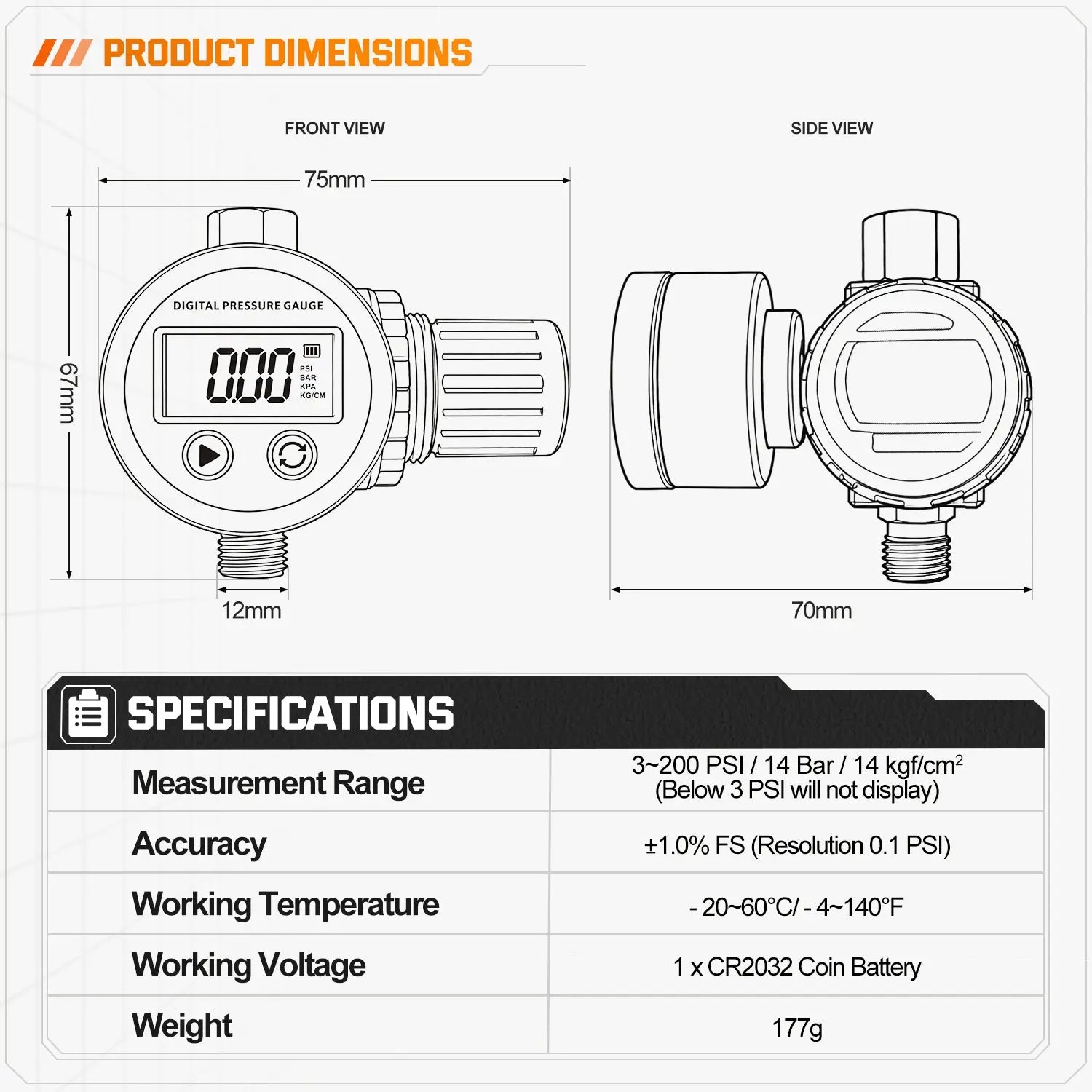
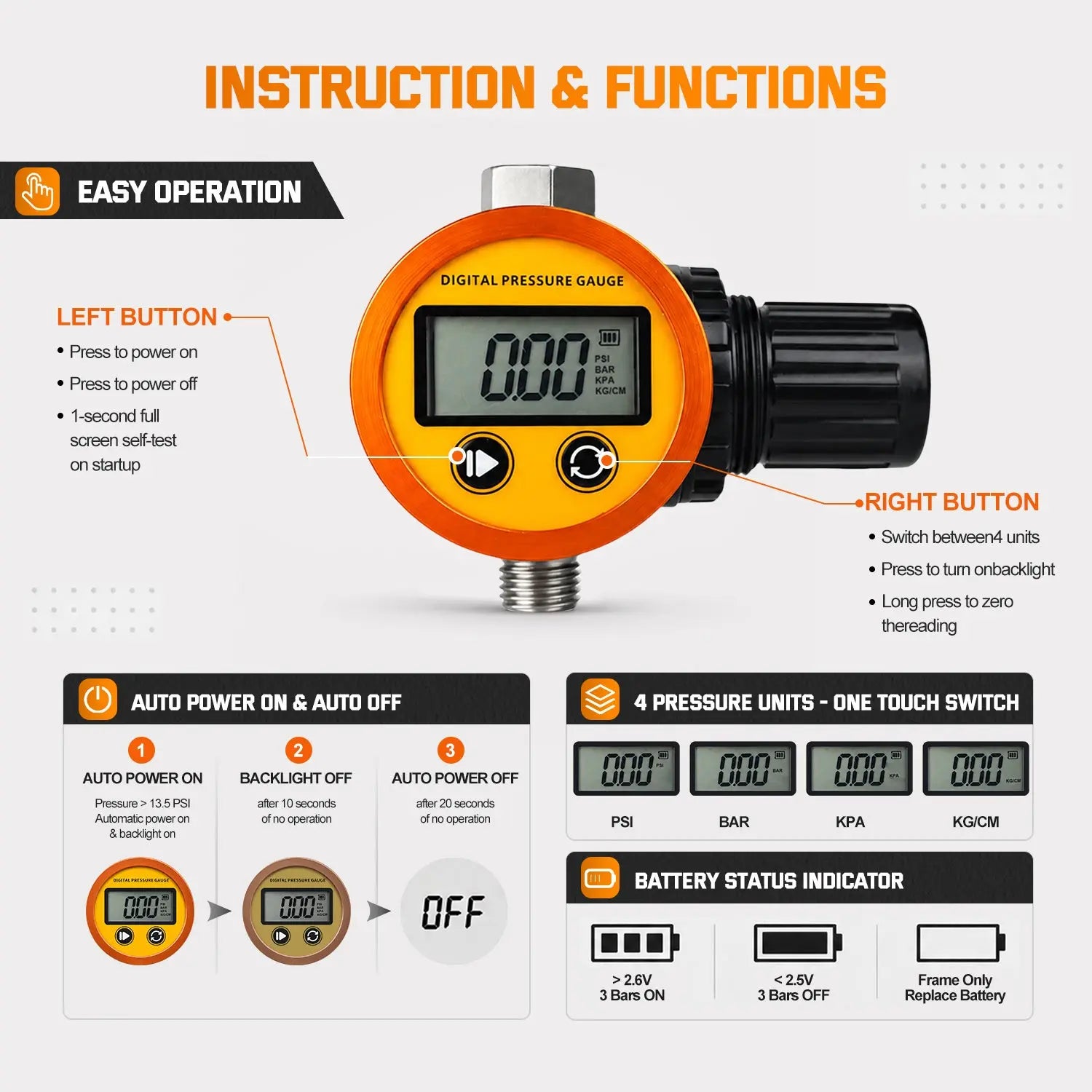
PORPHIS PDG-02 Digital Diaphragm Air Regulator
Now Featuring an Upgraded Solvent-Resistant Display Lens
PORPHIS PDG-02 Digital Diaphragm Air Regulator
Upgraded Solvent-Resistant Display Lens
The display lens has been upgraded for improved resistance to common automotive refinishing solvents, helping reduce clouding and surface damage during normal workshop cleaning and use.
For best results, avoid prolonged soaking and wipe the display promptly after solvent exposure.
Complete Your Master Setup
FAQs
Q1: What is the difference between a digital diaphragm regulator and a standard piston regulator?
A: A digital diaphragm regulator uses a flexible diaphragm to sense outlet pressure, providing higher sensitivity, zero leakage (no dynamic seals), and precise electronic control. It is ideal for applications requiring stable, ripplefree pressure, such as laboratory equipment or precision spray systems.
Q2:How do I set the desired outlet pressure?
A: Use the digital keypad to enter the target pressure (in PSI, bar, or kPa). A closedloop electronic controller then drives an internal pilot valve to adjust the diaphragm position, achieving and maintaining the set pressure with ±0.5% fullscale accuracy.
Q3: Does the regulator vent excess downstream pressure?
A: Yes, it has an integrated relief function. If downstream pressure exceeds the set point (e.g., due to temperature rise or back pressure), the diaphragm moves to open an internal relief port, venting the excess pressure to atmosphere.
Q4: Can it handle corrosive gases or aggressive media?
A: The standard version uses nitrile (NBR) diaphragm and aluminum body, suitable for clean air and inert gases. For corrosive media (e.g., CO₂, natural gas, or chemical vapors), a special version with PTFE diaphragm and stainless steel body is available. Please contact sales.
Q5: What is the required power supply and power consumption?
A: It operates on 24V DC (±10%) and consumes less than 3W in steady state. A power adapter is included with the product. During fast pressure changes, peak power may reach 56W momentarily.
Q6: How does the digital diaphragm regulator respond to fast demand changes (e.g., intermittent tool use)?
A: The electronic PID controller responds in less than 100 milliseconds. For highly intermittent applications, enabling the “fast mode” parameter reduces settling time to 30 ms, though with a slight increase in overshoot.
Q7: Does the regulator have an integrated digital pressure gauge?
A: Yes, it features a builtin highaccuracy pressure sensor and a backlit LCD display showing both set pressure and actual outlet pressure simultaneously. The display can show pressure in PSI, bar, or kPa.
Q8: What maintenance is required for the diaphragm regulator?
A: The diaphragm itself is maintenancefree for over 2 million cycles under clean air. Periodic checks (every 6 months) for dust accumulation on the vent port and electrical connections are recommended. No lubrication or seal replacement is needed under normal conditions.
Q9: Can I cascade two regulators for higher flow or twostage precision?
A: For twostage pressure reduction (e.g., 150 PSI → 60 PSI → 20 PSI), you can connect two units in series. The digital output of the first unit can be used as a setpoint signal for the second unit via analog output/input, creating a fully electronic cascade.
Q10: What should I do if the pressure reading on the display does not match a downstream mechanical gauge?
A: First, ensure the mechanical gauge is calibrated. Then perform a zeropressure calibration on the digital regulator (accessible via the menu). If the mismatch exceeds ±1% of full scale, contact support for remote recalibration instructions – field calibration is possible without returning the unit.
Q11: What should I do if the pressure reading on the display does not match a downstream mechanical gauge?
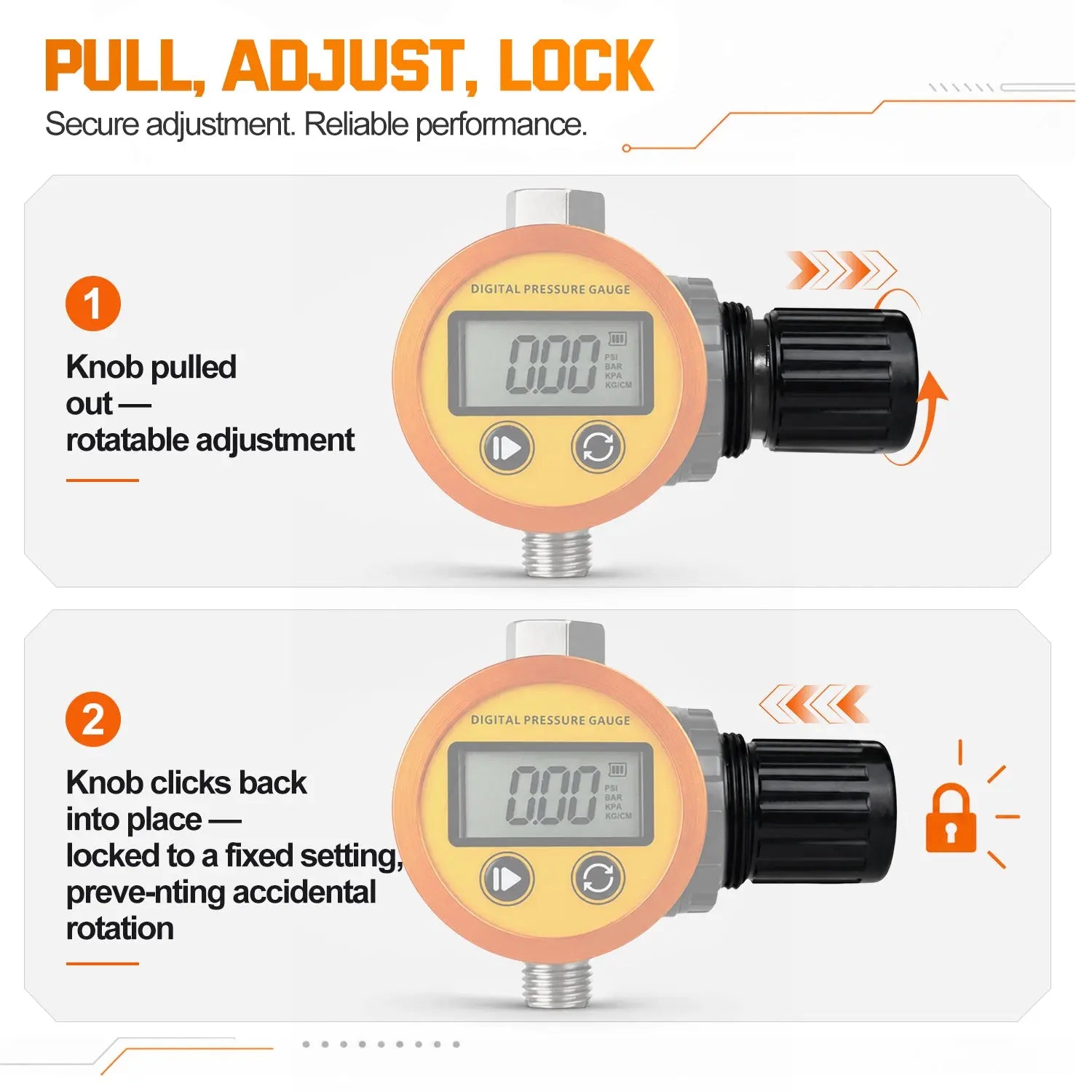
A: This can occur due to sensor offset or temperature drift. To manually zero the display, press and hold the right button for 5 seconds. The display will reset to zero. The regulator will then use this new zero reference for pressure measurement. Always perform this zeroing procedure with no air pressure applied to the inlet.
He comprado y usado el. Regulador de diafragma y funciona perfecto con mi porphis 338 a 1,5 bar manteniendo la presión pero tengo un problema cuando lo uso con mi Porphis 717 a 1,8 bares, no me mantiene la presión constante a 1,8 y creo que es debido a que mi compresor es de 50 litros y 4 hp, por lo tanto la 717 gasta mucho aire, hay que tener un compresor bastante potente y mínimo 100 litros, creo que voy a intentar comprar la porphis 815 con boquilla de 1,2 para ver si consigo mantener una presión constante para el Clear.
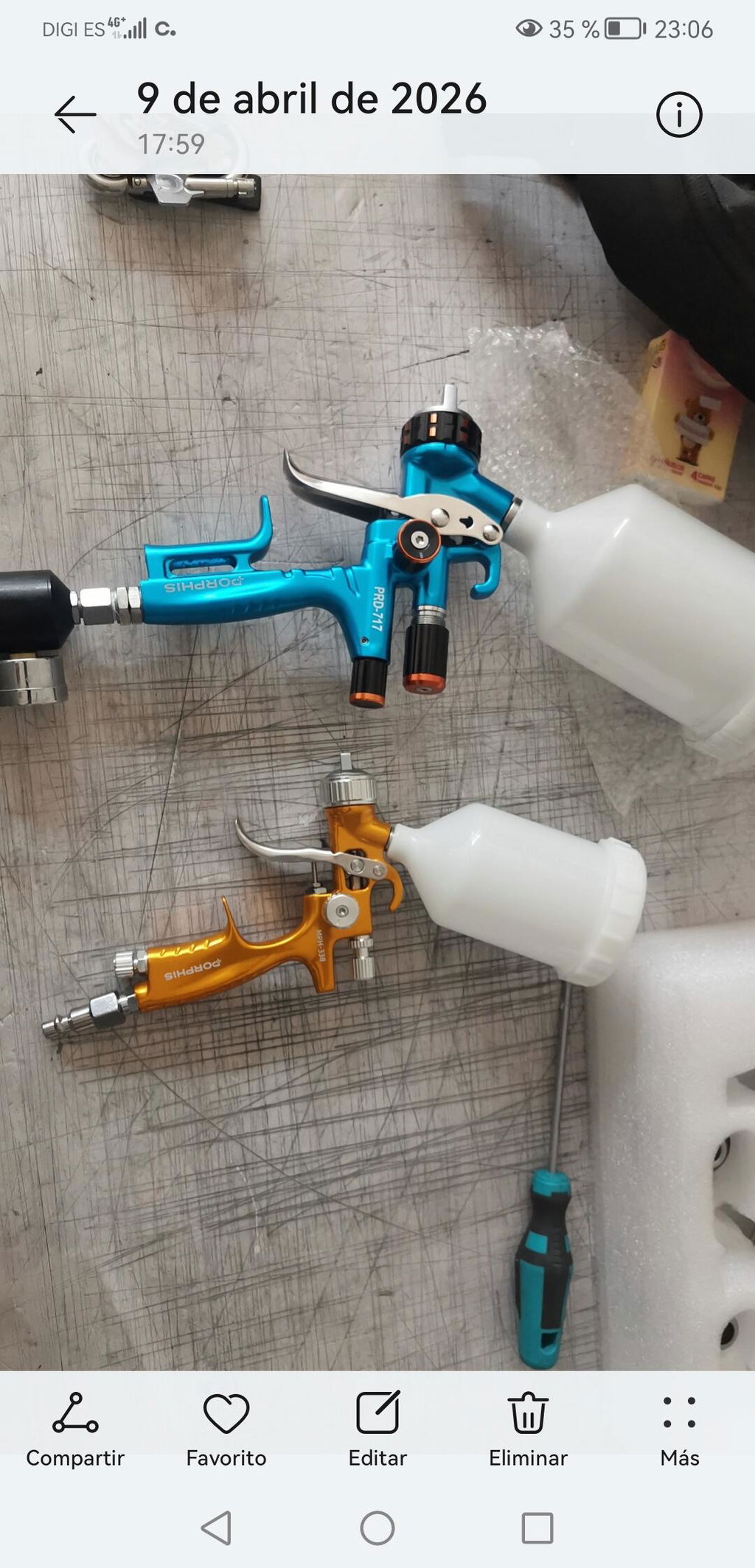
Thank you, David, for the detailed feedback and for sharing your real-world experience! We’re glad the PDG-02 works perfectly with your PRD-338. As you noticed, maintaining stable pressure can depend on the spray gun’s air consumption and the compressor’s air supply. We hope the PRD-815 1.2mm works well for your clear coat, and we’d love to hear your results!
Seems very quality but would be nice to have a smaller adjustment knob like the V1 had.
Other then that I like it and the display I can see better then the analogs .
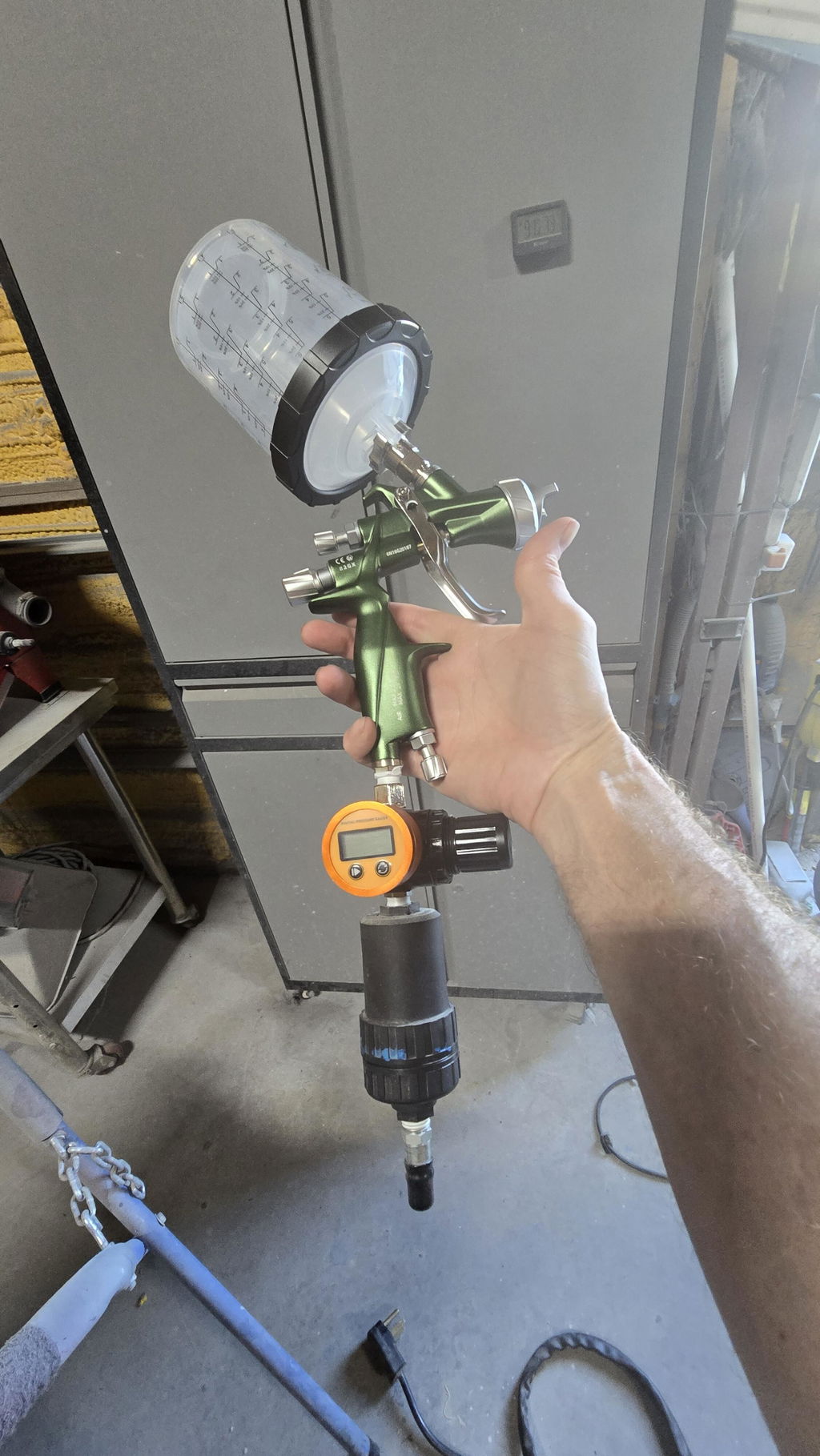
Thank you for the great feedback! We’re glad you like the quality and find the digital display easier to read than analog gauges. We also appreciate your suggestion about a smaller adjustment knob and will share it with our team for future improvements!
Great addition to a great gun! Easy battery replacement.
Thank you, Robert! We’re glad the PDG-02 is a great addition to your spray gun setup and that battery replacement is easy. We appreciate your support!
Did a great job regulating the air pressure from my small compressor. The light/display shuts off quickly, which I wish it stayed on a little longer to make adjustments.
Thank you, Zachary! We’re glad the PDG-02 is helping you maintain consistent pressure with your small compressor. We also appreciate your feedback about the display timing and will share it with our team for future improvements!
I gave this only 4 stars, because it says in the manual the regulator is supposed to turn on when it senses air and my regulator doesn’t do that. With the regulator having an automatic screen off I find myself having to push the button every time I want to check my psi. Other than that it’s a fantastic regulator holds pressure spot on.
Thank you for the detailed feedback, Jerry! We’re glad the PDG-02 holds pressure accurately, and we’re sorry about the auto-on function not working as expected. We also appreciate your feedback on the automatic screen-off feature and will share both points with our team for improvement.
Used with a tiny compressor for priming using an lvlp (A610) and pressure stayed consistent. Game changer and this is a must have!
Thank you, Wally! We’re thrilled to hear the PDG-02 helped maintain consistent pressure with your small compressor and LVLP setup. We’re glad it’s been a game changer for you—thanks for the great recommendation!
The regulator is very accurate. I haven't received the up-graded display for it or my other manual regulator yet, hope they arrive soon.
Great products,
Thank You,
John Anderson
Thanks, John! Glad the PDG‑02 is accurate – that's what we aimed for! The upgraded display is on its way, should be with you soon. Appreciate your patience! 😊