
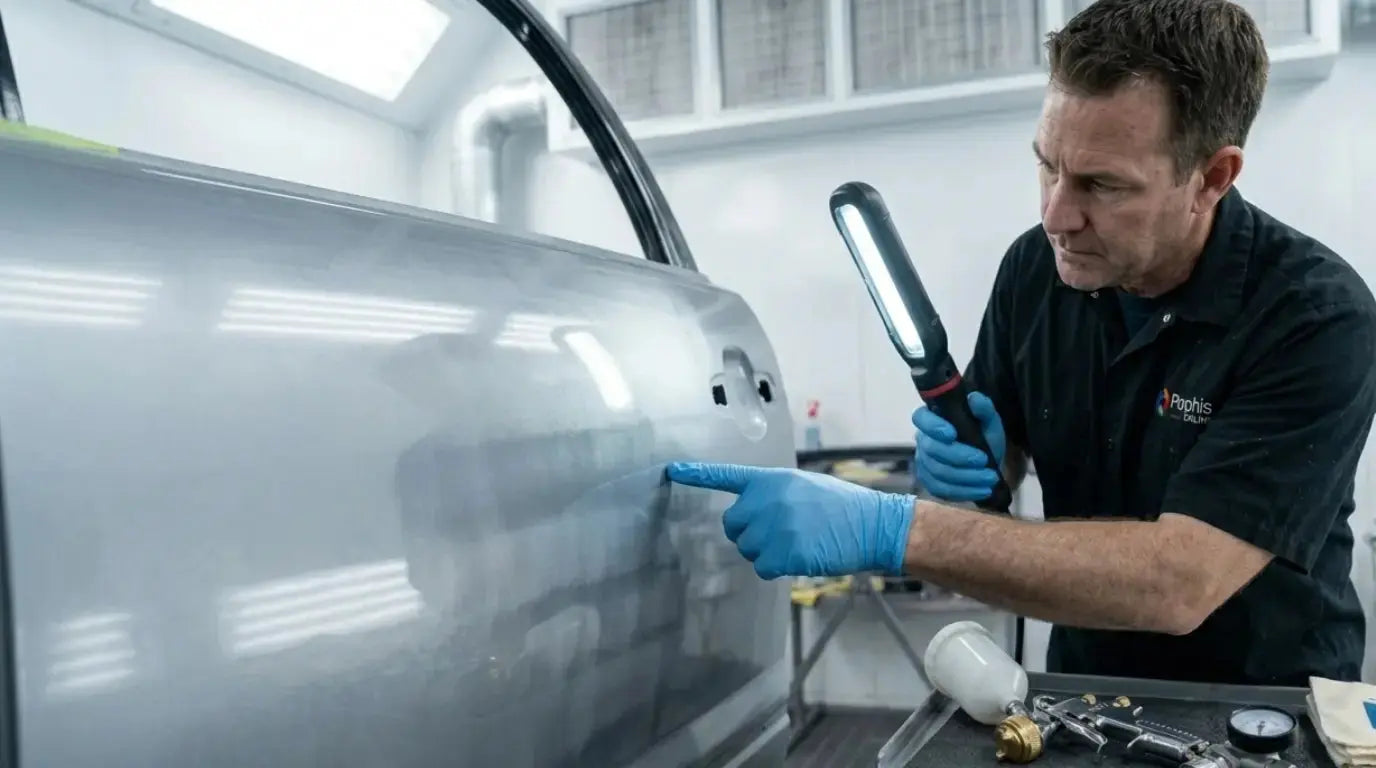
Standing in front of a shelf of automotive paints, the letters "1K" and "2K" can feel like a code you're supposed to crack. Throw in "single stage" and "two stage," and the confusion only deepens. But this choice has real consequences—durability, appearance, and how long your work lasts all depend on getting it right.
This guide explains exactly what 1K and 2K mean, clears up the confusion with single-stage and two-stage systems, and helps you choose the right paint for your specific project.
What "1K" and "2K" Actually Mean
The "K" stands for component—it's shorthand for how many components need to be mixed before the paint can be applied.
1K Paint: Single-Component
1K paint (single-component) does not require a hardener, catalyst, or activator. It's ready to spray straight from the can or mixing cup. 1K paints dry through solvent evaporation—the solvents evaporate into the air, leaving the paint film behind.
Most aerosol spray paints are 1K formulas—just shake and spray. 1K basecoats are also common in automotive refinishing; they provide color and coverage without needing activation.
Key characteristic: 1K paints dry by evaporation. They don't undergo a chemical change—the solvents simply leave, and what's left is the paint film.
2K Paint: Two-Component
2K paint (two-component) requires a hardener, catalyst, or activator to be mixed in before application. The second component triggers a chemical reaction—crosslinking—that cures the paint from the inside out.
2K paints include most automotive single-stage finishes and clear coats. Once the hardener is added, the paint has a limited "pot life"—you have to use it within a specific window before it cures in the cup.
Key characteristic: 2K paints cure through chemical reaction. They don't just dry—they transform into a new, harder, more durable material.
1K vs. 2K: The Critical Differences
| Factor | 1K Paint | 2K Paint |
|---|---|---|
| Components | Single component, ready to spray | Two components, must be mixed with hardener |
| Curing mechanism | Solvent evaporation | Chemical crosslinking |
| Durability | Moderate—softer, less chemical resistance | High—hard, chemical-resistant, UV-resistant |
| Pot life | Unlimited | Limited (cures within hours once mixed) |
| Application | Easier, more forgiving | Requires precise mixing and timing |
| Safety | Lower isocyanate exposure | Contains isocyanates—requires PPE |
| Typical uses | Aerosol touch-ups, basecoats, small repairs | Full resprays, clear coats, professional refinishing |
| Longevity | Shorter—can crack or craze over time | Longer—maintains gloss and protection for years |
The Durability Gap: Why 2K Wins for Professional Work
The single biggest reason professional automotive painters choose 2K over 1K is durability.
1K paints stay softer for a very long time after application. If you build up too much material, the underlying coats can dry slower than the top coats—leading to cracking or crazing over time. This is why 1K is generally not recommended for full vehicle refinishing or any application where the finish needs to withstand UV exposure, chemicals, or physical abuse.
2K paints, once cured through their chemical reaction, become much less susceptible to damage from chemicals, weather, and UV rays. They form a hard, durable film that maintains its gloss and protects the underlying paintwork for years. 2K clear coats offer excellent scratch resistance, gasoline resistance, and weathering resistance.
Bottom line: If the vehicle is going to see sunlight, weather, or regular washing, 2K is the right choice.
Single Stage vs. Two Stage: Don't Confuse Them with 1K and 2K
This is where a lot of confusion happens. Single stage and two stage describe the paint system—how many layers you apply. 1K and 2K describe the chemistry—how the paint cures.
| 1K | 2K | |
|---|---|---|
| Single Stage | Old-school lacquer, aerosol enamels | Modern urethane single-stage |
| Two Stage (BC/CC) | Some basecoats (color only) | Clear coats (almost always) |
Single-stage paint is a coating that does not require a separate clear top coat. The color and gloss are in one layer. A single-stage coating can be either 1K or 2K.
Two-stage paint (base coat/clear coat or BC/CC) requires both a color base coat and a separate clear top coat. Most base coat/clear coat systems are 2K coatings—but not all of them. The base coat is often 1K (no hardener needed), while the clear coat is almost always 2K.
When to Use 1K Paint
1K paints have their place—especially for certain types of work:
-
Small touch-ups and spot repairs: 1K aerosol clear coats are fast and easy for small areas
-
Basecoat color application: Many 1K basecoats provide excellent color coverage and don't require activation
-
Quick turnaround jobs: When you need to get a car out the door fast and durability isn't the primary concern
-
Hobbyist and DIY projects: 1K paints are more forgiving and don't require the same level of safety equipment
However, if you're doing any work that needs to last—full panels, exterior surfaces, or anything exposed to the elements—1K clear coat is generally not recommended for professional automotive use.
When to Use 2K Paint
2K is the standard for professional automotive refinishing:
-
Full vehicle resprays: The durability and UV resistance are essential
-
Clear coat application: 2K clear coats provide the gloss, depth, and protection that customers expect
-
High-traffic areas: Hoods, roofs, and other horizontal surfaces that take the most sun and weather exposure
-
Any repair that needs to last: 2K paints cure to a hard, chemical-resistant film that won't crack or craze over time
-
Professional shop work: When your reputation depends on longevity, 2K is the only choice
Application Tips for 2K Paints
1. Mix Accurately
2K paints require precise mixing ratios. Use a mixing stick and graduated mixing cups. Don't eyeball it—the chemical reaction depends on the correct ratio of paint to hardener.
2. Respect Pot Life
Once you add the hardener, the clock starts ticking. Most 2K paints have a pot life of 2-4 hours, depending on temperature. Mix only what you can use within that window.
3. Use the Right Equipment
2K clear coats require a spray gun that can deliver consistent atomization and precise fluid control. A gun with poor atomization will leave uneven film thickness—and that's where runs, orange peel, and adhesion problems start.
For painters serious about 2K work, the PORPHIS PRD-625 is engineered to deliver. Featuring MP (Multi-Point) atomization technology and a versatile 1.3/1.4mm nozzle set, the PRD-625 produces an exceptionally even spray pattern that eliminates the "hot center / thin edges" problem common with standard nozzles. The PRD-625 operates at 23-31 PSI with an air consumption of just 10.2 CFM, making it compatible with a wide range of professional compressors.
Its patented fluid adjustment system allows for precise quantitative control of material output—critical when you're working with 2K paints that have a limited pot life and need to go down right the first time. The gun's forged aluminum body with anodized coating and metal air distribution ring provide consistent, predictable airflow, so you can focus on technique, not on fighting your equipment.
Whether you're spraying 2K single-stage or base coat/clear coat systems, the PRD-625 gives you the control and consistency that professional results demand.
4. Use Proper PPE
2K paints contain isocyanates, which are hazardous when inhaled. Always use a fresh charcoal-filter respirator (not just a dust mask), spray in a properly ventilated booth, and wear appropriate protective clothing.
5. Follow Flash Times
2K paints require specific flash times between coats—typically 5-15 minutes depending on temperature and the specific product. Rushing between coats traps solvents and compromises the cure. Waiting too long reduces intercoat adhesion. Always follow the manufacturer's technical data sheet.
Frequently Asked Questions
Can I use 1K clear coat over 2K basecoat?
Yes, but it's not recommended for exterior automotive work. 1K clear coats don't offer the same UV protection, chemical resistance, or durability as 2K clears. For a repair that needs to last, always use 2K clear.
Can I use 2K clear coat over 1K basecoat?
Yes—this is actually a common practice in professional shops. Many basecoats are 1K (no hardener), and they're designed to be topped with a 2K clear coat. The key is to follow the manufacturer's recommended flash times before applying the clear.
How long does 2K paint take to cure?
2K paints typically cure to a tack-free state within 30-60 minutes, depending on temperature and the specific product. Full chemical cure can take 24-48 hours. Some fast 2K clears are designed for quicker turnaround—but they offer less working time.
Is 2K paint always better than 1K?
For professional automotive refinishing—yes. 2K paints are more durable, more chemical-resistant, and last longer. However, 1K paints have their place for small touch-ups, basecoat color application, and situations where durability isn't the primary concern.
What's the difference between 1K and 2K aerosol paints?
1K aerosols are ready to spray straight from the can—just shake and go. 2K aerosols have the hardener stored in a separate compartment inside the can. You puncture the seal to mix the components immediately before spraying. This gives you the convenience of an aerosol with the durability of a 2K paint.
Can I mix 1K and 2K products from different brands?
Always stick with a complete system from a single manufacturer whenever possible. Different brands use different resin technologies and hardener formulations. Mixing systems can lead to intercoat adhesion failure—and that means peeling paint.
Conclusion
The choice between 1K and 2K paint comes down to one question: how long does this finish need to last?
If you're doing a small touch-up or a basecoat that will be covered by a 2K clear, 1K is fine. But if you're applying a clear coat, doing a full panel, or working on anything that will see sunlight, weather, or washing—2K is the only professional choice.
2K paints cure through chemical crosslinking, creating a hard, durable film that resists UV damage, chemicals, and physical wear. 1K paints dry by solvent evaporation and simply don't offer the same longevity. For work that needs to last, 2K is worth the extra effort—the mixing, the pot life management, the safety precautions.
And when you're ready to spray that 2K clear, make sure your equipment is up to the job. A precision tool like the PORPHIS PRD-625 gives you the consistent atomization and precise fluid control you need to lay down a flawless finish every time.
Share:
Fair Salary Expectations for Automotive Painters: What You Should Be Earning in 2026
Prepper to Painter: A Complete Guide to Pay, Career Progression, and Success in Automotive Refinishing