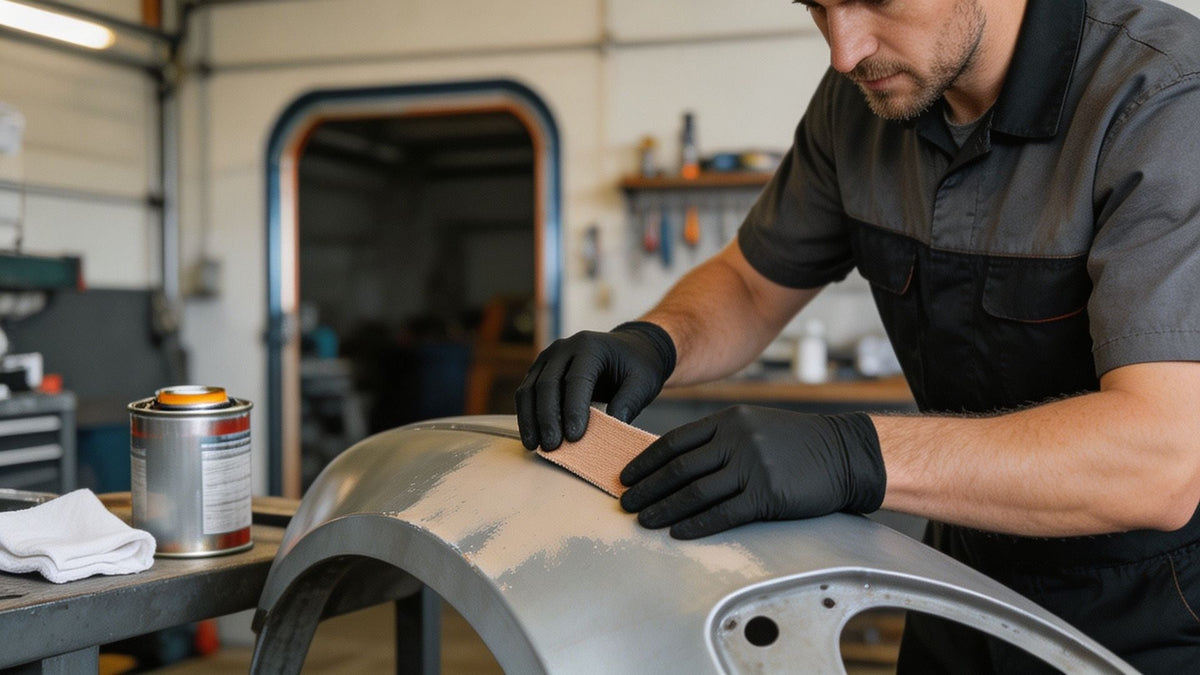
You can spray 2K paint over some rattle can finishes. Keep the old paint only if it is firmly bonded, has reached the condition required for recoating, and is permitted under the new coating system. If the old paint softens or wrinkles during a recoat check, stop. New paint cannot restore adhesion to a failing layer.
The fact that a finish came out of a can tells you how it was applied. It does not tell you whether it is lacquer, enamel, 1K or 2K. The first decision is whether the existing finish can stay.
Decide Whether the Old Coating Can Stay
Clean and examine the panel. Look closely at chipped edges, sanding transitions and earlier spot repairs. One part of a panel may have a different paint history from another. If you have the old can or the paint record, check both that product's instructions and the new system's approved substrates and recoat procedure.
|
Existing finish |
What to do next |
|
Sound, identified and accepted by the new coating system |
Follow the specified surface preparation and recoat procedure. |
|
Firm but unidentified, with no clear repair history |
Ask the coating supplier how to evaluate it. Verify a representative area before committing to the panel. |
|
Soft, cracked, lifting or reacting during a test |
Remove the failed material to a stable substrate and rebuild the approved coating stack. |
|
System explicitly excludes the old coating |
Choose an approved repair route. A small patch that looks fine does not override that restriction. |
Dry to the touch is not the same as ready for the next coat. Even a cured finish can be sensitive to the solvents in a new coating. A patch of lifting can begin at a featheredge when solvent reaches an older layer. See PPG's lifting and wrinkling guide for other signs of that reaction. Where the old coating cannot stay, remove old rattle can paint without assuming the surrounding original finish needs stripping too.
Check the Whole Recoat Sequence
Test with the products, preparation and application sequence you actually intend to use. A test on bare scrap can show your spray pattern; it cannot show what your new paint will do over an unknown old finish. Use a sample that reproduces the old paint and its edge, or an inconspicuous representative area where the coating procedure allows it.
If your system calls for a sealer, include it in the test. Watch the edge as each layer goes on, then inspect again at the published check or cure stage. Note softening, swelling, raised edges or wrinkles. Record the products and conditions so you can repeat the result. A clean first pass is useful evidence, but it does not establish adhesion after cure or clear a panel with several different repairs.
When Scuffing or Sealer Makes Sense
Scuffing provides a surface profile where the paint is sound and approved for recoating. It will not harden a soft film. A sealer can provide a uniform base when the supplier approves it over that substrate and under the next coat. Do not apply it to contain lifting paint. See how to prepare sound paint before basecoat, and use the guide to 2K paint reacting with 1K primer if the layer in question is primer.
Set Up the Spray Gun After the Test Passes
Use the coating's technical data sheet (TDS) for mix ratio, nozzle, flash time and recoat condition. The PORPHIS PRD-815 MP lists 1.2 mm and 1.3 mm configurations. Compare the required nozzle and operating setup before choosing one, then test the fan and material delivery on a suitable panel. Changing to a gun gives you control of application; the coating still needs a compatible surface.
Read the safety data sheet (SDS) before mixing or spraying. Some 2K materials contain isocyanates. The HSE vehicle spray painting guidance calls for an appropriate booth or room and air-fed respiratory protection while spray mist remains. Use the coating's specified controls and follow local requirements, including for activated aerosols. See the 2K spray safety guide for the setup questions to resolve before work starts.
Questions About Recoating Aerosol Paint
Can you clear coat single stage acrylic enamel
Only if the exact enamel and clear are approved together, including their preparation and recoat timing. Single-stage describes how the color and finish are applied; it does not tell you whether the product is 1K or 2K.
Does a light first coat prevent lifting
It can reduce the initial solvent load where the coating procedure calls for it. It will not fix a soft, unstable or chemically incompatible substrate.
What hardener ratio should I use
Use the ratio and components on the specific product's TDS. Do not copy a ratio from another single-stage paint or add a hardener to an ordinary 1K product.
Share:
How to Repair Clear Coat Burn Through
Pink Primer Bleed Through with Slick Sand Optex