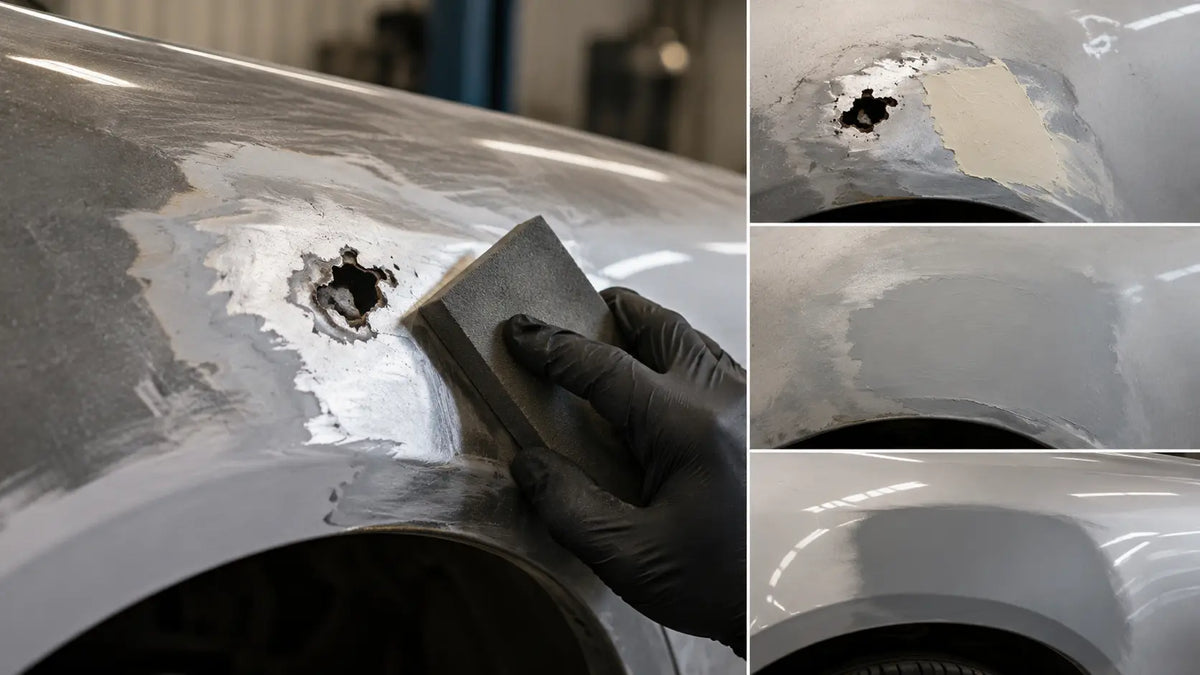
To fix burn throughs before painting, identify the exposed layer first. Bare steel, aluminum, plastic, filler and an intact primer layer need different preparation. Repair the protection and surface profile that sanding removed before applying color.
This guide covers sanding breakthroughs before basecoat. Burning through finished clearcoat while polishing is a different repair. Here, the immediate question is what the next coating is allowed to sit on.
What Has the Sandpaper Exposed
Clean the inspection area using the product's approved method and examine it under good light. Do not choose a primer only from the color of the spot. Confirm the panel material and coating history where possible.
|
Exposed layer |
What to establish |
Repair direction |
|
Steel |
Clean metal, corrosion condition and profile |
Approved direct-to-metal preparation and primer |
|
Aluminum |
Correct cleaning and oxidation control |
A system expressly approved for aluminum |
|
Plastic |
Plastic type and surface requirements |
Specified plastic preparation and any adhesion promoter |
|
Body filler |
Sound, dry filler and acceptable scratches |
Compatible undercoat preparation and repair |
|
Sound primer |
Layer identity, remaining thickness and next-coat requirements |
Level and recoat as the system permits |
|
Soft or lifting old finish |
Whether the foundation is reliable |
Remove failed material before rebuilding |
A small spot is not automatically harmless. It can interrupt corrosion protection or expose a sensitive older layer. At the same time, a small sound repair does not automatically require stripping the whole panel.
A Repair Sequence for Sanding Burn-Throughs
Stabilize the surrounding edge
Remove loose, lifting or cracked material and feather the sound coating into the repair. Use controlled sanding pressure around body lines and edges. If each pass reveals more weak coating, enlarge the repair until a stable boundary is reached.
Clean and prepare the substrate
Remove dust and contamination using cleaners approved for the exposed material. Let the area reach the required dry condition. Steel can flash-rust in humid conditions, so follow the chosen system's preparation-to-priming timing.
Our paint prep before basecoat guide explains the broader cleaning and feathering sequence. It should be used alongside the primer's substrate instructions.
Restore the approved undercoat
Apply the product required for that substrate and repair size. Use the stated mixing ratio, coat count, film build and recoat conditions. Do not add etch, epoxy and sealer together simply because all three containers are available.
Level and inspect the transition
If the primer must be sanded, wait until it reaches its sanding condition and use the profile required by the next material. If a product is approved for wet-on-wet use in this repair, follow that route instead of adding an unnecessary sanding step.
Inspect for a ridge around the spot, pinholes, remaining scratches and any new breakthrough. PPG's primer-surfacer sanding procedure includes checking exposed metal before proceeding with the next coating.
Etching Primer vs Epoxy Primer vs Sealer
|
Product role |
Where it can fit |
Limit to check |
|
Etching primer |
Metal adhesion and protection in systems that specify it |
Metal type and compatibility with the next layer |
|
Epoxy primer |
Adhesion and corrosion protection on approved substrates |
Preparation, film build and recoat window |
|
Primer surfacer |
Leveling small defects and sanding scratches |
Whether it requires a separate metal primer |
|
Sealer |
A uniform compatible foundation before color |
Whether direct-to-metal or spot repair is expressly allowed |
Etching primer often contains an acidic component. It is not automatically compatible underneath epoxy or every filler and sealer. Epoxy products also differ: some have a sealer application mode, while others are intended for another role.
PPG's bare-metal guidance lists several approved direct-to-metal approaches, including epoxy and certain DTM high-build products. The correct route comes from the selected system. A surfacer or sealer that is explicitly approved for your metal and repair size may be usable; a generic 2K label is not that approval.
What Primer Should I Use Over Bare Metal Spots
Start with the material actually exposed and the products that will follow. An approved epoxy can be a useful choice for bare-metal protection. An etching product can be appropriate where the system specifies it. Aluminum needs explicit substrate approval rather than an assumption that a steel product will work.
For intact primer or filler, the repair may involve a compatible surfacer rather than another metal treatment. For plastic, follow the plastic system. Basecoat by itself should not be used to cover a metal spot unless the coating maker specifically provides that application route.
Can I Use Etching Primer After Ospho
Only with a documented compatible preparation route. Ospho is a metal treatment, not a primer, and a fresh sanding breakthrough does not automatically need it.
The Ospho directions primarily recommend oil-based primers or paints and call for trial testing with epoxy or other paint systems. They also distinguish rust treatment from cleaning and etching, with different cleanup instructions. Do not combine those into one universal “leave it overnight, then spray” method.
If Ospho is already on the panel, identify how it was used, complete the relevant residue-removal and drying instructions, and check the primer maker's approval for that surface. Loose powder or an unknown treated layer is not a dependable foundation. A small test does not override an explicit incompatibility.
When the intended refinish system does not support the treatment, use its documented metal-preparation route rather than stacking another acid-containing product on top.
Will 2K Sealer Color Affect Black Basecoat
It can affect how quickly the color reaches hiding and how uniform it looks before full coverage. A repair with light primer, dark old paint and exposed spots can require more work to make the basecoat look consistent.
Use the ground-coat or sealer shade recommended for the specific color formula, then apply the basecoat to its required coverage. A dark sealer is not compulsory for every black formula. After the specified hiding is achieved, assess the color against the spray-out rather than assuming the undercoat permanently changes it.
Do not apply excessive basecoat to conceal an unsuitable or unstable undercoat. Repair the substrate first; use shade selection to support the color application afterward.
Epoxy Primer or 2K Sealer for Burn-Throughs
Ask what job the first layer must do. If exposed metal needs a corrosion-protection primer, use the approved DTM route. If the panel is already sound and properly primed, a compatible sealer may be the next step before color.
Some products can serve both roles with different mixing and application instructions. Check the product name, approved substrate and repair limits. Calling a material “2K sealer” does not establish that it can go over bare metal.
Spray Gun Setup for the Repair
The PHS-155 offers 1.3 and 1.8 mm nozzle configurations. Select one that matches the material being applied. A primer that calls for a larger opening needs a suitable different setup; do not thin it beyond its permitted ratio to make the available nozzle work.
Keep the fan balanced and the working pressure consistent. See spray gun air pressure regulation for the air-supply check, then use the actual coating and gun instructions for the settings.
Read every component's safety data sheet before spraying. Metal treatments, solvents and 2K products involve different handling and exposure controls. The 2K coating safety guide covers the later coating stage.
Frequently Asked Questions
Can I cover a tiny metal spot with sealer
Only if the exact sealer is approved for that metal, spot size and preparation. Otherwise use the required metal-primer step before the sealer.
Do I need epoxy over every sand-through
No. The exposed substrate determines the route. Some spots expose sound primer or filler, and some systems specify another approved metal primer.
Should I put epoxy over etching primer
Only when the selected system expressly allows the combination. Extra primer types are not automatically extra protection.
Why is the repair edge visible after color
The undercoat may still have a ridge, scratch pattern or unstable edge. Check and level the transition before continuing to clearcoat.
Before Spraying Color
Confirm the exposed material has been protected with the approved system and the transition is level. Check the final sanding profile, recoat window and ground-coat shade. That is the point to load color, rather than using more paint to cover an unresolved spot.
Share:
How to Remove Uncured Clear Coat and Repair the Finish