
1. Introduction and Scope of Evaluation
In the high-volume environment of a professional collision repair center, equipment reliability is a core driver of profitability. The strategic importance of tool consistency cannot be overstated; even minor technical defects in a spray gun—such as inconsistent atomization or fluid-tip seal failure—trigger a cascade of material waste and excessive labor costs. For the senior refinish technician, a tool must deliver predictable results to maintain the "First-Time-Right" ratio necessary for optimal booth throughput.
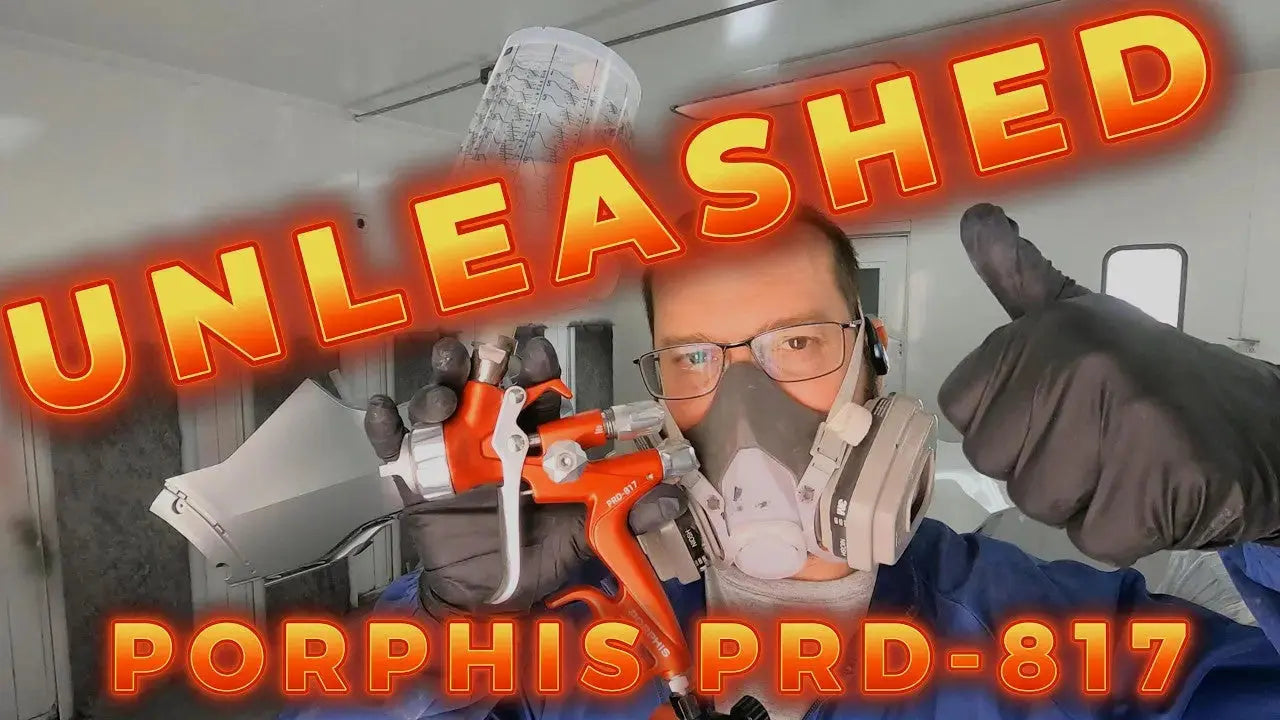
This report evaluates the PORPHIS PRD-817, the latest evolution in the 81 series following the PRD-815 MP (Medium Pressure) variant. This assessment follows manufacturer revisions intended to remediate initial performance complaints regarding fluid management and assembly defects.
The evaluation methodology comprised a five-job testing cycle under real-world shop conditions. The scope included complex refinish procedures on specific substrates, including a Ford bumper and Subaru door/fender panels, requiring multi-stage applications of metallic basecoats, pearl mid-coats, and high-solids clear coats. The following analysis details the technical transition of the PRD-817 from a flawed prototype to a viable professional asset.
2. Technical Remediation: Addressing Fluid Management and Assembly Defects
Consistent fluid tip integrity is the baseline requirement for professional-grade pneumatic equipment. Any breach in the seal between the nozzle and the gun body introduces air into the fluid stream, resulting in "sputtering." This defect not only compromises the finish quality but also erodes technician confidence, leading to a "double-check" culture that slows production. While the earlier iteration of the 817 required mechanical over-tightening to function, the revised unit emphasizes precision machining and assembly reliability.
|
Technical Metric
|
Observations
|
|---|---|
|
Nozzle Sealing & Sputtering
|
Original: Prone to intermittent sputtering and leaks; required constant monitoring. Revised: Reliable seal achieved; zero sputtering detected across five job cycles including thinner-based leak tests.
|
|
Assembly Requirements
|
Original: Required excessive torque to prevent air intrusion, risking thread damage. Revised: Reliable "Hand-Tighten" seal; matches the assembly profile of premium European benchmarks.
|
|
Maintenance Recovery
|
Original: Leaks often manifested after a single cycle in a professional gun washer. Revised: Maintains seal integrity after full disassembly and high-pressure cleaning cycles.
|
|
Fluid Flow Consistency
|
Original: Unpredictable delivery necessitated test-spraying before every trigger pull. Revised: Stable, clean fluid delivery from initial sealer coat to final clear.
|
The transition to a "Hand-Tighten" reliability standard is a critical mechanical milestone. By removing the need for excessive torque, the design prevents long-term mechanical fatigue of the gun body and preserves the integrity of the fluid tip threads. This remediation streamlines the maintenance workflow and brings the PRD-817 in line with the operational expectations of enterprise-level repair facilities.
3. Comprehensive Application Analysis: Metallics, Pearls, and Clear Coats
- Metallic Basecoats (e.g., Iconic Silver on Ford Bumper): Silver remains the industry benchmark for flake orientation. The PRD-817 demonstrated excellent control, laying down the metallic particles uniformly without blotchiness or "tiger-striping," which is essential for bumper-to-fender color matching.
- Tri-Coat/Pearl Mid-coats (e.g., K1X White on Subaru panels): This stage required a "wet bedding" (color blender) technique to ensure a seamless transition. The PRD-817 proved highly user-friendly, providing the delicate atomization required to layer the pearl mid-coat without disturbing the wet bed, resulting in an invisible blend.
- High-Solids Clear Coats: The gun excelled in material "lay down," producing a glass-like finish on the Subaru panels and Ford bumper. The atomization was fine enough to minimize orange peel, significantly reducing post-paint finishing time.
The "So What?": The ability of a single tool to handle everything from sealer and "wet bed" blenders to high-solids clear coats reduces the need for "gun-switching." This versatility increases booth throughput and simplifies the technician's setup, directly impacting the shop's bottom line.
 |
 |

|
4. Operational Reliability and Maintenance Workflow
The "So What?": The removal of the "double-check" requirement is the most significant operational gain. By eliminating the fear of sputtering, the PRD-817 reduces the mental load and fatigue on the painter. A technician who trusts their equipment can focus entirely on the application and the blend, rather than troubleshooting the tool mid-coat.
5. Procurement Recommendation and Strategic Verdict
The evolution of the PORPHIS PRD-817 from the 815 series into its current revised state marks its transition into a recommended professional asset. The manufacturer has successfully addressed the mechanical flaws that previously hindered its adoption in high-stakes environments.
Value Assessment
At a price point of approximately $405 USD, the PRD-817 offers a compelling ROI. When compared to industry standards from SATA or Iwata, which can cost $800 to 1,000+ ,the PRD−817deliverscomparableatomizationatlessthanhalfthecapitalexpenditure.Forfacilitieslookingtooptimizetheirequipmentbudget,theROIisfurtherenhancedbyusingthe520 per gun.
Share:
PORPHIS PRD-715 Evaluation: Professional Spray Performance Without the Premium Price
Technical Performance Evaluation: PORPHIS PRD 815 Spray Gun in Multi-Stage Automotive Refinishing