MP Spray Gun

The PORPHIS MP (Medium Pressure) Spray Gun bridges the gap between high-transfer efficiency and the raw atomization power needed for heavier coatings. Operating at 10CFM and 22–32 PSI, MP guns handle thicker materials — primers, epoxies, and high-build coatings — without sacrificing spray consistency. Designed for painters who work across multiple substrates and need a versatile, all-conditions performer that adapts to the job rather than the other way around.
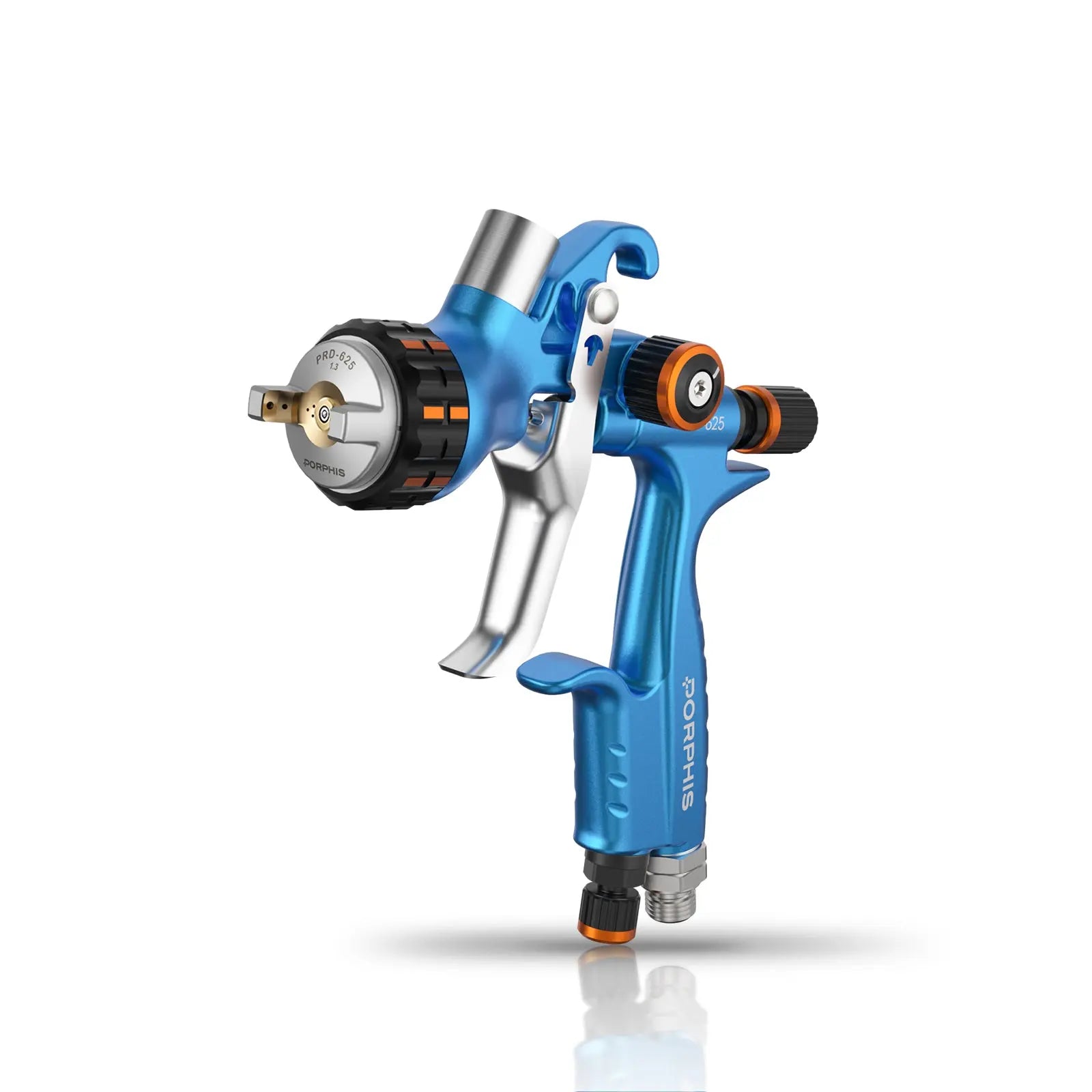
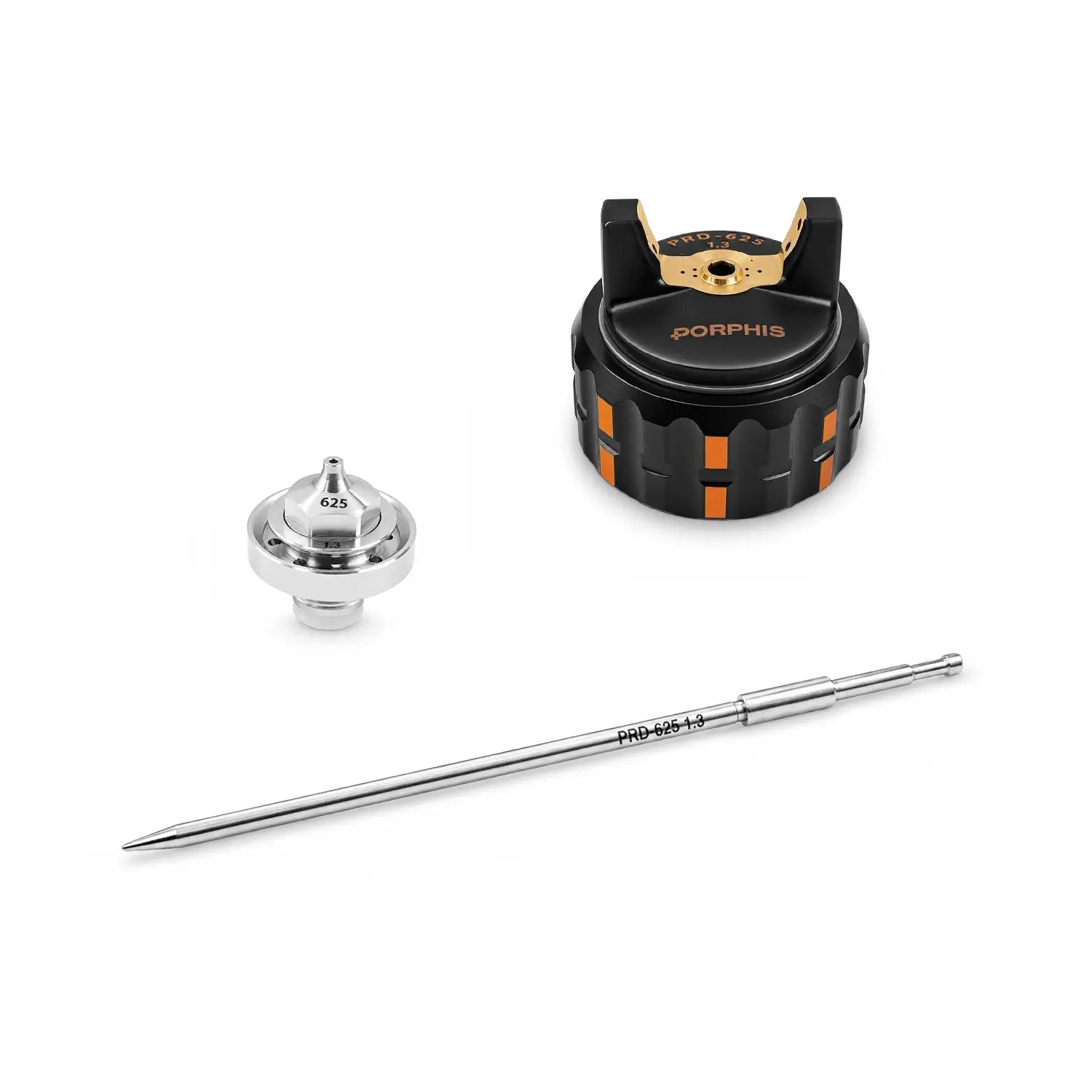
PRD-625 Car Paint Gun PORPHIS

PRD-625 MP SPRAY GUN

Comprehensive warranty: 1-YEAR
Warranty policy: >>CLICK HERE<< to learn more about.

SHOP NOW

FAQs

Q1: I'm buying my first serious spray gun. Why should I start with the PRD-625 instead of something cheaper?

A: Most painters who start with very cheap spray guns spend 6 months fighting their equipment — inconsistent spray patterns, leaking needles, poor atomization — before upgrading anyway. The PRD-625 is the point where professional engineering starts without professional-level price commitment. Its MP nozzle, integrated needle valve structure, and precision needle-nozzle pairing give you consistent, learnable results from day one. When your results are inconsistent with a cheap gun, you don't know if it's your technique or your equipment. With the PRD-625, when something goes wrong, you can trust it's technique — and that's how you actually improve.

Q2: Can I really use the PRD-625 for both primer and clear coat, or is that a marketing claim?

A: It's a genuine capability, not marketing. The PRD-625's MP atomization system handles the viscosity range from thinned primer surfacers through clear coat without requiring a nozzle change. The 1.3mm nozzle at 1.6–2.0 bar covers the spray pressure and flow requirements of both material types when properly thinned to manufacturer specification. The practical limitation: for very high-build primers (thick, minimally thinned), a larger nozzle (1.8mm+) will give you better flow. For standard primer surfacers at normal thinning ratios, the 625 handles the full system. Most DIY painters and smaller shops run the 625 through an entire job — primer, base, clear — without switching guns.

Q3: What's the difference between the integrated needle valve on the PRD-625 and a standard needle design?

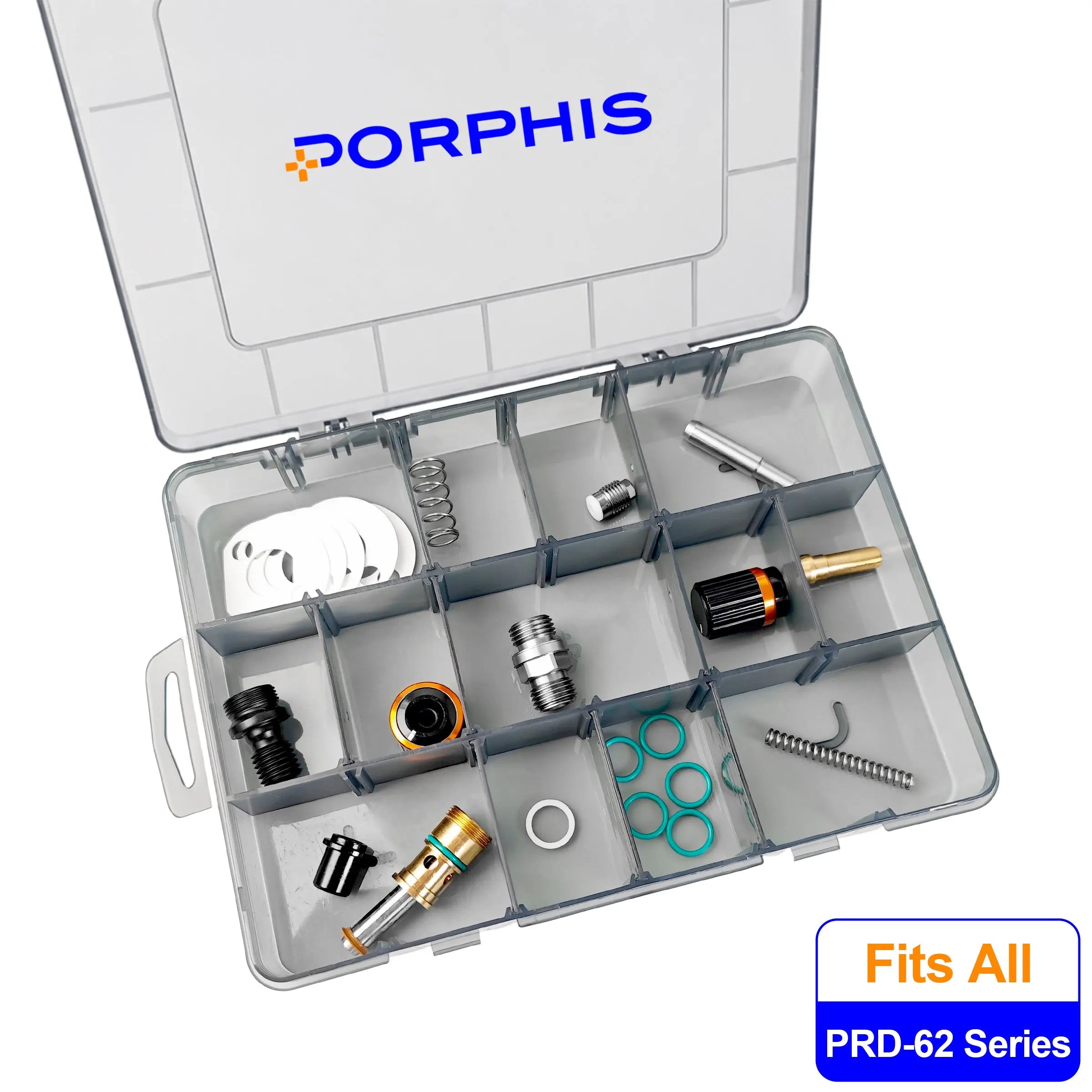
A: A standard needle design uses separate components for the needle and the air valve mechanism, with each requiring its own seal. The integrated needle valve combines both into a unified assembly — fewer components, fewer seal interfaces, fewer potential leak points. For a first-time spray gun owner, this matters because it means the gun behaves more predictably from day one and stays consistent longer. You're not managing two separate wear items; the integrated unit ages as a single system. When maintenance is eventually needed, the PRD-62 series repair kit covers the complete assembly.

Q4: I've seen reviews saying MP atomization sprays "too fast" and it's hard to control for beginners. Is this true of the PRD-625?

A: MP atomization does lay material down faster than HVLP — this is a real characteristic. For beginners, "faster" can mean runs and sags if technique isn't dialed in. The PRD-625 manages this through its fluid adjustment set, which lets you reduce fluid flow independently of air pressure. Start with the fluid needle backed out 1.5 turns from closed, maintain a consistent 15–20cm distance, and practice your arm speed on a test panel before moving to the actual job. The PRD-625's fluid control is linear and responsive — you can slow the material delivery down significantly while maintaining good atomization. Most first-time users have consistent results within a single practice session.

Q5: I'm doing a full car respray — is the PRD-625 fast enough for a project that size?

A: Yes. The PRD-625's MP atomization and wide fan pattern (up to 280–300mm at optimal distance) are designed for exactly this kind of large-surface work. A full vehicle respray — primer, base coat, clear coat — is comfortably within the 625's production capacity. The faster material delivery of MP atomization versus HVLP means you can complete panel passes more quickly, which matters when you're maintaining a wet edge across a large surface like a hood or roof. Most full car resprays are completed in a single session without the gun fatiguing or losing consistency — the ergonomic needle valve integrated structure is specifically designed for sustained operation.

Q6: What compressor do I need for the PRD-625? I have a 20-gallon home compressor.

A: The PRD-625 operates at 1.6–2.0 bar (23–29 PSI) at the gun. A 20-gallon compressor delivering 8–10 CFM at 90 PSI is sufficient for the PRD-625 for most DIY and light professional use. You'll want to monitor your compressor's recovery time — if it's cycling on continuously during extended spray passes, give it 30-second rest intervals to maintain pressure consistency. For a full car respray in a single session, a 30-gallon or larger tank will give you more comfortable sustained operation. If your compressor is undersized, the symptom will be a gradually shrinking fan pattern as pressure drops — easy to spot on a test panel before committing to a car panel.

Q7: How does the PRD-625 fit into the PRD-62 series? When would I need to upgrade to the 626 or 627?

A: The PRD-625 is the natural starting point in the PRD-62 series — MP atomization, full-system versatility, straightforward operation. You'd consider the 626 or 627 when you've identified a specific need the 625 doesn't fully address:

Upgrade to PRD-626 when paint savings and VOC compliance become priorities — HVLP's transfer efficiency advantage compounds significantly in high-volume production environments.
Upgrade to PRD-627 when clear coat finish quality becomes your primary focus — the Split Nozzle technology delivers a measurable improvement in atomization fineness for metallic and pearl clear coats specifically. Many professional shops run a 625 as their training gun and daily workhorse, then add a 627 for clear coat finish work as their volume grows. The 625 rarely gets retired — it's too useful as a primer and base coat gun even after a 627 joins the rack.

Related Videos

E-Guides