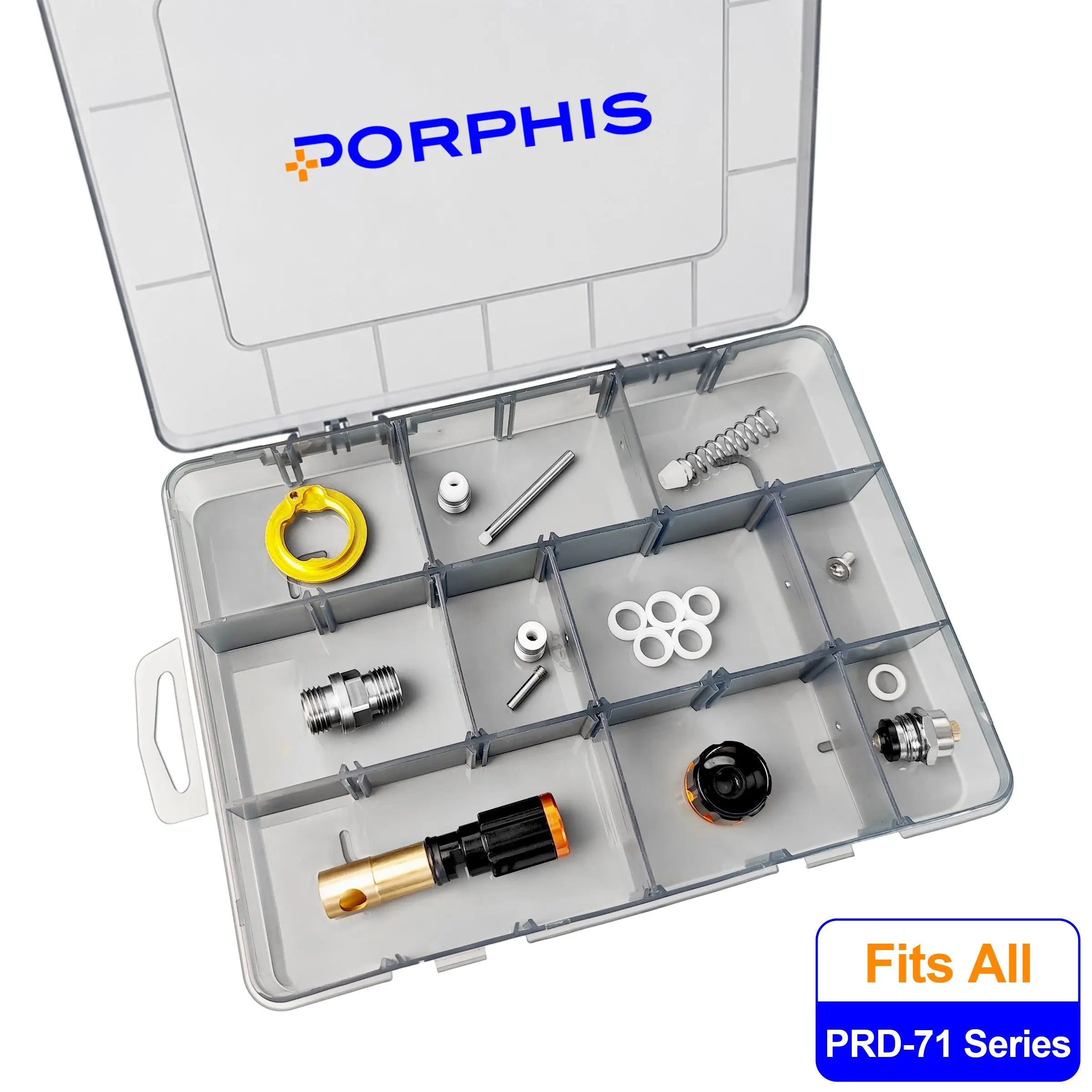
MP Spray Gun

The PORPHIS MP (Medium Pressure) Spray Gun bridges the gap between high-transfer efficiency and the raw atomization power needed for heavier coatings. Operating at 10CFM and 22–32 PSI, MP guns handle thicker materials — primers, epoxies, and high-build coatings — without sacrificing spray consistency. Designed for painters who work across multiple substrates and need a versatile, all-conditions performer that adapts to the job rather than the other way around.
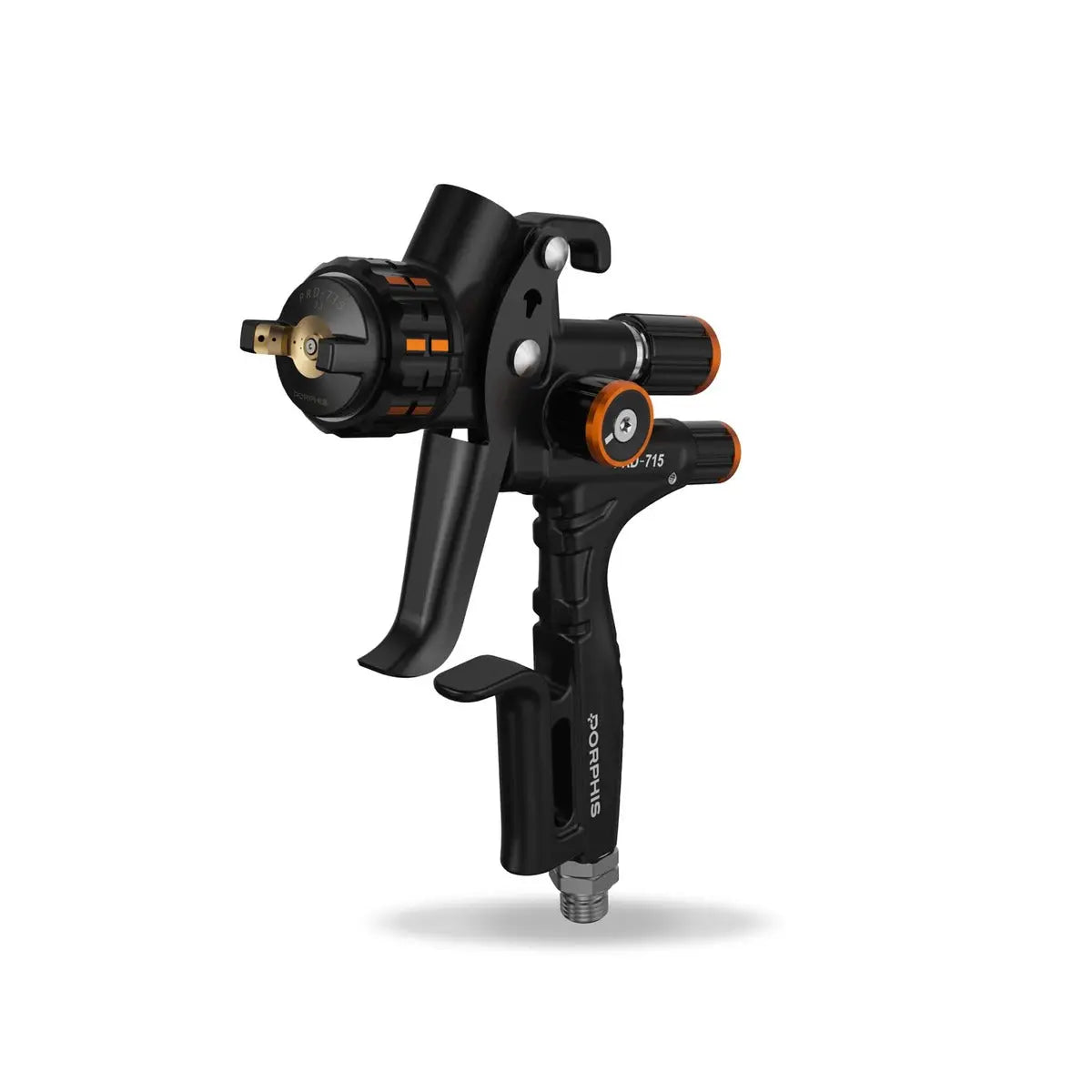
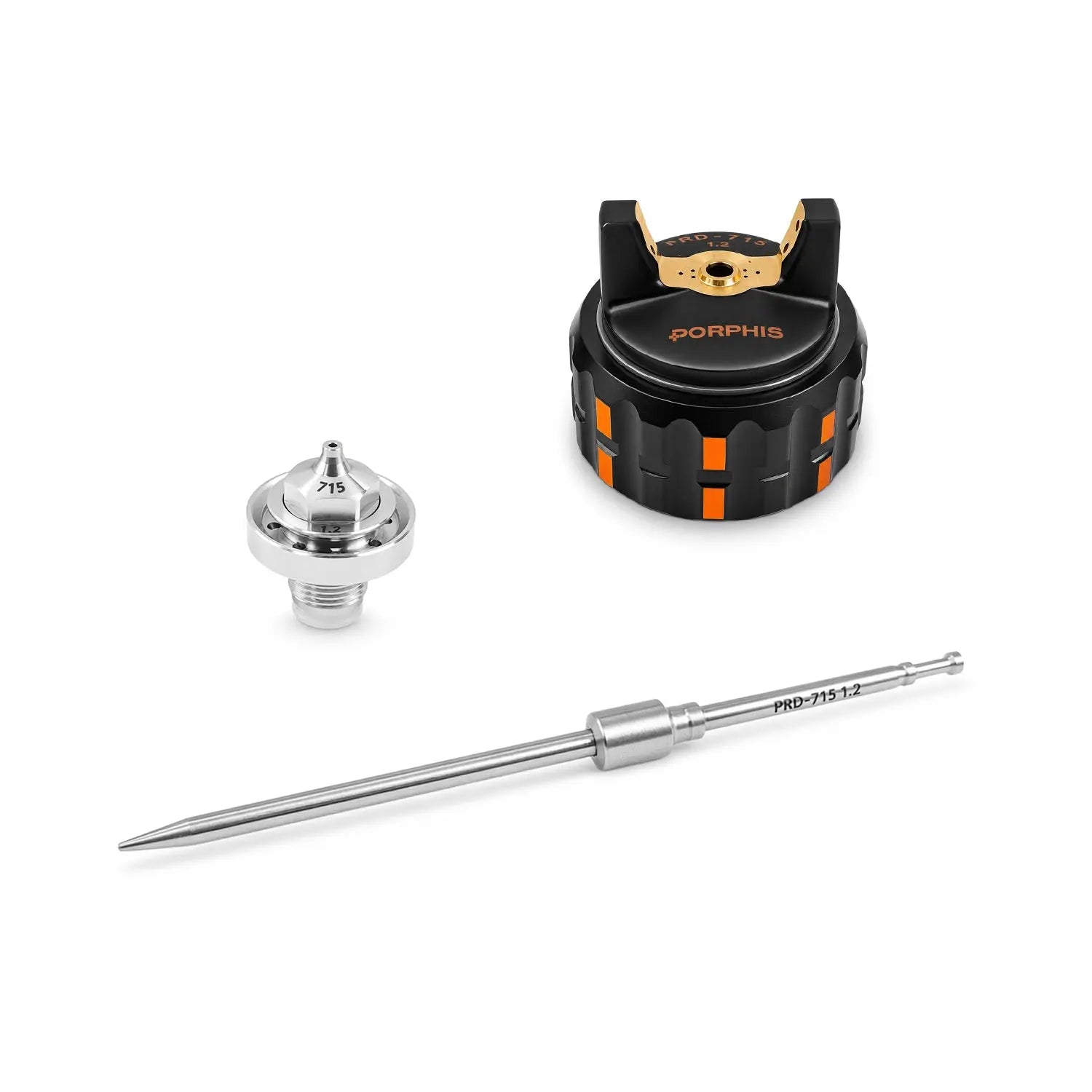
PRD-715 MP SPRAY GUN PORPHIS

PRD-715 MP SPRAY GUN

Comprehensive warranty: 1-YEAR
Warranty policy: >>CLICK HERE<< to learn more about.

SHOP NOW

FAQs

Q1: What is MP atomization and why does it matter for my finish quality?

A: MP (Multi-Point) atomization distributes air across multiple discharge points around the nozzle, creating a spray pattern where the top and bottom of the fan reach the same height simultaneously. In practice, this eliminates the common problem of "hot center / thin edges" that you see with conventional nozzles — where the middle of your spray pass is heavy and the edges are light, forcing you to overlap more aggressively. With MP atomization, each pass lays down an even film from edge to edge, which means fewer passes, less material waste, and a more consistent film build across the entire panel.

Q2: I need a gun that handles both base coat and clear coat without switching guns mid-job. Can the PRD-715 do that?

A: This is exactly where the PRD-715 excels. Its MP nozzle's atomization characteristics — fine droplet size with a wide, even fan — perform well across both base coat viscosities and clear coat viscosities without requiring nozzle changes. The fluid adjustment set allows you to dial in flow rate for each material. For a one-gun shop or a painter who wants a reliable all-rounder, the 715 handles the full coating system from primer surfacer through clear coat with consistent results. If you need a dedicated clear coat gun with the absolute finest atomization, the PRD-717's Split Nozzle edges it out — but for full-system versatility, the 715 is the better choice.

Q3: How fast is "fast spraying" actually? I have production targets and downtime is money.

A: The PRD-715's MP atomization system, combined with its wide spray pattern (up to 300mm fan width at optimal distance), allows you to cover a full door panel in significantly fewer passes than a conventional nozzle of the same diameter. In practical terms: painters report completing a full vehicle base coat in 20–30% less time compared to their previous gun. The key driver is the even top-to-bottom fan height — less overlap required means faster lateral movement per pass. On a busy production day, that compounds into meaningful time savings across multiple vehicles.

Q4: I've had guns where the spray pattern is oval but the left and right edges are always lighter than the center. Does the PRD-715 have this problem?

A: This "hot center" issue is the most common complaint with conventional fan nozzles, and it's exactly what MP atomization was engineered to solve. The multi-point air distribution around the PRD-715's nozzle creates a genuinely uniform particle density from the center to the edges of the fan. You can verify this yourself with a spray-out card on day one — the film build should be consistent across the full fan width. If you've been compensating for hot-center guns by overlapping 75% per pass, you'll find you can drop to 50% overlap with the 715 and still get even coverage.

Q5: What's the minimum compressor setup to run the PRD-715 reliably for extended sessions?

A: The PRD-715 operates at 1.6–2.0 bar (23–29 PSI) at the gun inlet. For reliable extended use, you need a compressor delivering at least 9–11 CFM at 90 PSI with a minimum 20-gallon tank. The MP nozzle's high-flow air delivery means it pulls more CFM than a low-pressure HVLP gun — so if you're on the edge of your compressor's capacity, you'll notice pressure drop during long passes more with the 715 than with the PRD-716. For shops with a full-size 60-gallon compressor and above, the 715 will run all day without hesitation.

Q6: The gun is listed as "lightweight." How much does it actually weigh, and does that matter for all-day use?

A: Spray gun fatigue is underestimated by most buyers until they've spent 6 hours holding one. The PRD-715's body is engineered from high-strength corrosion-resistant alloy that balances structural durability with weight reduction — the result is a gun that feels substantially lighter than its build quality suggests. Paired with an ergonomic grip angle, wrist fatigue during overhead and low-angle work is meaningfully reduced compared to heavier guns in the same class. For production painters doing multiple vehicles per day, this translates to better consistency in the final hour of a shift — when hand fatigue is usually where finish quality starts to slip.

Q7: How durable is the PRD-715? I've had "professional" spray guns wear out in six months of shop use.

A: The PRD-715's key components have undergone 10,000-cycle durability testing — trigger pull, needle actuation, and fluid tip seating. The main body is high-strength corrosion-resistant alloy, and the needle and nozzle are precision-machined from wear-resistant material that maintains dimensional stability under continuous use. The modular assembly design means that when a component does eventually wear (and every mechanical tool has a wear life), you replace that specific part — not the entire gun. PRD-71 series repair kits cover every internal component and are available directly from us. A well-maintained PRD-715 in daily shop use should deliver years of consistent performance, not months.

Related Videos

E-Guides

Quick Start-up

View & Download