
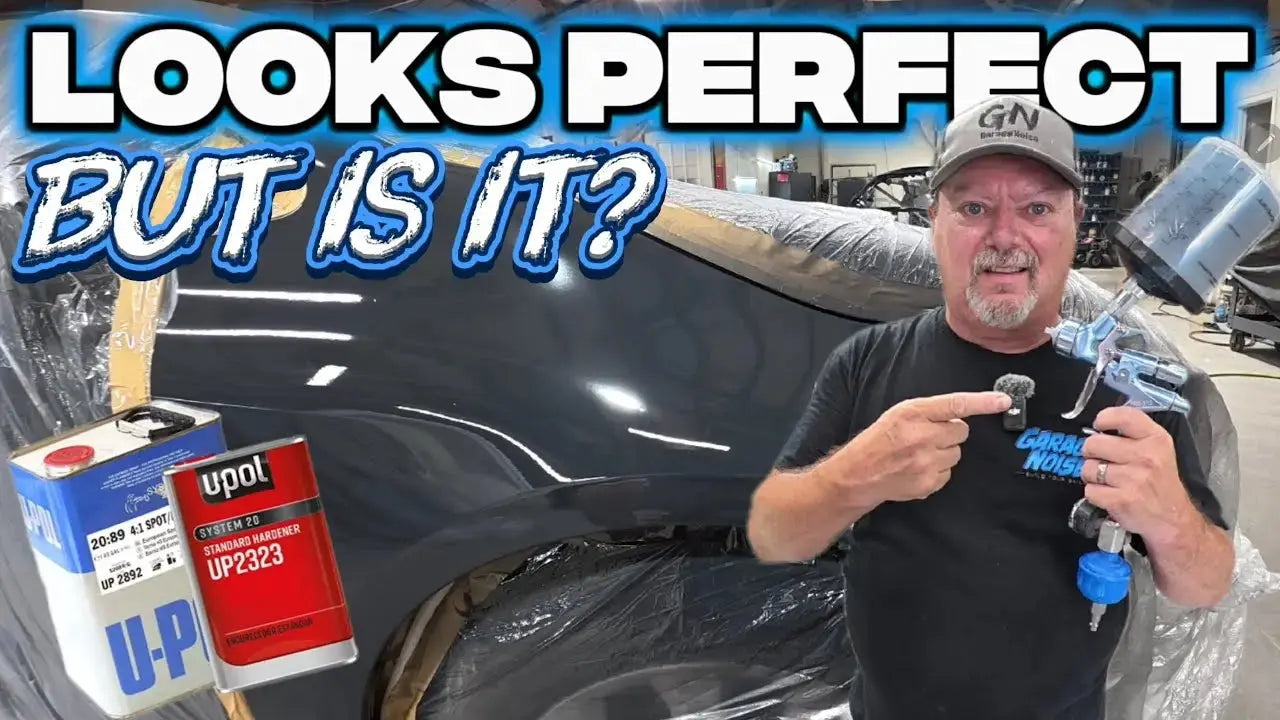
1. Substrate Preparation: Managing Raw Plastic and Mold Release Agents
Successful refinishing of OEM components is dependent upon the precision of the initial substrate preparation. Because OEM plastic bumpers are delivered as raw, unprimed plastic, the primary technical objective is the total elimination of chemical contaminants—specifically mold release agents. These greasy, silicone-based substances are inherent to the manufacturing process and represent the leading cause of coating delamination if surface energy is not correctly managed.
The Multi-Stage Decontamination Protocol
-
Initial Decontamination:
Perform a thorough wash of the bumper cover using soap and water to remove water-soluble residues and bulk mold release agents, critical OEM plastic surface preparation for optimal adhesion of original equipment manufacturer parts. -
Mechanical Abrasion:
Apply an automotive scuff paste (e.g., TransStar or Bulldog) with a gray scuff pad and water. Focus extensively on "cracks and crevices," as these recessed geometries are high-failure zones for mechanical adhesion to OEM plastic parts, especially important when working with original equipment manufacturer components. -
Secondary Wash:
Perform a second soap and water wash specifically to remove all scuff paste residue and particulates generated during abrasion, maintaining a clean OEM plastic substrate. -
Solvent Neutralization:
Apply isopropyl alcohol (IPA) to the dried surface to dissolve any remaining greasy films, ensuring the OEM part surface is ready for primer application and long-term adhesion.
Mechanical Scuffing of Adjacent Panels
- Fenders: For blending purposes, sand the adjacent panels using 600-grit sandpaper. This creates the necessary refractive scratch pattern to ensure the new clearcoat bonds to the existing factory finish without visible transitions in automotive parts refinishing, matching the quality expected from OEM products.
Checklist for Cleanliness
- [ ] Visual Inspection:
Surface is free of soap residue and displays a uniform matte scuff, which is critical to bonding with OEM paint systems and ensures the finished product meets automotive industry standards. - [ ] Recess Verification:
All edges and "nooks and crannies" have been mechanically abraded to maximize adhesion of OEM components during refinishing. -
[ ] Tack Cloth Application:
Lightly pass a fresh tack cloth over the substrate to remove airborne particulates, crucial for achieving a defect-free finish on original equipment manufacturer automotive parts.-
Technical Warning:
Do not apply excessive pressure during tacking; high pressure can cause the transfer of adhesive resins from the cloth to the substrate, resulting in finish defects common in OEM automotive parts refinishing.
-
Technical Warning:
Once the substrate is chemically and mechanically prepared, the process moves to the application of the interface layers, a crucial step in refinishing OEM plastic bumper parts to guarantee adhesion and lasting finish quality.
2. Chemical Foundation: Adhesion Promotion and Sealer Application
The foundation layer acts as the critical chemical bridge between the raw plastic substrate and the automotive paint system. This stage ensures long-term durability and provides a uniform color floor for the basecoat, which is essential when working with OEM plastic parts that require lasting adhesion and finish quality.
Adhesion Promotion
Apply an adhesion promoter, such as U-Pol Grip #4, over the entire bumper. This product chemically "softens" the plastic surface, allowing the sealer to "bite" or melt into the substrate. This is essential for ensuring adhesion in complex geometries where mechanical sanding may have reached its limit, a common challenge when refinishing OEM parts and other original equipment manufacturer components.
Sealer Specification and Mixing
|
Component
|
Ratio
|
Technical Role
|
|---|---|---|
|
Primer (UP 2253 V)
|
4
|
Base structure and pigment density
|
|
Activator (System 20 / 2333)
|
1
|
Isocyanate hardening agent
|
|
Urethane Reducer
|
2
|
Viscosity reduction for flow-out
|
Note: Use a "slow" activator (2333) when ambient temperatures reach 88°F to extend the open time and prevent premature drying, optimizing production time in hot environments common in automotive refinishing.
Application Parameters (PORPHIS PRD-815)
-
Pressure:
20 PSI. -
Fluid Volume:
3 turns out from the closed position. -
Fan Pattern:
Wide open. -
Technique:
Use a consistent trigger pull, moving across the bumper in continuous overlapping passes to maintain a wet edge, critical for matching OEM finish standards.
3. Basecoat Application and Precision Blending Techniques
Achieving an invisible repair requires a strategic approach to color application, particularly when working with "odd" solid colors like Toyota 1L7, which contains no metallic flakes, a challenge often encountered with OEM automotive parts finishes.
Basecoat Specifications
Apply the Nason XL 1L7 basecoat at 22 PSI. This pressure ensures proper atomization for a solid color lay-down. Allow the coating to "flash off" to a matte finish between coats to ensure solvent evaporation and optimal finish on OEM plastic parts, which helps achieve an end product indistinguishable from factory-applied finishes.
Dust Management Protocol
- Allow the sealer or the first basecoat layer to dry for 20 minutes.
- Inspect the surface for dust nibs. Use a small piece of 600-grit sandpaper to lightly "knock down" the defect.
- Process Note: Performing this after the basecoat provides the visual contrast necessary to locate small defects. Do not be concerned if you sand through the basecoat to the sealer; subsequent passes will provide the necessary coverage and opacity for OEM-quality finishes.
Fender Blending
To blend into the fenders, use overlapping strokes to taper the pigment density. By gradually reducing the amount of 1L7 pigment as you move away from the repair area, you ensure a seamless color transition into the original OEM finish, maintaining factory-style appearance with OEM parts and matching the expectations of automotive industry customers.
4. Clearcoat Integration: Achieving Surface Depth and Gloss
The clearcoat is the most critical stage for UV protection and achieving the required mil thickness for a professional gloss that matches OEM plastic bumper finishes.
Medium Solids (MS) Clearcoat Selection
-
So What?
Because MS clears are thinner, they stay "open" longer in the heat, allowing the film to "slick out" and level itself, which prevents the heavy orange-peel texture common with HS clears in hot environments. -
System Synergy:
The U-Pol 2842 clear utilizes the same System 20 (2333) activator as the sealer, simplifying inventory management, which is valuable for operational efficiency in automotive repair shops that partner with OEM manufacturers or use original equipment manufacturer products.
Clearcoat Application Parameters
-
Gun Model:
PORPHIS PRD-815 -
Target Pressure:
26 PSI. -
Fluid Volume:
2.5 turns out. -
Overlap:
Maintain a 70% to 80% overlap on every pass. -
Distance:
Keep the gun at a consistent 5 to 6 inches from the surface.
Apply two full coats. A third coat may be applied if additional film build is required for heavy mechanical correction later, which helps maintain the professional appearance expected from aftermarket and original equipment manufacturer automotive parts.
5. Post-Process Quality Control: Troubleshooting and Finishing
Even high-level applications may require post-paint refinement to reach showroom standards expected in the automotive industry, especially with OEM products and original equipment manufacturer parts.
Troubleshooting Common Defects
-
Pinching Back / Die Back:
This occurs when the final gloss "shrinks" or dulls. This is often caused by applying the second coat of clear too quickly. Because the MS clear stays "open" longer due to the slow activator, rushing the second coat traps solvents from the first layer (solvent entrapment), a common issue in OEM plastic bumper refinishing and aftermarket product applications. -
Roughness/Dry Spray:
Typically found on the edges or returns of the bumper where the fan pattern may have been inconsistent. -
Dust Nibs:
Airborne particulates that settled during the curing phase.
The "Cut and Buff" Protocol
Mechanical correction should only be attempted after the clearcoat has set up overnight. This allows the resin to fully cross-link and the solvents to escape, preventing the "tearing" of the clear during sanding. Use 1500–3000 grit wet sanding followed by a multi-stage buffing process to rectify any "pinching back" or roughness, achieving the surface depth and gloss expected of OEM paint finishes.
Technical Summary Reference
|
Parameter
|
Specification
|
|---|---|
|
Spray Gun Model
|
|
|
Sanding Grits
|
600-grit (Fenders, Prep, & De-nibbing)
|
|
Scuffing Material
|
Gray Scuff Pad + Scuff Paste (Two-Wash Process)
|
|
Sealer Mixing Ratio
|
4:1:2 (UP 2253 V : System 20 Activator : Reducer)
|
|
Clearcoat Mixing Ratio
|
4:1 (UP 2842 : System 20 Activator)
|
|
Sealer PSI
|
20 PSI
|
|
Basecoat PSI
|
22 PSI
|
|
Clearcoat PSI
|
26 PSI (Target)
|
|
Overlap Rate
|
70% – 80%
|
FAQ
What is OEM vs original?
OEM stands for Original Equipment Manufacturer and refers to parts or components produced by the original manufacturer of the vehicle or product. "Original" may imply the very first or authentic parts, but OEM parts are specifically made to match the specifications and quality of the original factory parts, ensuring compatibility and performance. In various industries like the automotive and computer industries, OEM products maintain intellectual property standards and benefit from economies of scale, which affect cost of production and overall product design.
Why is OEM cheaper?
OEM parts can sometimes be cheaper than aftermarket parts because of economies of scale in production and direct sourcing from original equipment manufacturers. Aftermarket products may incur additional costs like branding, distribution, and variances in quality, which can increase the price for end users despite similar functionality. Additionally, partnering with OEMs often reduces production time and the cost of production through streamlined processes, benefiting value-added resellers and customers alike.
Share:
Is the PORPHIS PRD-817 the New King of Base Coat? 5 Surprising Takeaways from the Split-Tip Revolution
Professional Standardized Guide: Vertical Spraying & Pressure Control for Complex Metallic and Pearl Coat