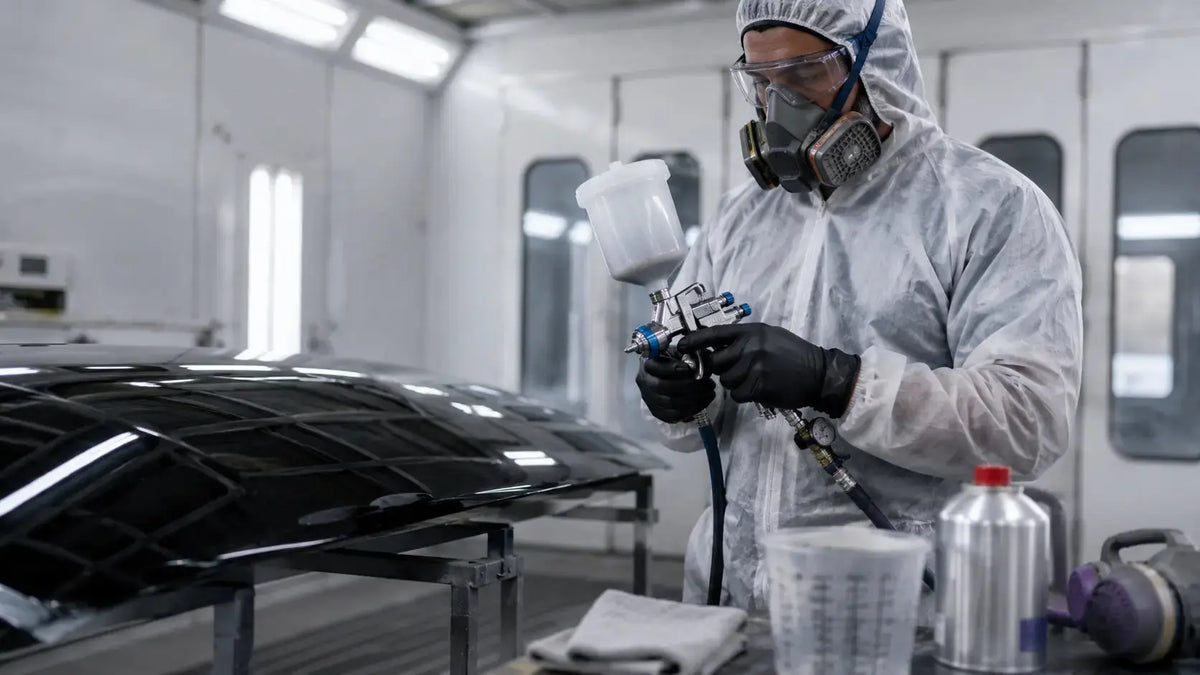
A good clear coat can make a paint job look deep, glossy, and finished. But 2K clear coat is not something I would treat like ordinary spray paint. For the next clear-coat decision in this process, see our guide to 2K clear coat over 1K base coat.
The finish may look simple from the outside - mix the clear, load the gun, spray two wet coats, and let it cure. The safety side is where many painters get careless. The problem is not only the smell. When 2K clear is sprayed, the material is atomized into a fine mist, and that mist can carry chemicals you do not want in your lungs, eyes, or on your skin.
This guide is written for painters who already understand the appeal of 2K clear, but want a more realistic look at the safety side: respirators, PPE, airflow, common mistakes, and where spray gun choice fits into the process.
Why 2K Clear Coat Needs More Respect Than 1K Products
Most 2K clear coats use a clear resin and a hardener. Once mixed, the coating starts a chemical reaction that produces a harder, more durable finish than most 1K products.
That durability is the reason 2K clear is common in automotive refinishing. It can offer strong gloss retention, chemical resistance, and UV protection. But the hardener side of the system is also why safety matters so much. Many 2K systems involve isocyanates or similar hazardous chemistry, depending on the exact product.
That is why you should always read the safety data sheet and technical data sheet before mixing or spraying. Do not assume one clear coat is safe to handle just because another product seemed easy to use.
The Main Risk: The Mist You Cannot Always See
The part that gets people into trouble is airborne exposure.
When clear coat leaves the spray gun, it becomes a cloud of fine droplets. Some of that material lands on the panel. Some becomes overspray. In a poorly ventilated garage, that overspray can hang in the air longer than people expect.
You may not see much of it. You may not smell it strongly. That does not make it harmless.
Possible exposure symptoms can include coughing, chest tightness, wheezing, shortness of breath, eye irritation, headaches, dizziness, or skin irritation. Some people can also become sensitized after exposure, which means later exposures may trigger stronger reactions. If breathing symptoms appear during or after spraying, stop work, leave the area, and seek medical advice.
Do You Need a Respirator for 2K Clear Coat?
Yes. If you are spraying 2K clear coat, respiratory protection is not optional.For the next clear-coat decision in this process, see our guide to 1K vs. 2K clear coat.
A paper dust mask, a basic surgical mask, or a casual cloth face covering is not enough for this kind of work. Those may stop some dust, but they are not designed for atomized automotive coatings or vapors from 2K systems.
For professional or repeated 2K spraying, many safety programs and body shops use supplied-air or air-fed respiratory protection because the user is breathing clean air from a separate source. For any respirator setup, fit, filter selection, maintenance, and the product's SDS matter. If you are not equipped for the coating system you are spraying, do not spray it until the protection is sorted out.
PPE Is More Than a Mask
A respirator gets most of the attention, but it is only one part of the safety setup.
Overspray can settle on your face, hands, clothes, hair, and floor. If you remove gloves too early, touch contaminated surfaces, or keep wearing the same dirty hoodie after spraying, you are still creating exposure routes.
A better setup usually includes respiratory protection suitable for the coating, eye and face protection, chemical-resistant gloves, a spray suit or coveralls, protective footwear, and enough ventilation to move contaminated air out of the work area.
- Respiratory protection suitable for the coating
- Eye and face protection
- Chemical-resistant gloves
- A spray suit or coveralls
- Protective footwear
- A controlled, ventilated spray area
Safe Spraying Habits That Actually Matter
Safety is not only about buying equipment. It is also about how you work.
Mix only what you need. Keep the work area organized. Do not spray in a closed garage with no real airflow. Keep other people and pets out of the area. Let the spray area clear before removing protection. Clean the gun after spraying, but do not treat cleanup as a safe part of the job - there can still be solvent and uncured material on the equipment.
Also, do not rush because it is a small job. A quick fender, hood, or motorcycle part can still create a cloud of atomized 2K material. The size of the panel does not remove the hazard.
Where Spray Gun Choice Fits In
A spray gun does not make 2K clear coat safe. PPE and ventilation come first.
That said, the gun can still affect how controlled the application feels. A poor spray pattern can waste material, create extra overspray, and make it harder to lay down an even wet coat. A stable pattern and better transfer efficiency can help more of the coating reach the panel instead of floating around the workspace.
For clear coat, many painters prefer an HVLP setup because it is easier to control material flow and overspray when the gun is adjusted correctly. But even with a good HVLP clear coat spray gun, you still need proper PPE, airflow, and safe work habits.
Suggested CTA Block
Working with automotive clear coat? View the PORPHIS PRD-716 HVLP Spray Gun for stable clear coat application.
Recommended Spray Gun for Clear Coat Work
For painters who need a dedicated clear coat gun, the PORPHIS PRD-716 HVLP Spray Gun fits this type of work well.
Its 1.3 mm setup is suitable for automotive clear coat application, and the HVLP atomization helps deliver a stable fan pattern with controlled material transfer. That makes it useful for painters trying to keep a consistent wet coat on panels without creating unnecessary overspray from poor gun control.
The PRD-716 is not a substitute for a respirator, spray suit, or ventilation. No spray gun is. But when the safety setup is already correct, a more controlled clear coat gun can help make the application cleaner and more predictable.
 |
 |
Common Mistakes to Avoid
The most common mistake is treating 2K clear like regular aerosol paint.
Other mistakes include spraying with only a paper mask, working in a closed garage, reusing contaminated gloves, ignoring respirator cartridge or system maintenance, removing PPE too soon, and assuming a short spray session is harmless.
Another mistake is focusing only on the final gloss. A beautiful finish is not worth long-term health damage. If the job cannot be done with the right protection and environment, wait until it can.
Frequently Asked Questions
Do you need a respirator for 2K clear coat?
Yes. Respiratory protection is essential when spraying 2K clear coat. Do not rely on a paper dust mask or casual face covering for atomized automotive coatings.
What is the best mask for spraying 2K paint?
For frequent or professional 2K spraying, supplied-air or air-fed respiratory protection is commonly used because it provides clean breathing air from a separate source. Always follow the coating SDS, respirator instructions, and local workplace safety rules.
What are isocyanate poisoning symptoms?
Possible symptoms may include coughing, chest tightness, wheezing, shortness of breath, eye irritation, headaches, dizziness, or skin irritation. If breathing problems occur, stop work and seek medical evaluation.
Can 2K clear coat kill you?
Improper exposure to hazardous 2K coating chemistry can create serious health risks. The safest approach is to take PPE, ventilation, and product instructions seriously every time you spray.
Is a spray gun part of PPE?
No. A spray gun can help control application and overspray, but it is not protective equipment. Respiratory protection, eye protection, gloves, clothing, and ventilation still come first.
Can I spray 2K clear coat in a home garage?
Only if the space, airflow, and PPE match the coating manufacturer's safety requirements. Many home garage setups are not appropriate for spraying 2K products safely. For the next clear-coat decision in this process, see our guide to clear coating carbon fiber safely.
Final Thoughts
2K clear coat can produce a deep, durable finish, but it deserves respect. The real risk is not only what lands on the panel - it is also what stays in the air, touches your skin, or gets handled during cleanup.
Before spraying, check the product SDS and TDS, make sure your respirator and PPE are suitable, confirm the area has proper airflow, and keep the spray environment controlled. Once those basics are handled, a stable HVLP clear coat gun such as the PORPHIS PRD-716 can help with cleaner, more consistent application.
The best clear coat job is not just glossy. It is done in a way that protects the painter as well as the panel.
Share:
Metal Flake Paint Guide: Mixing Flakes, Choosing Tip Size, and Avoiding Clogs
How Long Does Clear Coat Last in the Sun? UV Damage, Oxidation, and Protection