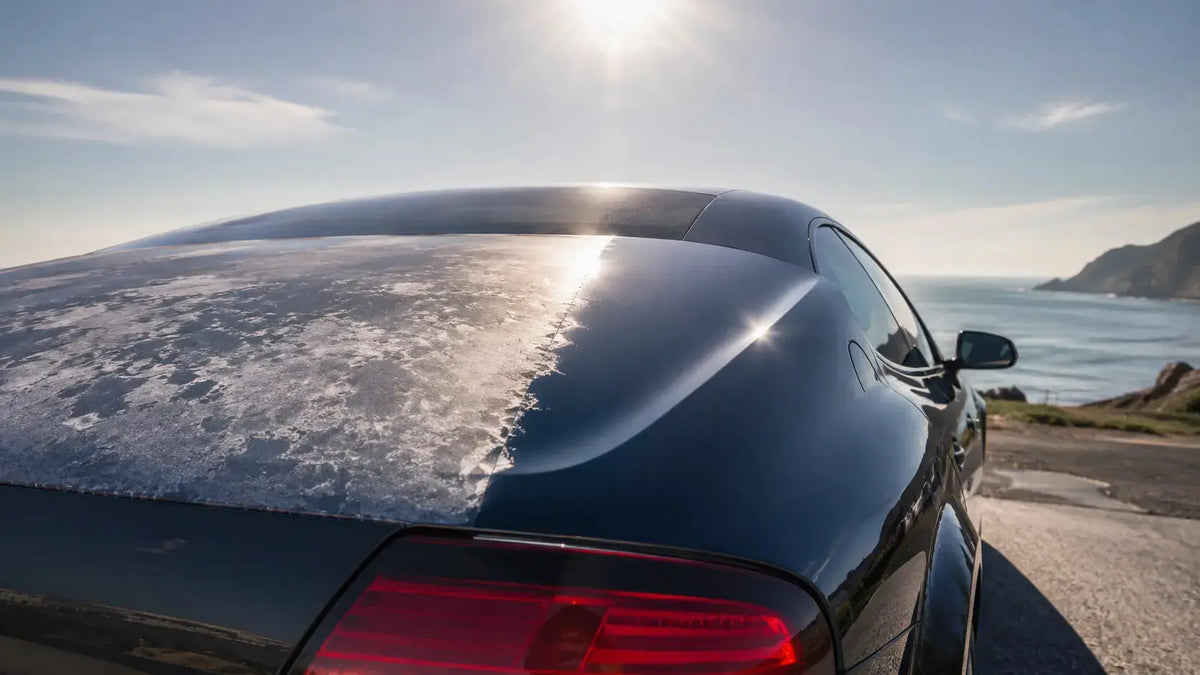
A car can sit outside for years and still look respectable, while another begins to lose gloss surprisingly early. That difference is not random. Sun exposure matters, but so do climate, paint quality, maintenance, panel position, and how the vehicle is stored.
Clear coat does not fail overnight. It usually gives warning signs first: the shine becomes flatter, the surface feels dry, dark colors lose depth, and exposed panels such as the roof, hood, and trunk begin to look older than the rest of the car.
The useful question is not simply, “How many years will clear coat last?” It is whether the coating is still healthy, beginning to oxidize, or already breaking down.
|
Quick answer A well-maintained factory clear coat can remain serviceable for many years, but there is no universal lifespan. Strong UV exposure, high heat, poor maintenance, contamination, and previous low-quality repairs can shorten it considerably. Light oxidation may still be correctable; peeling or flaking usually requires refinishing. |
What the Clear Coat Is and What It Does
Modern automotive finishes normally use a primer, a colored base coat, and a transparent clear coat. The clear layer provides gloss, but its more important job is to protect the color beneath it from weather, moisture, chemicals, and ultraviolet radiation.
That protection is durable, not permanent. Every day of outdoor exposure adds a little heat and UV stress. Over time, the surface becomes less able to retain gloss and resist environmental damage.
What Makes UV Damage Happen Faster?
Two cars with the same paint system can age very differently. A vehicle parked in a garage in a mild climate is not living the same life as one parked outside every day in intense sun.
|
Factor
|
Why It Matters
|
Typical Risk
|
|
Daily outdoor parking |
The finish receives longer and more consistent UV exposure. |
Higher |
|
Hot, sunny climate |
Heat and UV work together to accelerate surface aging. |
Higher |
|
Horizontal panels |
Roofs, hoods, and trunk lids receive the most direct sunlight. |
Higher |
|
Poor wash habits |
Bird droppings, sap, and contamination remain on the finish longer. |
Higher |
|
Regular protection |
Wax, sealant, or maintained coating adds a sacrificial layer. |
Lower |
|
Garage or shade |
Reduces direct exposure and heat cycling. |
Lower |
Paint color can also change how quickly aging becomes visible. Dark colors often show fading and loss of depth sooner, while white and silver may hide early changes until the clear starts to look chalky or patchy.
Early Signs of Sun-Damaged Clear Coat
The first signs are often subtle. You may notice that the finish no longer looks as deep after washing, or that one panel seems duller than the surrounding bodywork.
- Loss of gloss, especially on the roof, hood, or trunk
- A dry or slightly rough feel after washing
- Fading or reduced color depth
- A chalky or hazy appearance
- Small cloudy patches near panel edges
- The first signs of peeling or flaking
Catching the problem early matters because oxidation and clear coat failure are not repaired the same way.
Oxidation vs. Clear Coat Failure
|
Condition
|
What You See
|
Can Polishing Help?
|
Likely Next Step
|
|
Light oxidation |
Dullness, mild haze, reduced gloss |
Often, yes |
Decontaminate, test-polish, then protect |
|
Heavy oxidation |
Chalky finish, uneven gloss, noticeable fading |
Sometimes, but results vary |
Professional paint assessment |
|
Clear coat failure |
Peeling, flaking, cracking, cloudy edges |
No |
Remove failed coating and refinish |
|
Exposed base coat |
Color layer visible with no intact clear above it |
No |
Repaint the affected panel |
If the surface is only oxidized, a careful paint correction may improve the appearance. If the clear coat is separating, polishing cannot bond it back to the base coat. Aggressive polishing may actually remove more of the remaining clear.
Can Sun-Damaged Clear Coat Be Saved Without Repainting?
Sometimes. The deciding factor is whether the coating is still intact.
When correction may still work
If the clear coat is dull but not peeling, a professional may be able to restore gloss through washing, decontamination, machine polishing, and protection. A small test area should be evaluated before the whole panel is polished.
When repainting is the honest answer
Once the clear coat is lifting, cracking, or exposing the color layer, the damage has moved beyond surface correction. The failed coating needs to be removed and the panel refinished.
|
Do not hide failure under more clear Spraying new clear coat over loose or peeling material does not repair adhesion. The unstable layer underneath will continue to fail. |
How to Help Clear Coat Last Longer in the Sun
You cannot stop UV exposure completely, but you can reduce how hard the finish has to work.
- Wash the vehicle regularly with paint-safe products.
- Remove bird droppings, tree sap, and insect residue quickly.
- Use wax, sealant, or a maintained ceramic coating according to the product instructions.
- Park in a garage or shade when practical.
- Avoid leaving abrasive dust under a car cover.
- Inspect the roof, hood, and trunk regularly instead of waiting for peeling to appear.
There is no single maintenance interval that suits every product and climate. Follow the protection product’s instructions and adjust the schedule for the vehicle’s real exposure.
Car Cover or Tarp: They Are Not the Same
A fitted, breathable automotive cover can reduce sunlight, dust, sap, and bird-dropping exposure. A generic plastic tarp can create a different set of problems.
|
Cover Type
|
Advantages
|
Main Risk
|
|
Breathable automotive cover |
Designed to fit the vehicle and allow moisture to escape |
Can still scratch if used over a dirty car |
|
Plastic tarp |
Cheap and easy to find |
Traps heat and moisture; moves in wind; may rub the paint |
|
Garage or permanent shade |
Best reduction in direct exposure |
Not always available |
Whatever you use, the paint and the inside of the cover should be clean. A dirty cover moving in the wind can mark the finish even while it blocks sunlight.
When Refinishing Becomes Necessary
A failed clear coat repair starts with removing the unstable material, not with spraying over it. The exact process depends on the condition of the base coat and the repair area, but the goal is always the same: rebuild a stable surface before applying fresh clear.
- Remove peeling or poorly bonded clear coat.
- Assess whether the base coat can be preserved.
- Repair and prime exposed areas where required.
- Reapply color if the base coat has been damaged.
- Apply clear coat within the coating system’s specified process and recoat window.For the next clear-coat decision in this process, see our guide to 2K clear coat safety guide.
- Follow the paint manufacturer’s TDS for mixing, flash time, film build, and curing.
Spray Gun Choice Matters After the Prep Is Right
A spray gun cannot reverse UV damage, and it cannot compensate for unstable paint underneath. Its role begins after the panel has been repaired and prepared correctly.
On a hood, roof, or full panel, the challenge is keeping the fan pattern and film build consistent from one pass to the next. Uneven atomization can leave dry areas, excessive texture, or inconsistent gloss.
For clear coat refinishing, the PORPHIS PRD-817 VS Spray Gun is a suitable option for painters who need a 1.3 mm setup and stable atomization across larger panels. For model-specific performance, setup, and application context, see our clear coat application on large panels. Its value in this job is control and consistency—not a promise that equipment alone will make the repair last.
Always match the gun setup to the clear coat manufacturer’s recommendations and confirm that the compressor can supply the required airflow.
Frequently Asked Questions
What is clear coat used for?
Clear coat is used to protect the colored base coat and add gloss.For model-specific performance, setup, and application context, see our mirror-like reflective clear coat finish. It helps shield the finish from UV radiation, moisture, chemicals, and everyday wear.
Does clear coat really work?
Yes. A healthy clear coat is the protective outer layer of most automotive paint systems. For the next clear-coat decision in this process, see our guide to clear coat tips for first-time painters. It works well, but it still needs maintenance and can wear down over time.
What is the best clear coat to buy?
The best clear coat depends on the repair, the paint system, and the manufacturer’s recommendations. For a proper match, choose a product that is compatible with the base coat and the intended repair process.
Can I apply clear coat myself?
Yes, if you have the right materials, preparation, ventilation, and spraying technique. For best results, follow the product instructions closely and understand that poor prep will shorten the life of the finish.
How long does clear coat last in the sun?
There is no fixed lifespan. Climate, UV intensity, storage, maintenance, paint quality, and previous repair work all affect how quickly the clear coat ages.
How fast does UV damage car clear coat?
Damage develops gradually. A vehicle parked outdoors in intense sun and heat will normally show aging sooner than a garage-kept vehicle, but early signs may still take time to become obvious.
Can you fix sun-damaged clear coat without repainting?
Light oxidation may improve with professional correction. Peeling, flaking, cracking, or exposed base coat generally requires refinishing.
What is the difference between oxidation and clear coat failure?
Oxidation affects the outer surface and may still respond to polishing. Failure means the clear coat is breaking apart or separating, which polishing cannot repair.
Is a tarp safe for protecting car paint from the sun?
A generic plastic tarp is not ideal. It may trap heat and moisture and can rub against the finish. A clean, breathable automotive cover is safer.
How often should UV protection be reapplied?
Follow the wax, sealant, or coating manufacturer’s schedule and adjust it for the vehicle’s exposure. A car parked outside year-round may need more frequent maintenance.
Final Thoughts
Sunlight does not destroy clear coat in a single season, but it does create a slow, cumulative load on the finish. The best time to act is while the coating is still intact—before dullness turns into peeling.
Regular cleaning, sensible UV protection, shade, and early inspection can extend the useful life of the paint. If the clear has already failed, the durable solution is proper refinishing, not another layer sprayed over loose material.
Once the surface is rebuilt correctly, a stable clear coat gun such as the PORPHIS PRD-817 can help the painter apply a more even film across the panel. The lasting result still comes from the complete process: sound preparation, compatible materials, correct application, and proper curing.
Share:
2K Clear Coat Safety Guide: What to Know Before You Spray
Pearl White Paint Matching: How to Control a Tri-Coat Blend