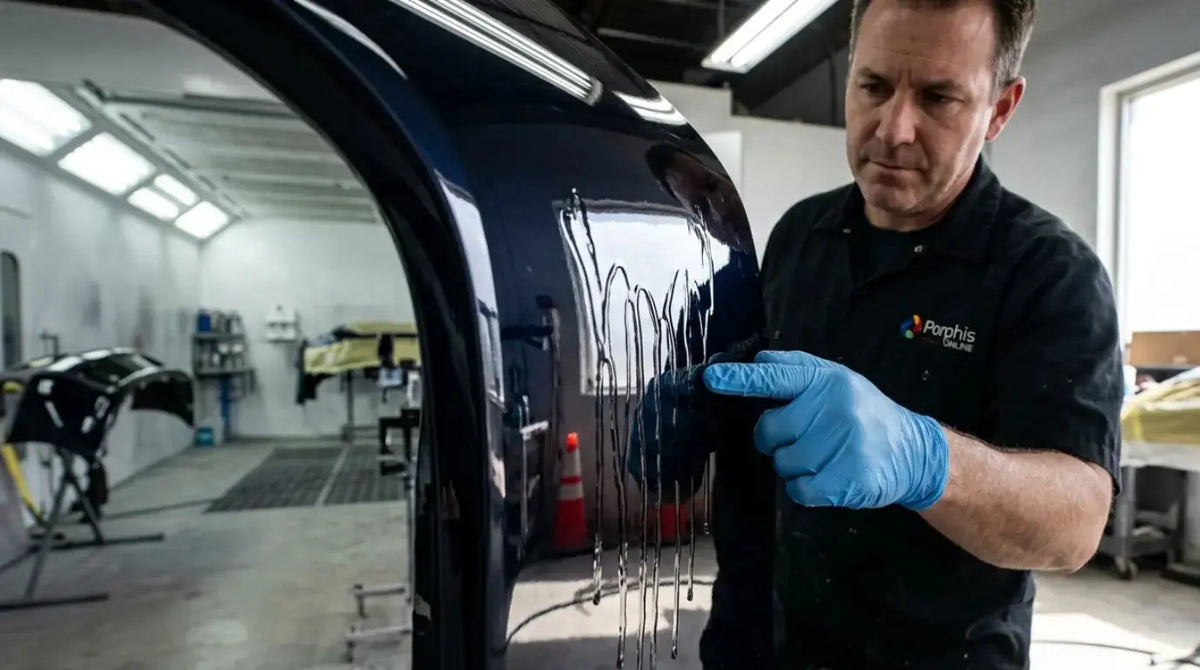
You've just pulled the tape off a fresh paint job, stepped back to admire your work, and spotted it—a run in the clear coat. That sinking feeling is universal in the collision repair industry. Same primer, same paint, same process. One door comes out flawless; the next looks like it cried its way through the booth.
If this sounds familiar, take heart: clear coat runs are preventable. For a closely related finish defect, follow our guide to fixing overlap lines in clear coat. This guide explains exactly why they happen, how to fix them when they do, and—more importantly—how to stop them before they start.
Why Clear Coat Runs Happen
A run or sag in clear coat occurs when the applied film is too heavy to stay in place before it sets. Gravity pulls the wet material downward, creating those telltale drips and curtains. But why does the film end up too heavy? Here are the five most common culprits.
1. Application Temperature Is Too Low
Temperature is one of the most overlooked variables in clear coat application. For model-specific performance, setup, and application context, see our clear coat application on large panels. When the ambient temperature or substrate temperature is too cold, the clear coat remains thin and fluid for too long. Solvents don't flash off at the proper rate, giving gravity extra time to work its mischief. Runs can form long after you've finished spraying.
The fix: Check the temperature of both the panel and the booth before mixing your clear. Most clear coats have a recommended application temperature range printed on the technical data sheet—typically between 18°C and 25°C (65°F–77°F). If it's too cold, warm the booth or the panel before you start. Never guess—measure.
2. Too Much Material in a Single Pass
This is the most common cause of runs. When you lay down too much clear coat in one pass, the weight of the material exceeds the surface tension that holds it in place. The excess flows downward—and you get a run.
The fix: Apply multiple medium-wet coats rather than one heavy coat. The first coat should be a "tack" or "mist" coat—a light application that creates a base for subsequent coats to bite into. Follow with two or three slightly heavier coats, allowing proper flash time between each. This builds film thickness gradually and evenly, without overwhelming the surface.
3. Spray Gun Too Close to the Surface
Holding the gun too close concentrates the material in a small area, creating excessive build-up that quickly turns into runs. The closer the gun, the higher the film thickness per pass—and the higher the risk.
The fix: Maintain a consistent distance of 15-25 cm (6-10 inches) from the surface, depending on your gun and the material. Measure it once with a ruler, then mark that distance on your gun or your arm as a visual reference. Keep that distance consistent across the entire panel.
4. Improper Gun Settings
Low air pressure produces poor atomization. Instead of breaking the clear coat into a fine mist, the gun spits out larger droplets that land heavy and wet. The material doesn't level properly, and runs form where the droplets accumulate.
The fix: Set your gun pressure with the trigger pulled (dynamic pressure). For clear coat application with most HVLP systems, you want the air cap pressure around 8-10 PSI, which typically translates to 24-30 PSI at the gun inlet. Adjust the fluid needle so that the material flows smoothly without excessive volume. Always test your pattern on masking paper before you hit the panel.
5. Mixing Consistency and Reducer Ratio
If the clear coat isn't mixed thoroughly, you can end up with localized areas of higher solvent concentration. Those areas stay fluid longer, making them prime candidates for runs. Too much reducer lowers viscosity, making the material more prone to sagging. Too little, and you'll struggle with orange peel.
The fix: Always mix your clear coat according to the manufacturer's specifications. Measure carefully—don't eyeball it. Stir thoroughly, scraping the bottom and sides of the mixing cup to ensure full incorporation. If you're adding reducer, stick to the recommended percentage.
How to Fix Clear Coat Runs: A Step-by-Step Approach
Even experienced painters get runs sometimes. Here's how to fix them without making the problem worse.
For Fresh Runs (Still Wet)
If you catch a run immediately after spraying—while the clear is still wet—you have options:
-
Use a run brush: A small brush can gently redistribute the excess material across the surrounding area. Work quickly and lightly.
-
Blow it out: A quick blast of compressed air from a blow gun can push the excess material back into the film. Be careful not to create waves or ripples.
For Cured Runs (Dry to the Touch)
Once the clear coat has cured, you'll need to sand and repolish. Here's the correct process:
-
Block sand the run: Use a hard sanding block with 600-800 grit wet-or-dry paper. Sand only the run itself, keeping the block flat to avoid creating a divot in the surrounding clear. Work carefully until the run is level with the surrounding surface.
-
Progress through the grits: Move to 1000 grit, then 1500, then 2000. Each grit removes the scratches from the previous one.
-
Polish: Use a compounding pad with a medium-cut polish, followed by a fine polish. The area should blend back to a gloss that matches the surrounding clear.
Important: If the run is deep or extensive, it may be faster to sand the entire panel and reclear rather than spend hours chasing a single run.
Preventing Clear Coat Runs: A Pro's Pre-Spray Checklist
Before you mix your next batch of clear coat, run through this checklist: For model-specific performance, setup, and application context, see our fixing dry spots under clear coat.
| Checkpoint | Action |
|---|---|
| Temperature | Panel and booth at 18-25°C (65-77°F) |
| Mixing | Measure accurately, mix thoroughly, correct reducer ratio |
| Gun distance | 15-25 cm (6-10 inches) from surface |
| Gun pressure | Set dynamic pressure; test pattern on paper |
| First coat | Light mist/tack coat |
| Flash time | Follow manufacturer's recommended times between coats |
| Spray speed | Consistent, not too fast or too slow |
| Overlap | 50% overlap on each pass for even coverage |
The PORPHIS Advantage: Equipment That Helps You Avoid Runs
A run is often the result of equipment that doesn't give you the control you need. Inconsistent atomization, unreliable pressure delivery, and poor fluid control make it harder to lay down a consistent film—and that's when runs happen.
For painters who demand predictable results coat after coat, the PORPHIS PRD-815 is engineered to deliver. Featuring MP (Multi-Point) atomization technology, the PRD-815 produces an exceptionally even spray pattern that eliminates the "hot center / thin edges" problem common with standard nozzles. The result is a uniform film thickness across the entire panel—no heavy spots waiting to become runs.
The PRD-815 operates at 23-31 PSI with an air consumption of just 10.2 CFM, making it compatible with a wide range of professional compressors. Its versatile 1.2/1.3mm nozzle set handles both clear coats and basecoats with equal precision.
What makes the PRD-815 particularly well-suited to run prevention is its responsive air regulation system and precise fluid control—features that allow you to dial in the exact settings for your specific clear coat and replicate them consistently job after job. The gun's lightweight forged body reduces fatigue during extended spraying sessions, helping you maintain consistent technique from the first coat to the last.
When your equipment gives you predictable atomization and fluid delivery, you can focus on what matters: laying down a perfect coat every time.
Frequently Asked Questions
Why do runs only happen on some panels but not others?
Temperature variation is often the culprit. Different panels can have different surface temperatures—especially if one is closer to a heat source or in the path of airflow. Check the temperature of each panel individually before spraying.
Can I prevent runs by using less reducer?
Yes, but only to a point. Using less reducer than recommended can make the clear coat too thick, leading to orange peel and poor leveling. Always follow the manufacturer's specifications. If you're experiencing runs, try adjusting your spray technique or gun settings before changing the mix ratio.
How long should I wait between clear coat coats?
Follow the manufacturer's recommended flash times—typically 5-15 minutes depending on temperature and the specific product. A good rule of thumb: the clear should be tacky but not wet when you apply the next coat. If it's still wet, wait longer. If it's fully dry, you've waited too long.
What's the difference between a run and a sag?
A run is a vertical drip that forms from excess material flowing downward. A sag is a broader, wavy area where the film has settled unevenly. Both are caused by the same issues—too much material, improper viscosity, or poor technique—but sags cover a wider area.
Is it better to spray clear coat with HVLP or conventional guns?
HVLP guns are generally preferred for clear coat because they produce less overspray and better transfer efficiency. However, any gun can produce runs if not set up correctly. The key is proper pressure, distance, and technique.
Conclusion
Clear coat runs are frustrating—but they're also preventable. The difference between a run-free finish and a run-ruined panel usually comes down to three things: temperature, technique, and equipment.
Check your temperature before you start. Apply light, controlled coats with proper flash times. Keep your gun at the right distance and pressure. And use equipment that gives you the control you need to lay down a consistent film every time.
When every coat goes down right, runs don't stand a chance.
Share:
Paint Peeling After Two Months? Here's Why — And How to Fix It Right
Can Moisture in Air Cause Solvent Pop? Yes — Here's How to Stop It