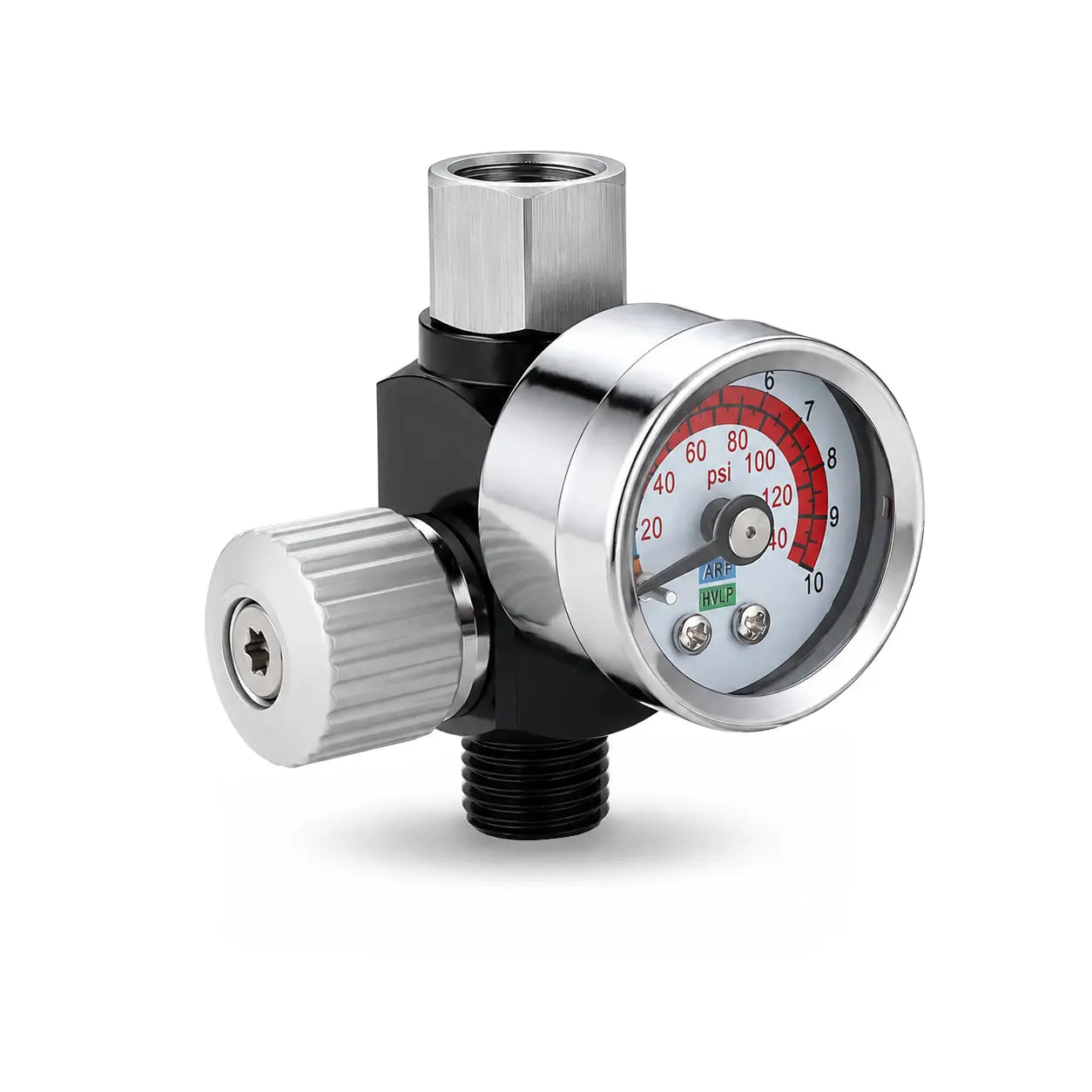

Air Regulator
Dirty Air Ruins Finishes. Unstable Pressure Wastes Paint. Fix Both. Before You Spray
Air Regulator
You may also like
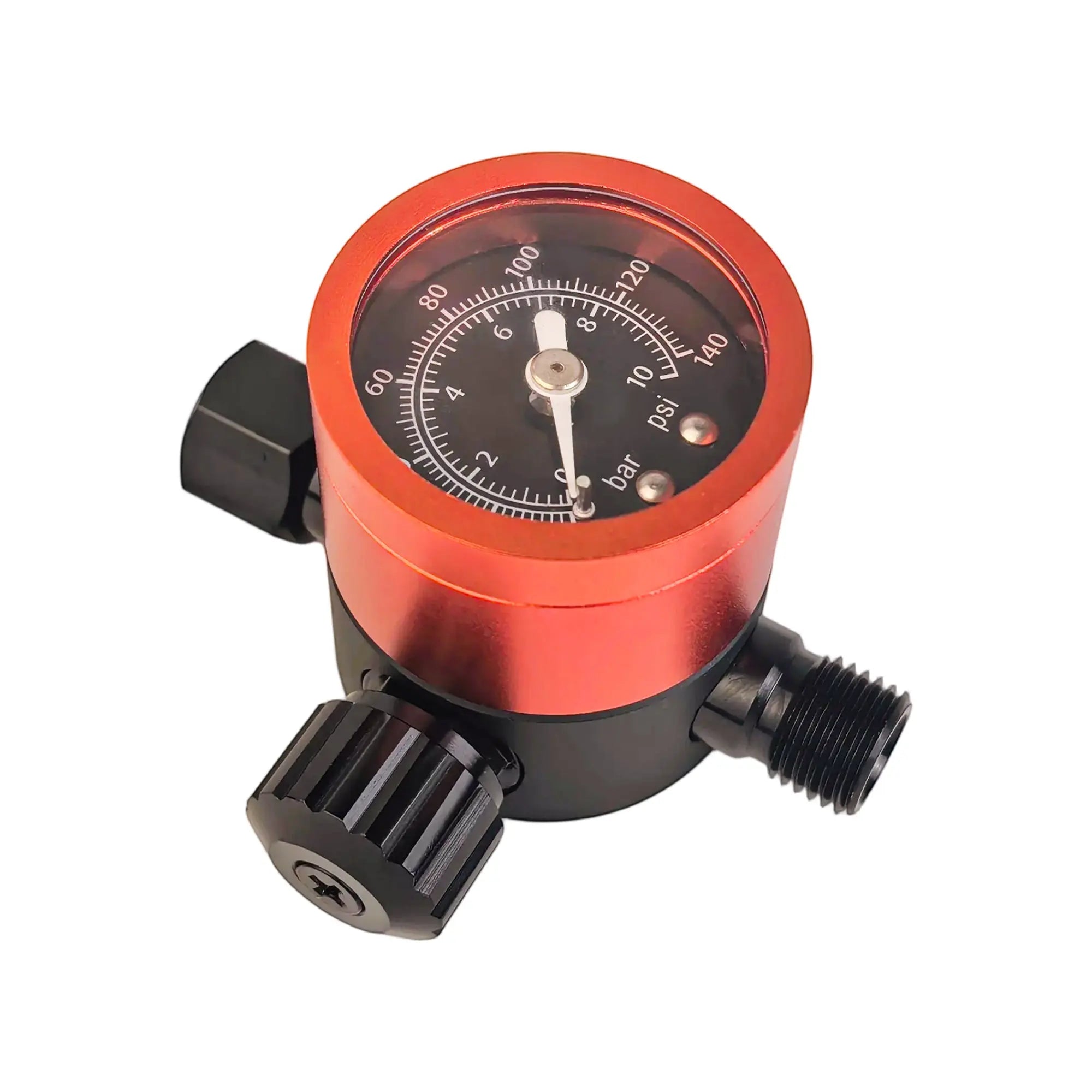
Air Pressure Gauge for Spray Gun | High-Quality Pressure Gauge
FAQs-Air Pressure Gauge
Q1: How does moisture in the air line actually damage my finish?
A: Moisture contamination produces two distinct finish defects depending on when it enters the spray stream. Water droplets reaching the fluid tip mix with the atomized paint, creating "fish-eye" craters in the wet film that do not level out — requiring the affected area to be sanded and resprayed. Water vapor that doesn't droplet but reaches the panel surface during waterborne clear coat application can cause adhesion failure between coats. Both defects appear after the paint has dried, not during application — meaning you won't know there's a moisture problem until the job is done and you're looking at a ruined finish.
Q2: How do I read the pressure gauge and set the correct pressure for my spray gun?
A: Set pressure at the gun inlet, not at the compressor regulator. With the trigger pulled (flowing air), the gauge reads dynamic pressure — this is the number that matters for atomization. Static pressure (trigger released) will always read higher. Set your compressor regulator until the dynamic pressure at the gun matches your target: typically 1.6–2.0 bar for most Porphis gravity-feed guns, with specific settings varying by model and nozzle size. Refer to your gun's specification card for the recommended inlet pressure range. Always set pressure with the trigger pulled — setting static pressure will result in over-pressure during actual spraying.
Q3: Where exactly should I install the filter and gauge in my air line setup?
A: Install as close to the gun inlet as practical — ideally within 30cm of the gun connection point. The further from the gun, the more opportunity for moisture to condense between the filter and the gun in the remaining hose. Optimal setup from compressor to gun: compressor outlet → main regulator → air hose → filter/gauge unit → spray gun. If using a whip hose (short flexible connector between the main hose and gun), install the filter/gauge between the main hose and the whip hose. Never install the filter/gauge at the compressor end and consider the hose "clean" — moisture forms in the hose, not before it.