
Body

Design

Pressure

Spraying
Weight

Design

Atomization

Spraying Clear Coat
Three Nozzles. One Entry Price. Trigger So Light You'll Forget You're Working.
Body
Design
Pressure
Spraying
Weight
Design
Atomization
Spraying Clear Coat
Free & Fast Ship
1-Year Warranty
60 Day Free Trial
1-on-1 Customer Service
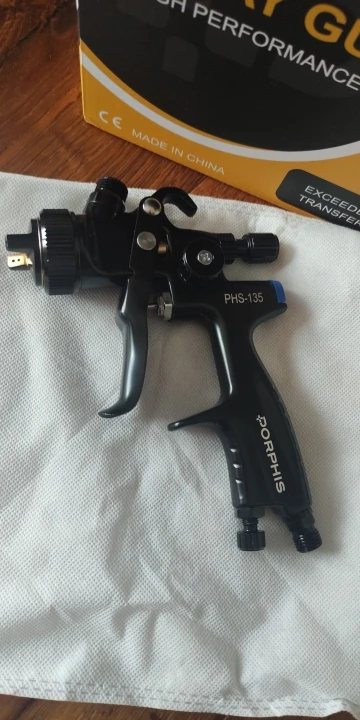
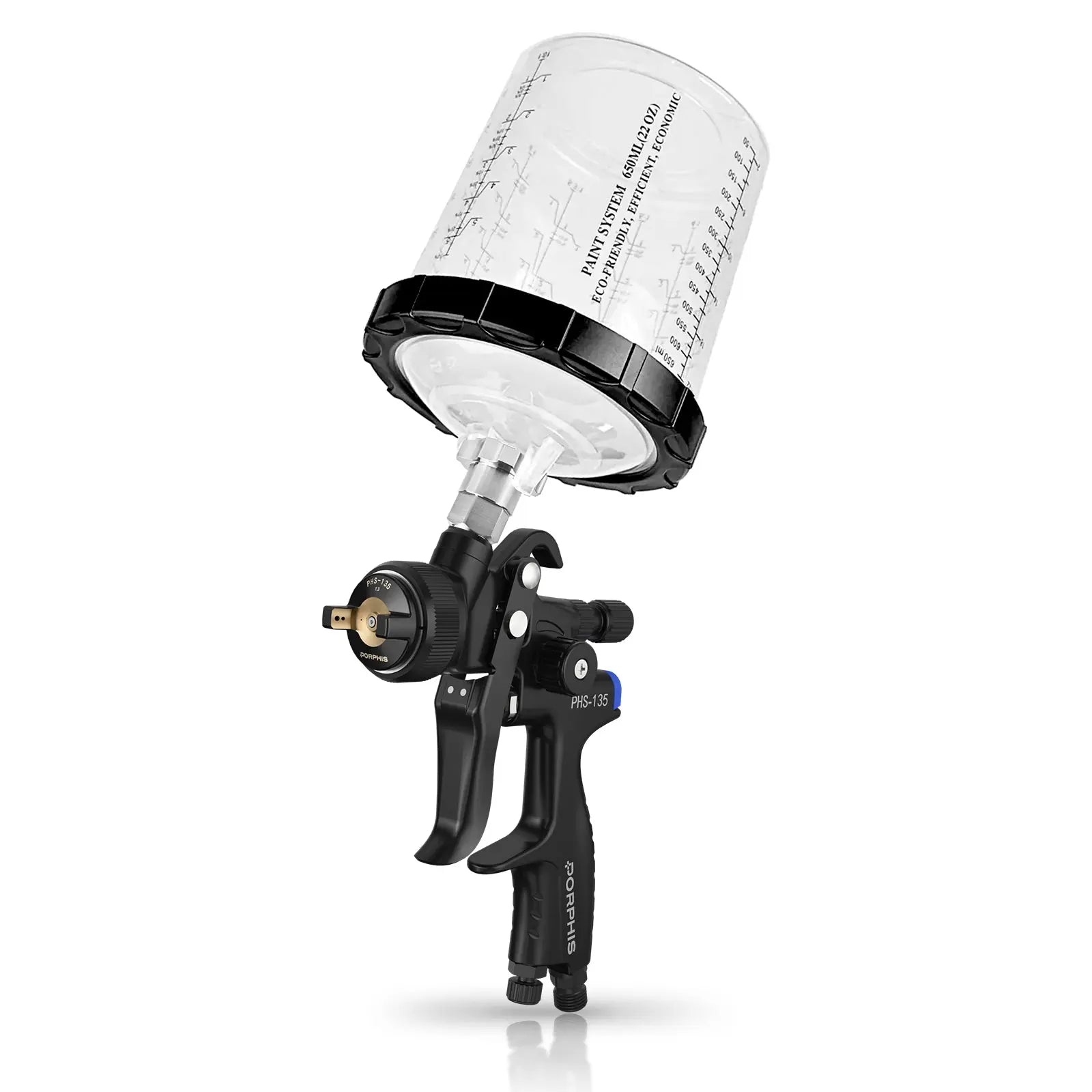
PHS-135 Air Paint Spray Gun
If you have any questions, you are always welcome to contact us. We'll get back to you as soon as possible, within 24 hours on weekdays.
Shipping Information
Use this text to answer questions in as much detail as possible for your customers.
Customer Support
Use this text to answer questions in as much detail as possible for your customers.
FAQ’s
Use this text to answer questions in as much detail as possible for your customers.
Contact Us
Use this text to answer questions in as much detail as possible for your customers.



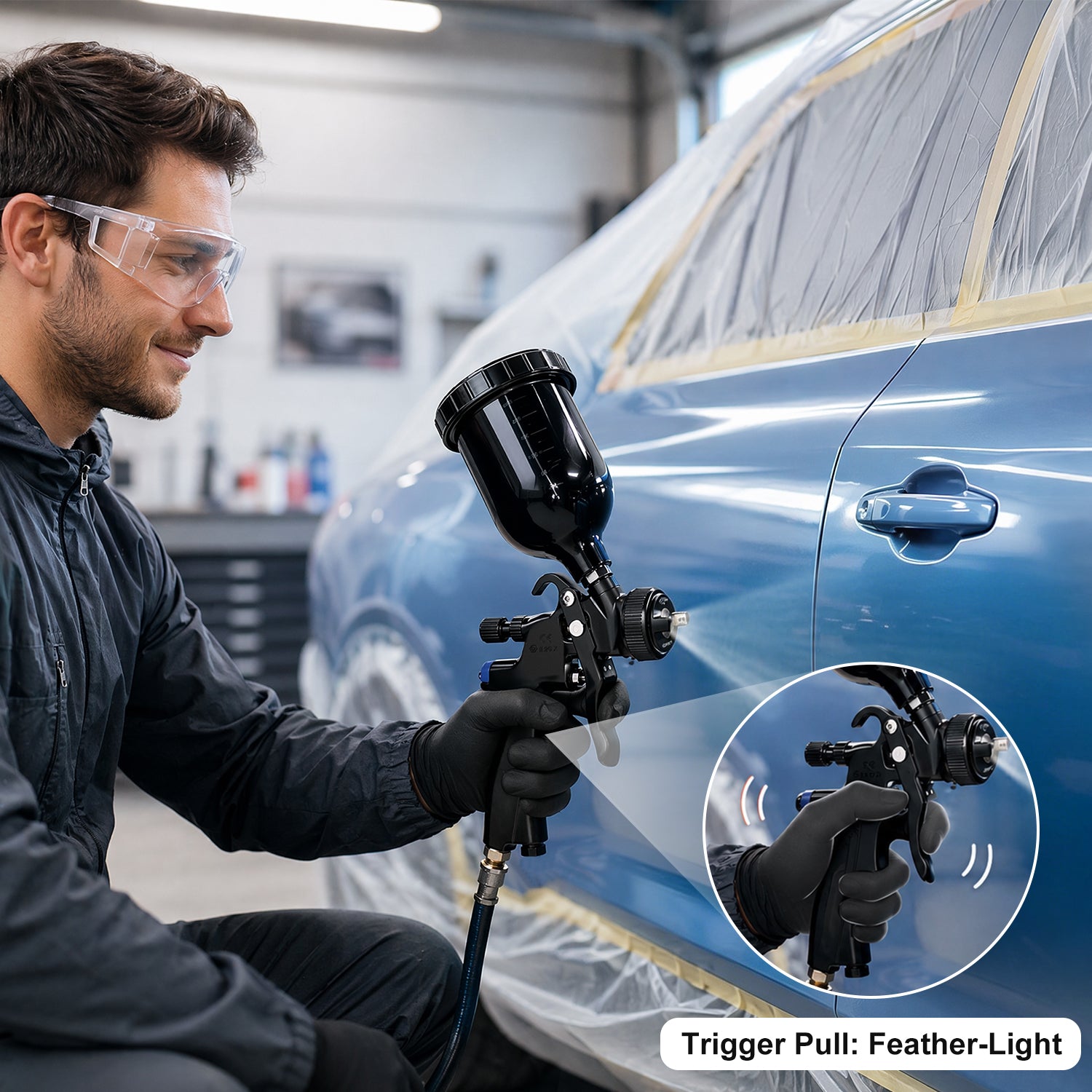
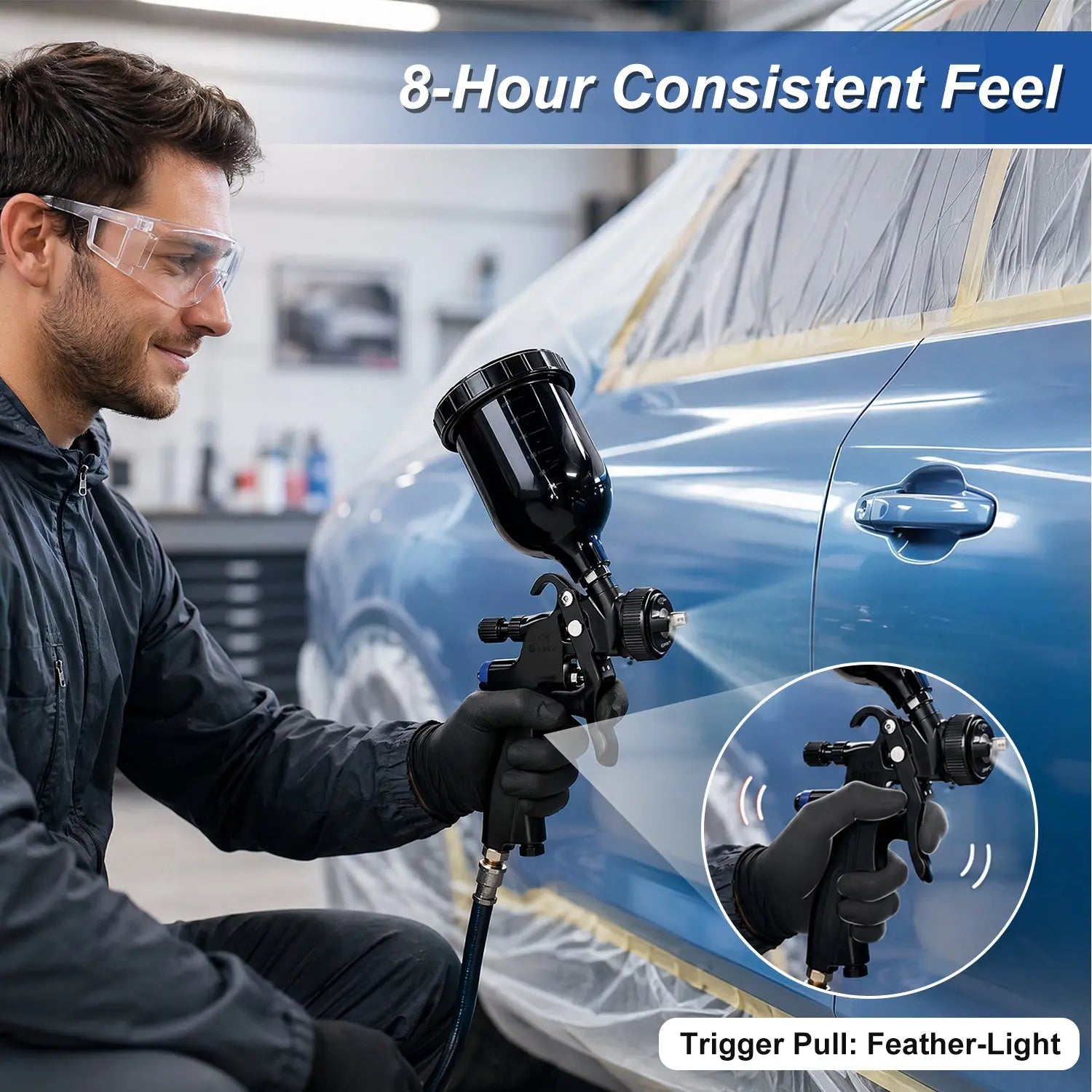
Eight Hours of Spraying. Your Hand Won't Know It.
Trigger fatigue is real — and it's why experienced painters are picky about trigger feel. The PHS-135 features an exceptionally light trigger pull that reduces hand strain during long spray sessions. Whether you're doing a single panel or a full vehicle, your grip stays steady and your results stay consistent.
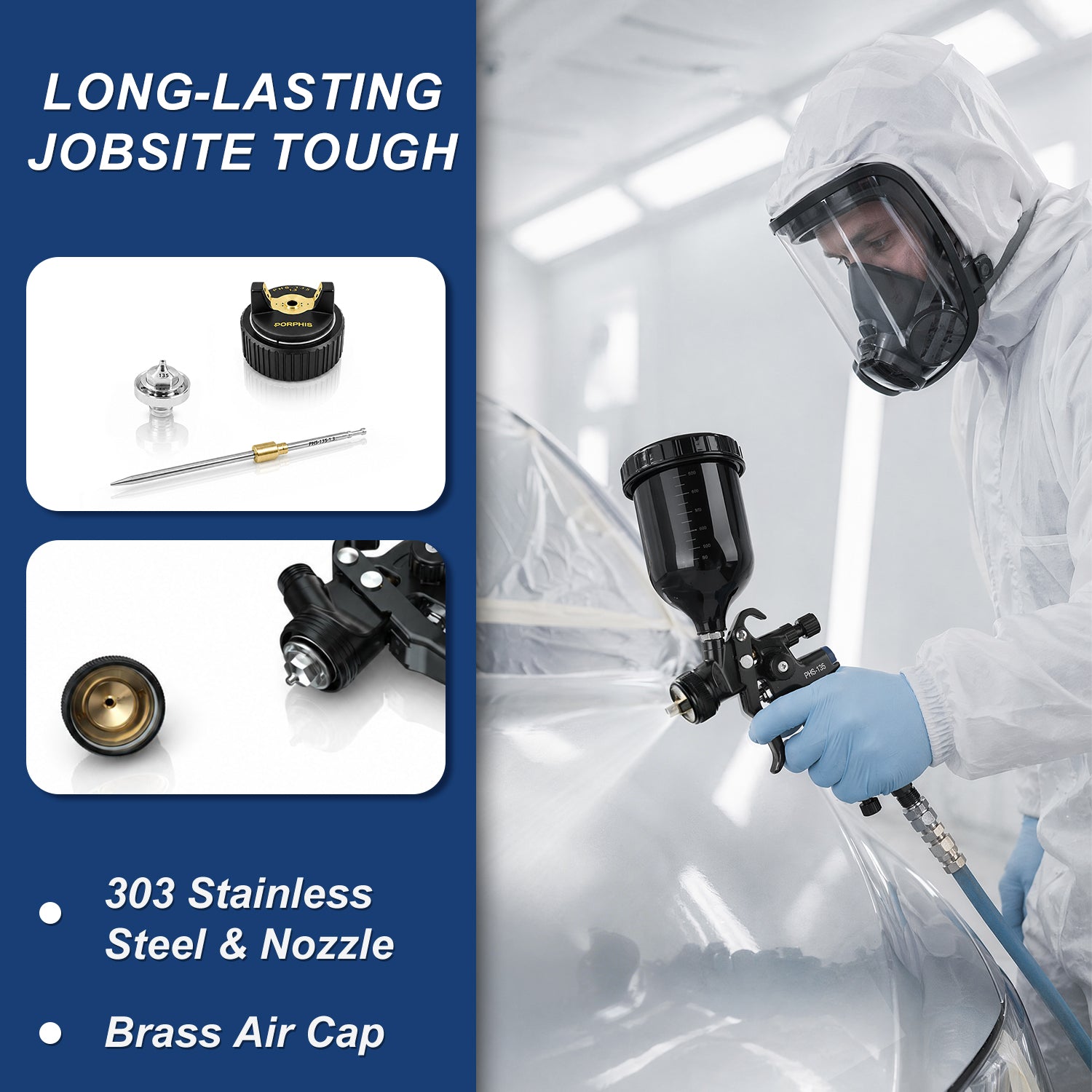
The Air Cap Is Where Atomization Happens. We Didn't Compromise There.
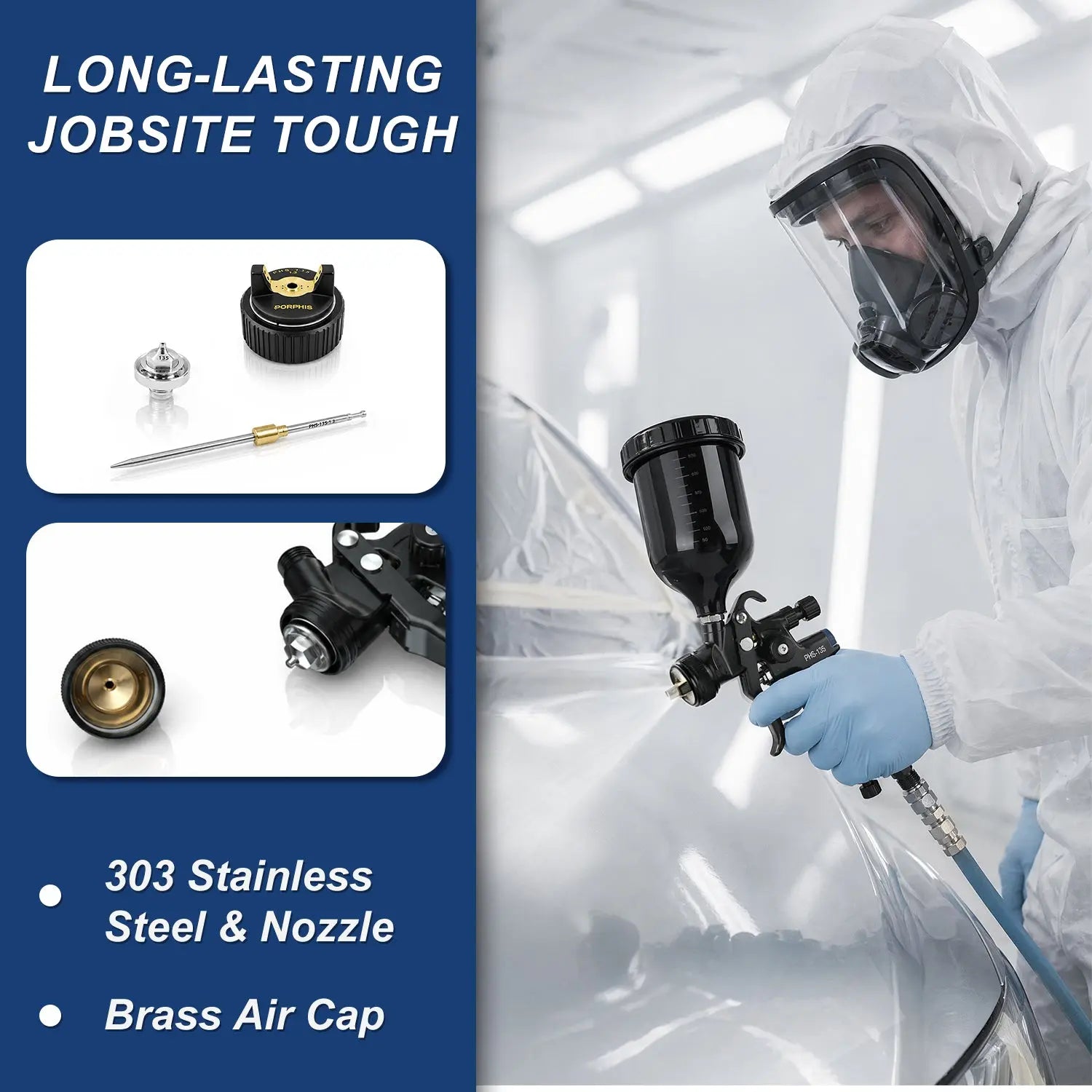
The PHS-135 uses a specially selected brass air cap, chosen for its superior corrosion resistance and wear durability. Brass maintains tighter dimensional accuracy than cheaper zinc alternatives — which means your spray fan stays symmetrical, your atomization stays consistent, and your finish quality stays predictable shot after shot.


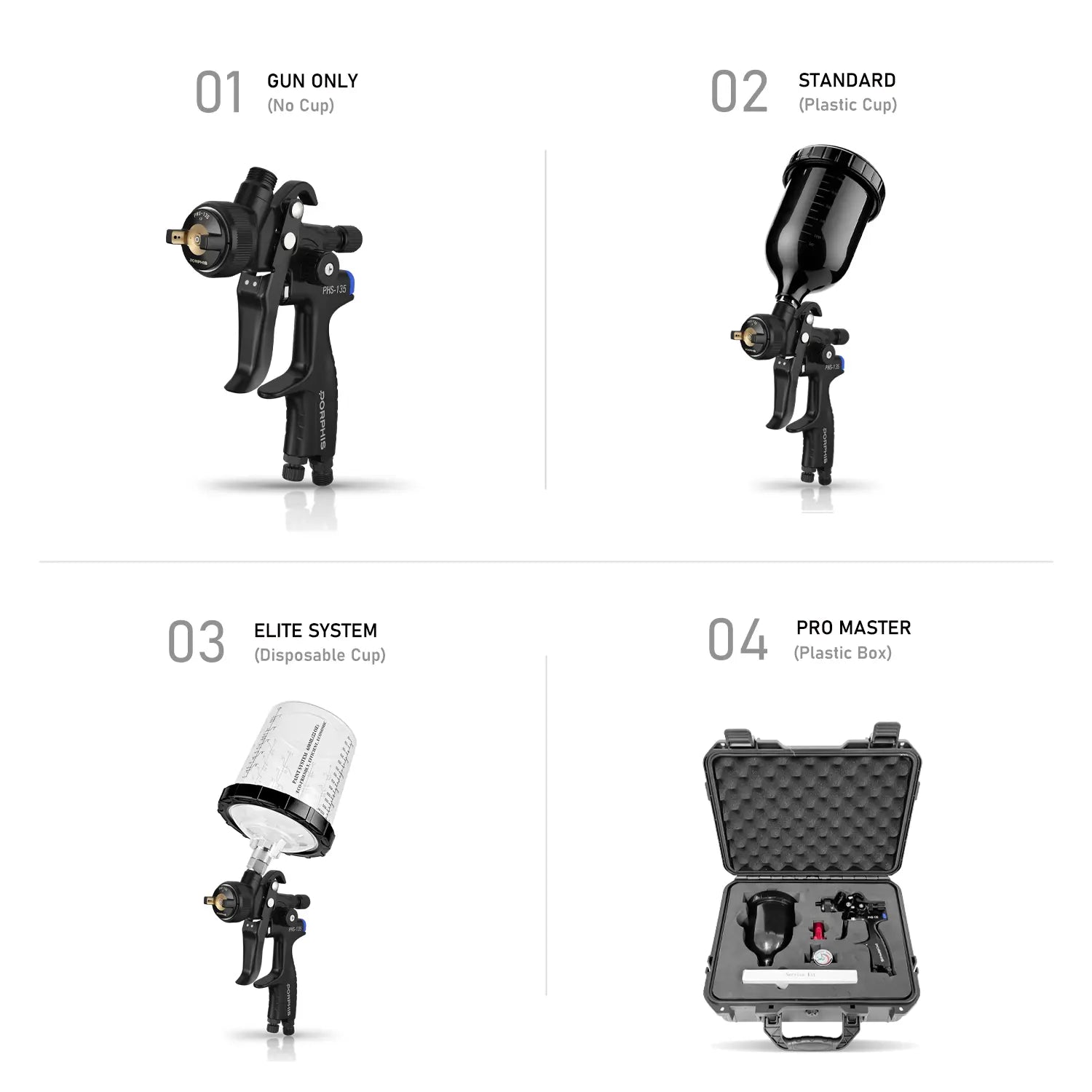
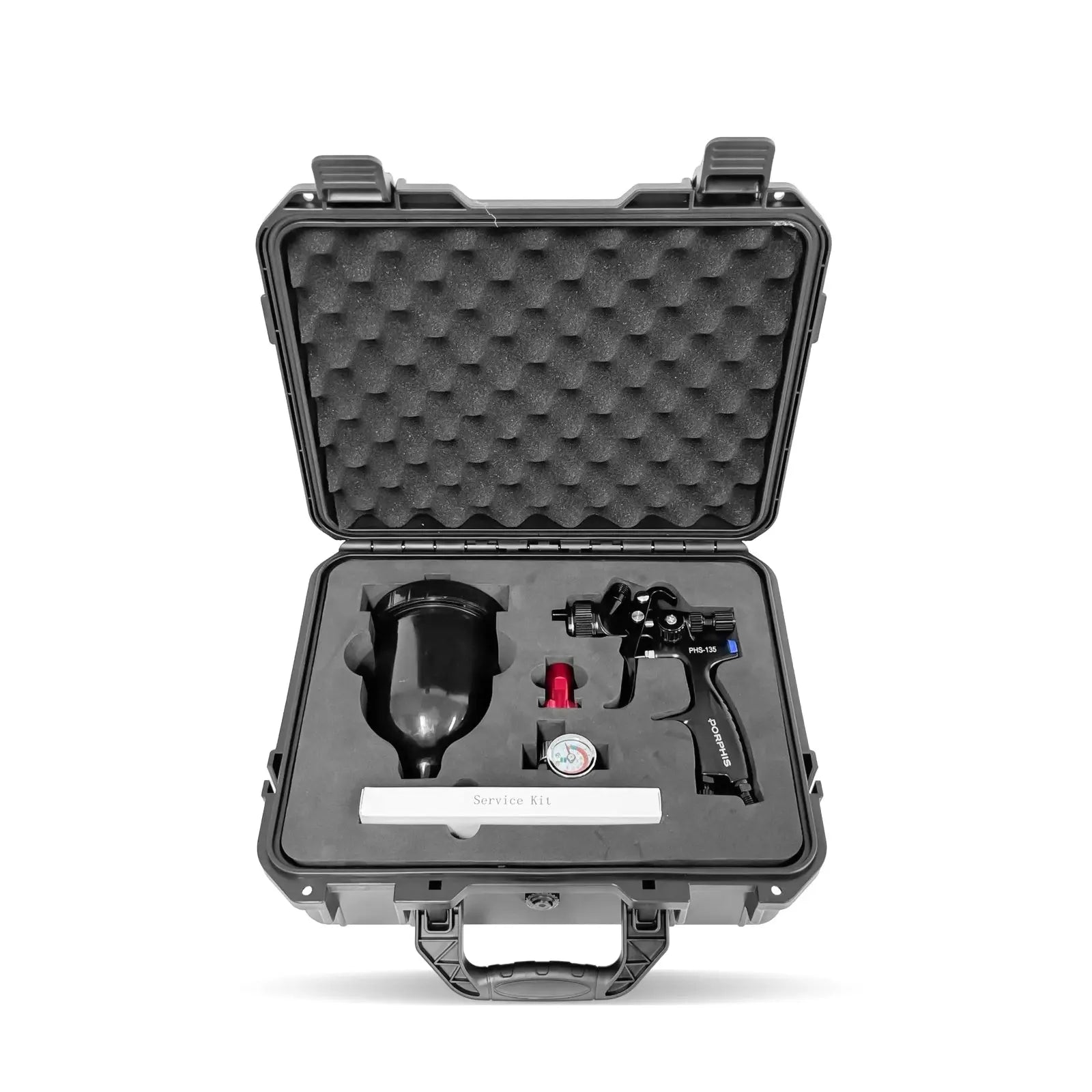
Included in the Box

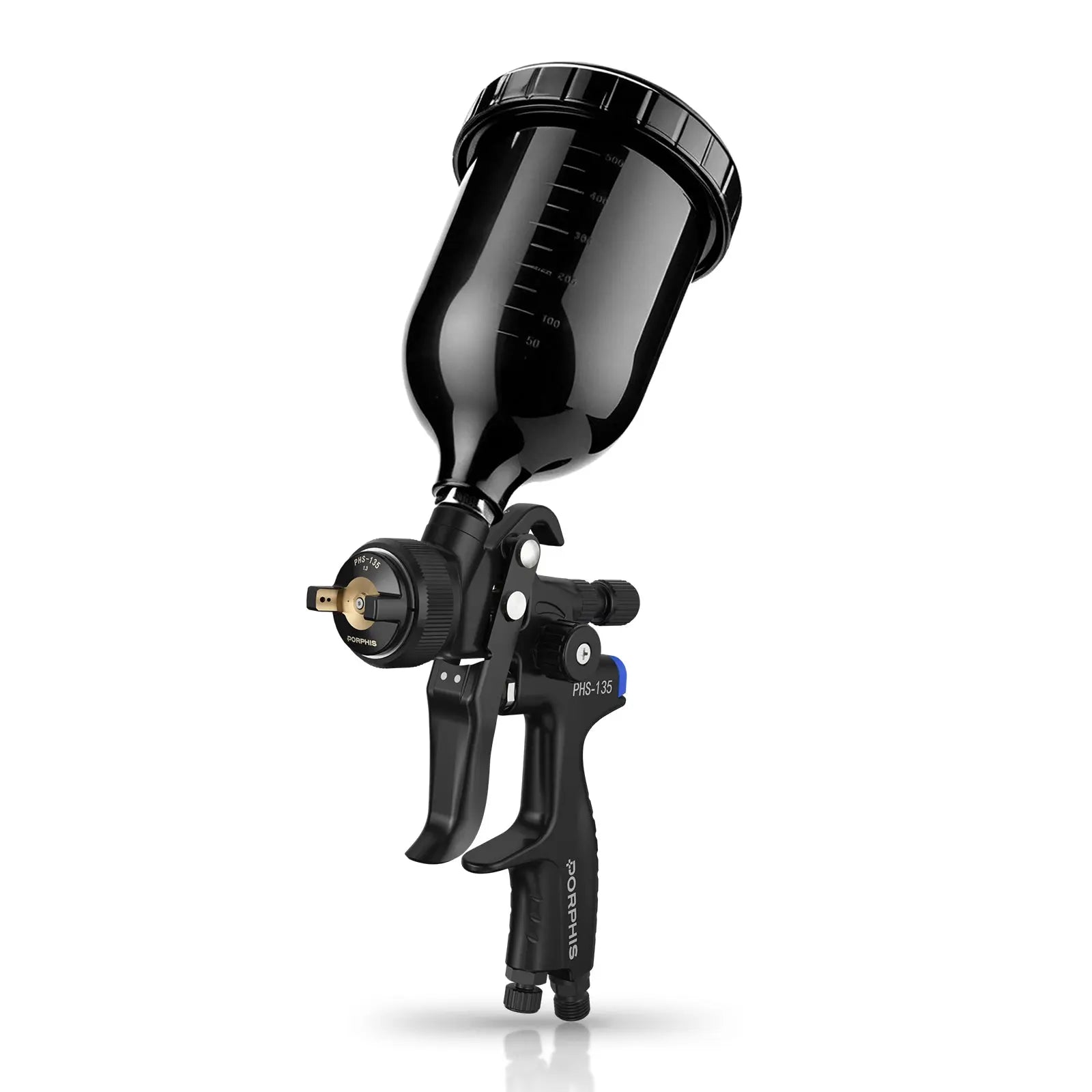
600ml white cup

Manual

Service kit

Spray gun
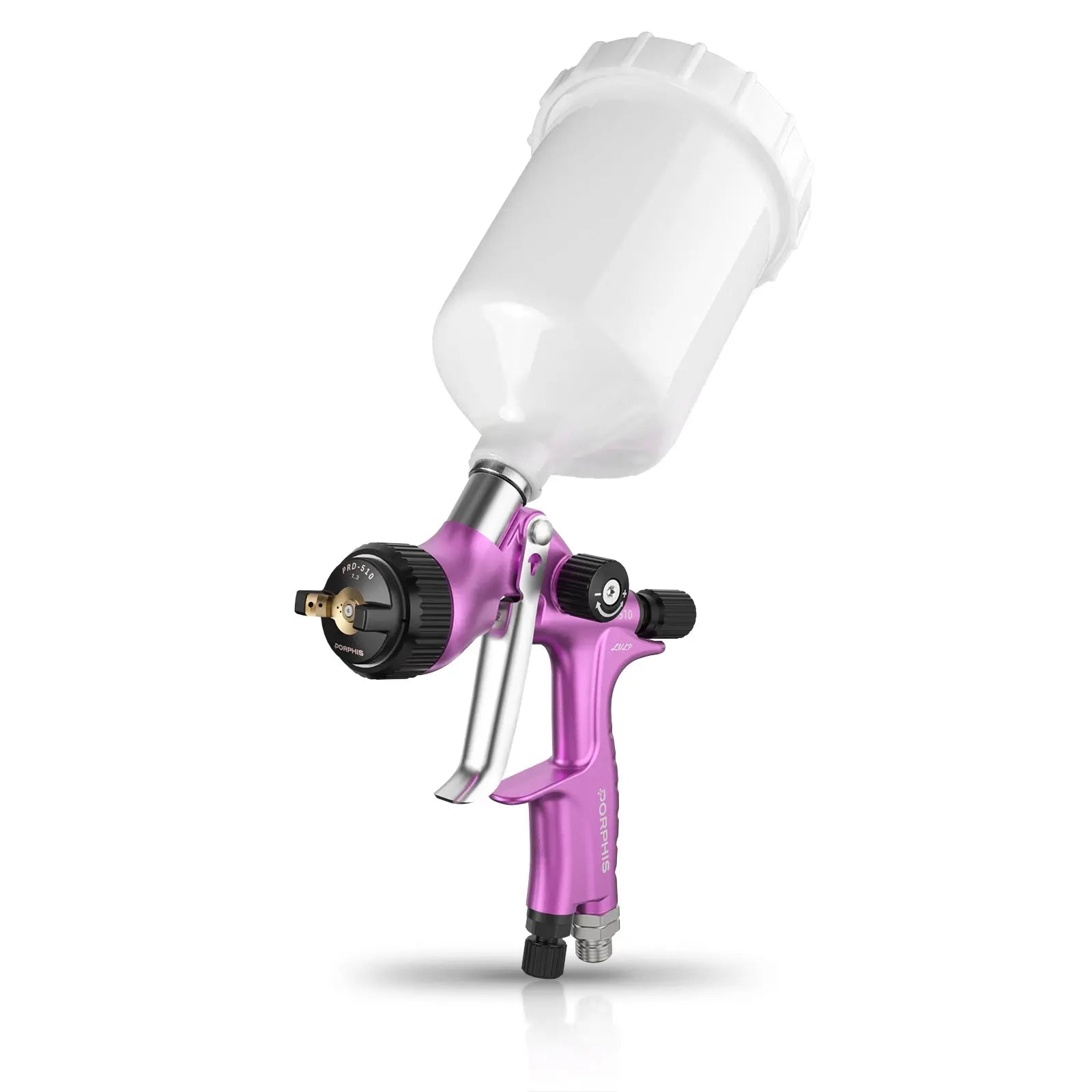
PORPHIS PRD-510 | Professional LVLP Spray Gun
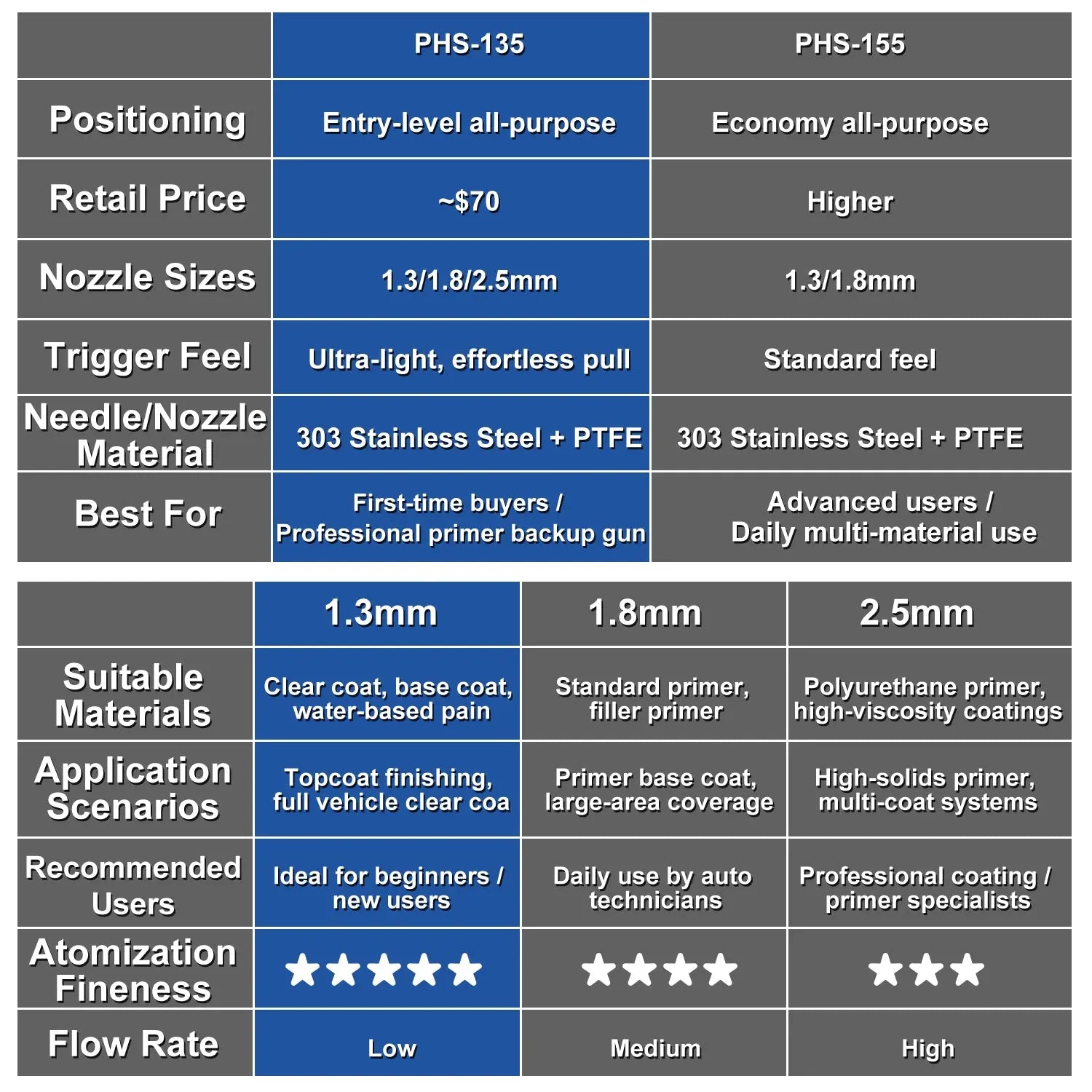
A: Here's the straightforward guide for the PHS-135's three nozzle options:
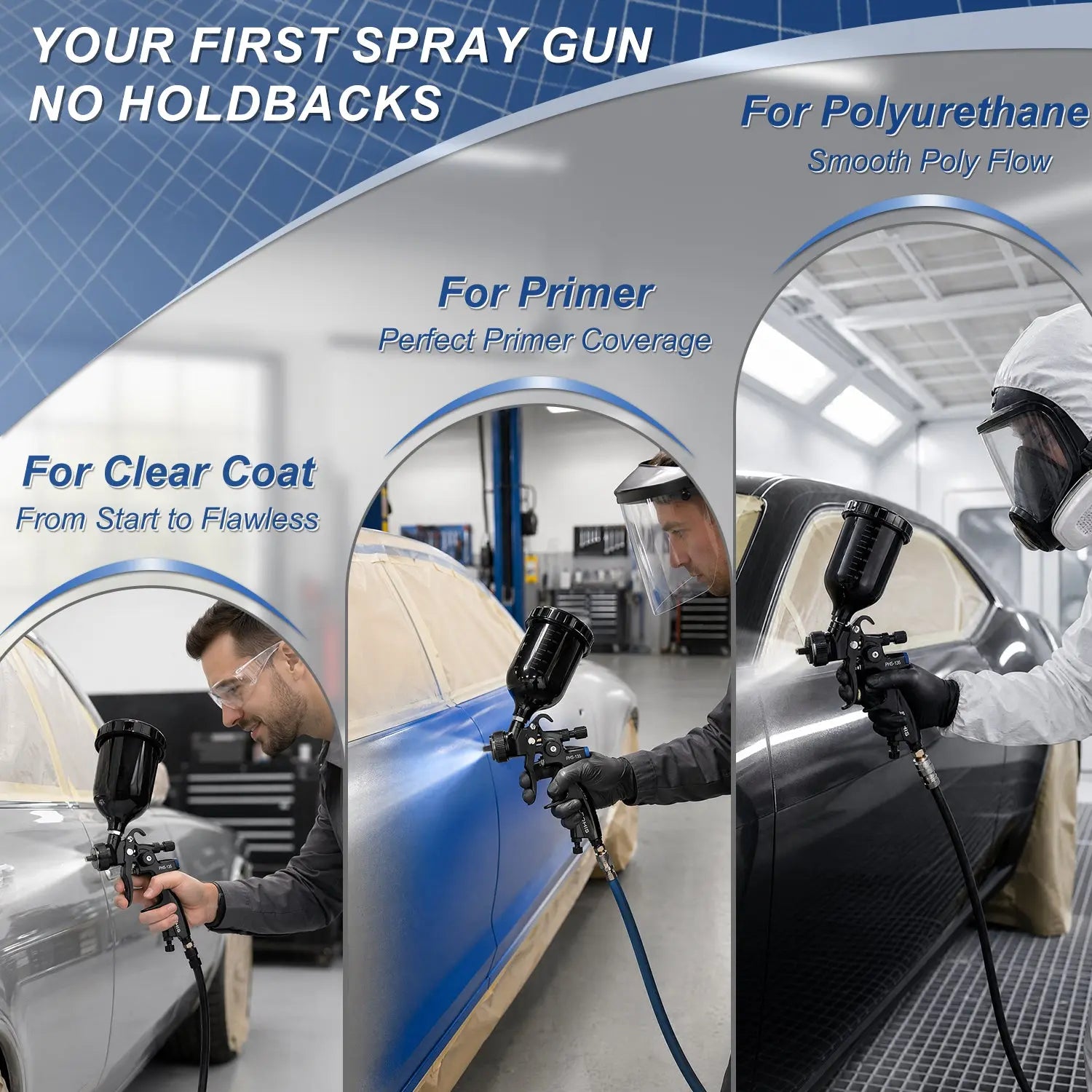
1.3mm — Start here if you're new. Ideal for clear coat and base coat. Fine atomization, maximum control, smallest margin for runs. Most first-time painters get professional results with the 1.3mm immediately.
1.8mm — Choose this for primer and filler applications. Handles higher-viscosity materials that would clog a 1.3mm nozzle. Used by professionals for full base coat coverage on larger vehicles.
2.5mm — Specialized for polyurethane primers and high-build sealers. If you don't know what polyurethane primer is, you don't need this one yet. Order the 1.3mm and grow from there.
A: The PHS-135's trigger mechanism uses a precision-balanced spring and pivot geometry that requires significantly less finger force to actuate than standard spray gun triggers. In practical terms: after 3–4 hours of continuous spraying, your trigger finger on a standard gun is fatigued enough to affect your spray speed consistency — which shows up in the finish as uneven film build. The PHS-135's light trigger keeps your finger fresh longer, which directly translates to more consistent technique in the later stages of a long job. For occasional DIYers this matters less; for painters doing multi-panel jobs in a single session, it's a genuine quality-of-life difference.
A: It's a fair question. Here's what was not cut: the needle and nozzle are 303 stainless steel (not iron), the air cap is specially selected brass for corrosion resistance, and the PTFE ring seal provides chemical resistance consistent with professional-grade guns. What the PHS-135 doesn't have compared to higher-tier guns: the integrated needle valve structure of the PRD-62 series, the VS Split Nozzle technology of the PRD-717/627, or the self-cleaning air cap of the PRD-817. The PHS-135 uses proven, conventional spray gun architecture executed with professional-grade materials at the fluid path — the price reflects a simpler design, not inferior materials where it counts.
A: The 2.5mm nozzle handles high-viscosity polyurethane primers and sealers, but rubberized undercoating and bed liner products are typically far outside the viscosity range of any conventional gravity-feed spray gun. These products are usually applied with dedicated texture guns or brush/roll methods. For spray-applied bed liner products specifically formulated for gravity-feed application (some exist at lower viscosity), thin to the manufacturer's minimum spec and test on a sample surface first — but this is at the edge of the 2.5mm's design intent, not its primary use case.
A: The PHS-135 and PHS-155 are different starting points for different users:
PHS-135 — Three nozzle options, ultra-light trigger, $70 entry price. Right choice if you want to start spraying immediately across multiple material types without committing to a higher price point, or if you need a dedicated primer gun alongside a more expensive clear coat gun.
PHS-155 — MP atomization optimized specifically for the base-coat-through-clear-coat workflow, heavier build quality, higher price. Right choice if your primary goal is finish quality on color and clear coat, and you're willing to invest more in that result.
Many painters own both: the 135 for primers and high-viscosity materials (2.5mm nozzle), and the 155 for base coat and clear coat. At $70, the 135 makes economic sense as a dedicated primer gun even if you already own a more expensive top coat gun.
A: The PHS-135 runs at 1.6–2.0 bar across all three nozzle sizes, but CFM requirements increase with nozzle diameter:
1.3mm — 6–8 CFM at 90 PSI. Most 6-gallon home compressors can handle this for intermittent use.
1.8mm — 8–10 CFM at 90 PSI. A 20-gallon compressor gives comfortable sustained operation.
2.5mm — 10–12 CFM at 90 PSI. A larger compressor (30-gallon+) is recommended for continuous use with high-viscosity materials. Pressure drop with an undersized compressor is more pronounced at 2.5mm because the larger nozzle passage draws more air volume per unit time.
A: Yes — all internal components of the PHS-135 are available as individual replacement parts through the PHS-135 repair kit. This includes the needle, nozzle tip (all three sizes), air cap, PTFE needle seal, and cup gasket. The modular component design means you replace the specific worn part rather than the entire gun. At $70, some painters treat the PHS-135 as disposable — but with proper cleaning and occasional seal replacement, a well-maintained PHS-135 will outlast several cheap spray guns at the same price point.
Excellent result, very powerful, transfers the material correctly, a bit tedious to adjust but once you have it, it gives a good finish, recommended!! Thank you.
Super equipment, the pad fits smoothly. Fast shipping. I recommend 👍
I have been using the PHS-135 MP Spray Gun with the 2.5mm setup for primer applications, and I am extremely impressed with the results. The spray pattern is consistent, atomization is excellent, and it lays down primer smoothly with minimal effort. Cleanup is easy, and the gun feels comfortable in hand during long jobs. For the price, it performs far beyond my expectations. I would definitely recommend it to any body shop or DIY painter looking for a quality spray gun without spending hundreds of dollars.
Hi Eliud, thank you for such a detailed and professional review! We are thrilled to hear that the PHS-135 with the 2.5mm setup is delivering the smooth atomization and consistent patterns you need for primer work. Our goal was to create a tool that bridges the gap between high performance and accessibility, and your experience confirms we hit the mark. We truly appreciate the recommendation to both body shops and DIYers! Happy painting!
Just sprayed some slick sand with it and it sprayed fantastic
Great primer gun.
Ok
The paint sprayer is good for the money, but the assembly leaves much to be desired. The shavings from processing the channels were not removed, so everything had to be disassembled.
Thank you 💪🏻.
Cheap isn't always good. The gun struggles with 4:1 primer filler. It needs to be thinned to flow properly. I purchased the 1.8 set up. Ok for small spot priming, but not for priming large respray jobs.
Cheap isn't always good. The gun struggles with 4:1 primer filler. It needs to be thinned to flow properly. I purchased the 1.8 set up. Ok for small spot priming, but not for priming large respray jobs.
I've just used the 135 for the first time. I was priming a pair of motorcycle wheels using Kapci Epoxy, which I used 100 / 30 / 30 by weight, which thins it down nicely.
In order to be able to get into all the crevices, particulary the rear face, I needed to narrow the fan down. I found that with a fan of about 75mm I only needed half a turn open on the fluid control. It coped with this raelly well and when I can to the larger open flaltter areas, it layed down fantastically smooth with no orange peel, just super flat. In fact so smooth I don't think I will have to flat them before going on with the base tomorrow.
The gun is nice to hold and use. Control is very good. I think fantastic value and chuffed to bit's.
Only question now is do I buy the 815 ? Pretty bloody tempted I can tell you.
One highly recommended primer gun. Thank you 5 stars
Good quality and sprays nice
Good quality and sprays nice
I've just used the 135 for the first time. I was priming a pair of motorcycle wheels using Kapci Epoxy, which I used 100 / 30 / 30 by weight, which thins it down nicely.
In order to be able to get into all the crevices, particulary the rear face, I needed to narrow the fan down. I found that with a fan of about 75mm I only needed half a turn open on the fluid control. It coped with this raelly well and when I can to the larger open flaltter areas, it layed down fantastically smooth with no orange peel, just super flat. In fact so smooth I don't think I will have to flat them before going on with the base tomorrow.
The gun is nice to hold and use. Control is very good. I think fantastic value and chuffed to bit's.
Only question now is do I buy the 815 ? Pretty bloody tempted I can tell you.
One highly recommended primer gun. Thank you 5 stars