
Atomization

Spraying Clear Coat

Design

Weight
Pressure

Spraying

Design

Body
Your Skills Just Leveled Up. So Should Your Gun. MP Atomization from Base to Glass-Clear Finish.
Atomization
Spraying Clear Coat
Design
Weight
Pressure
Spraying
Design
Body
Free & Fast Ship
1-Year Warranty
60 Day Free Trial
1-on-1 Customer Service
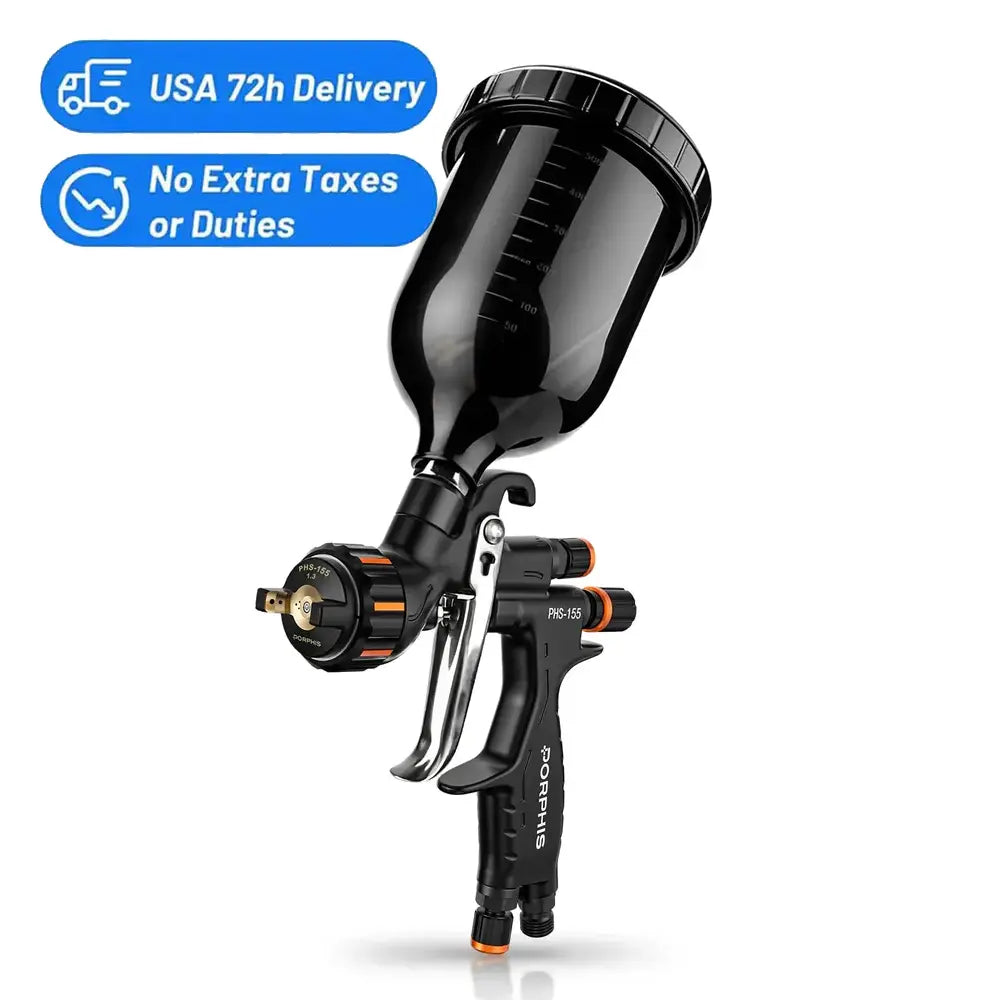
PHS-155 Car Paint Sprayer (USA 72-Hour Delivery)
If you have any questions, you are always welcome to contact us. We'll get back to you as soon as possible, within 24 hours on weekdays.
Shipping Information
Use this text to answer questions in as much detail as possible for your customers.
Customer Support
Use this text to answer questions in as much detail as possible for your customers.
FAQ’s
Use this text to answer questions in as much detail as possible for your customers.
Contact Us
Use this text to answer questions in as much detail as possible for your customers.

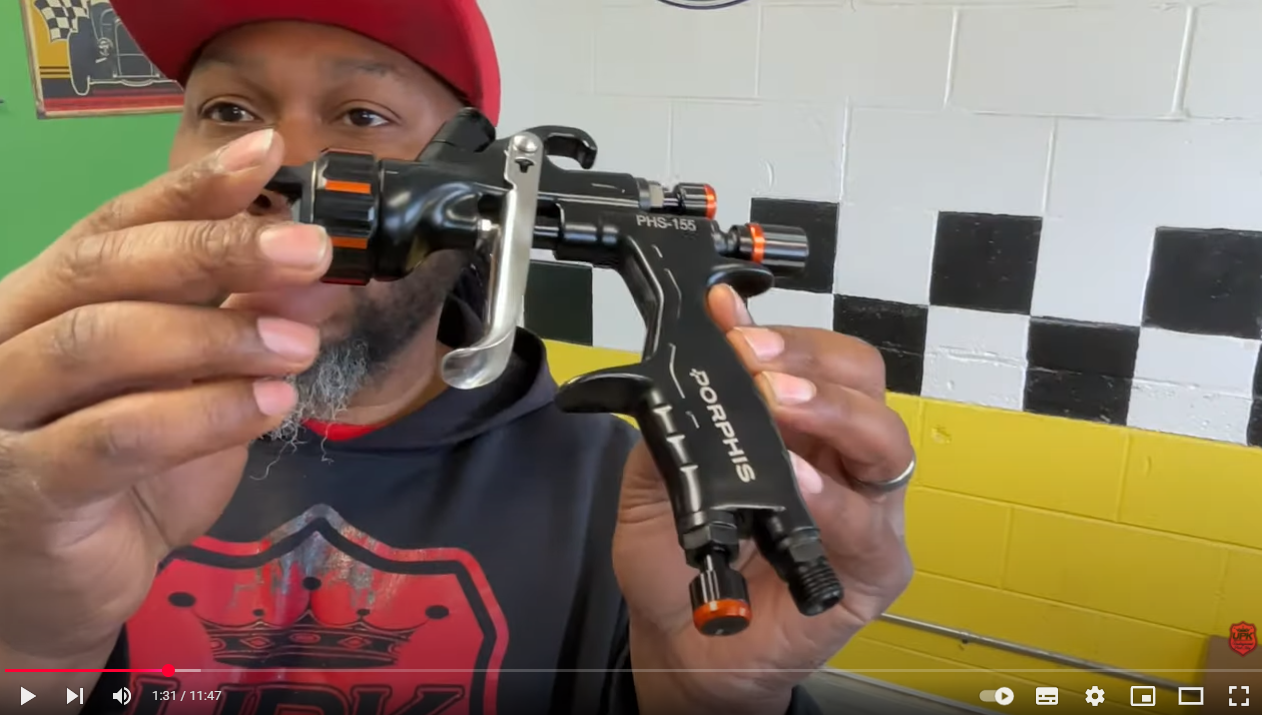
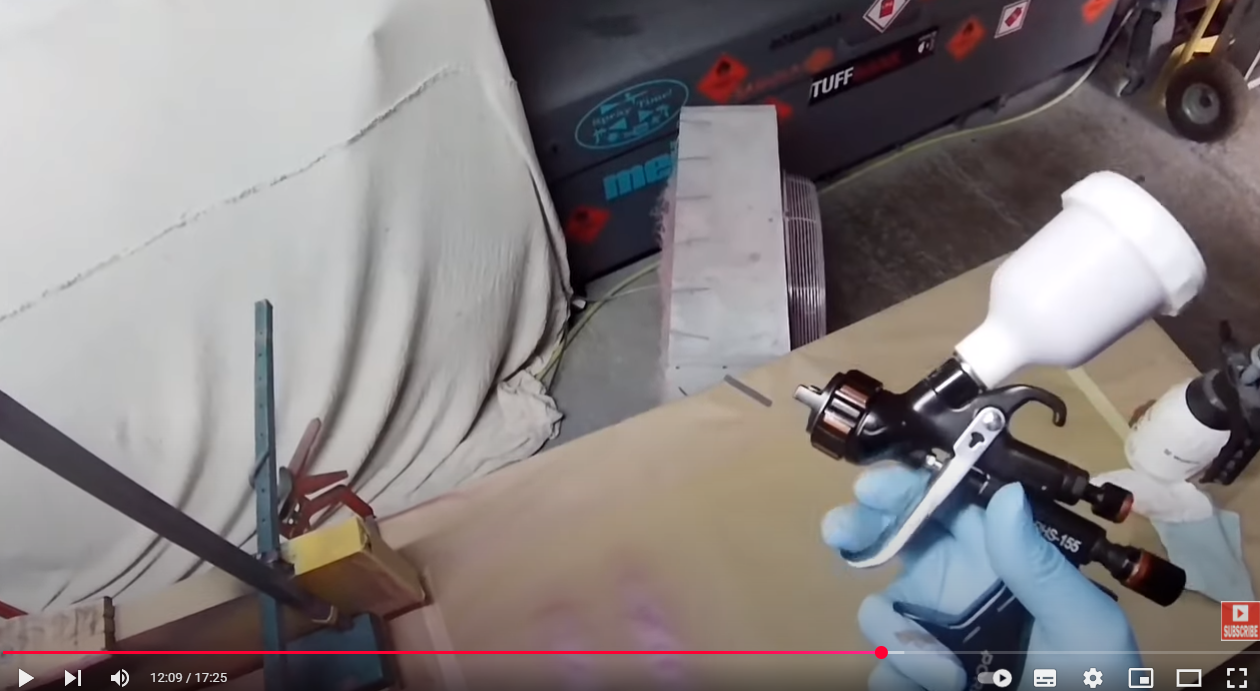


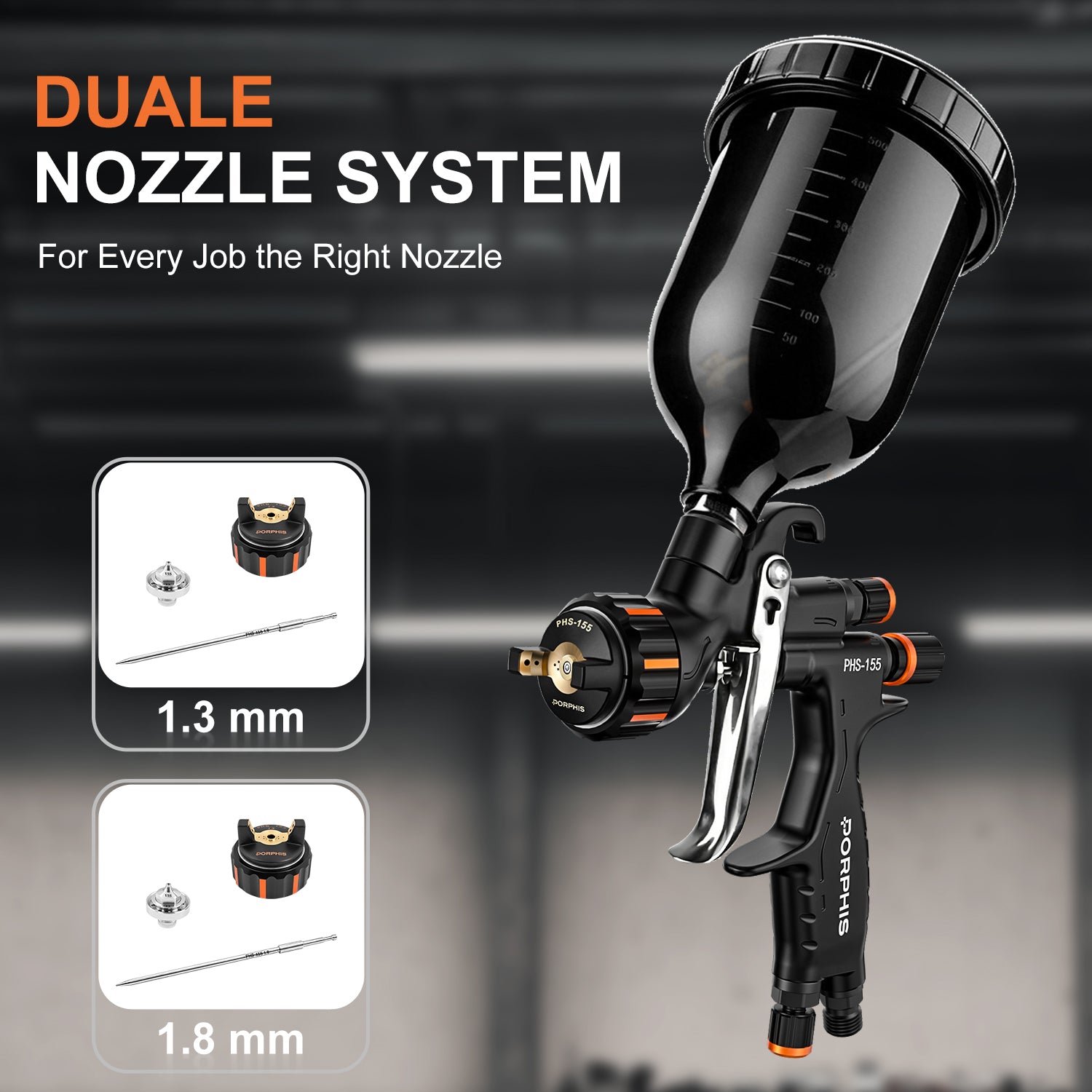
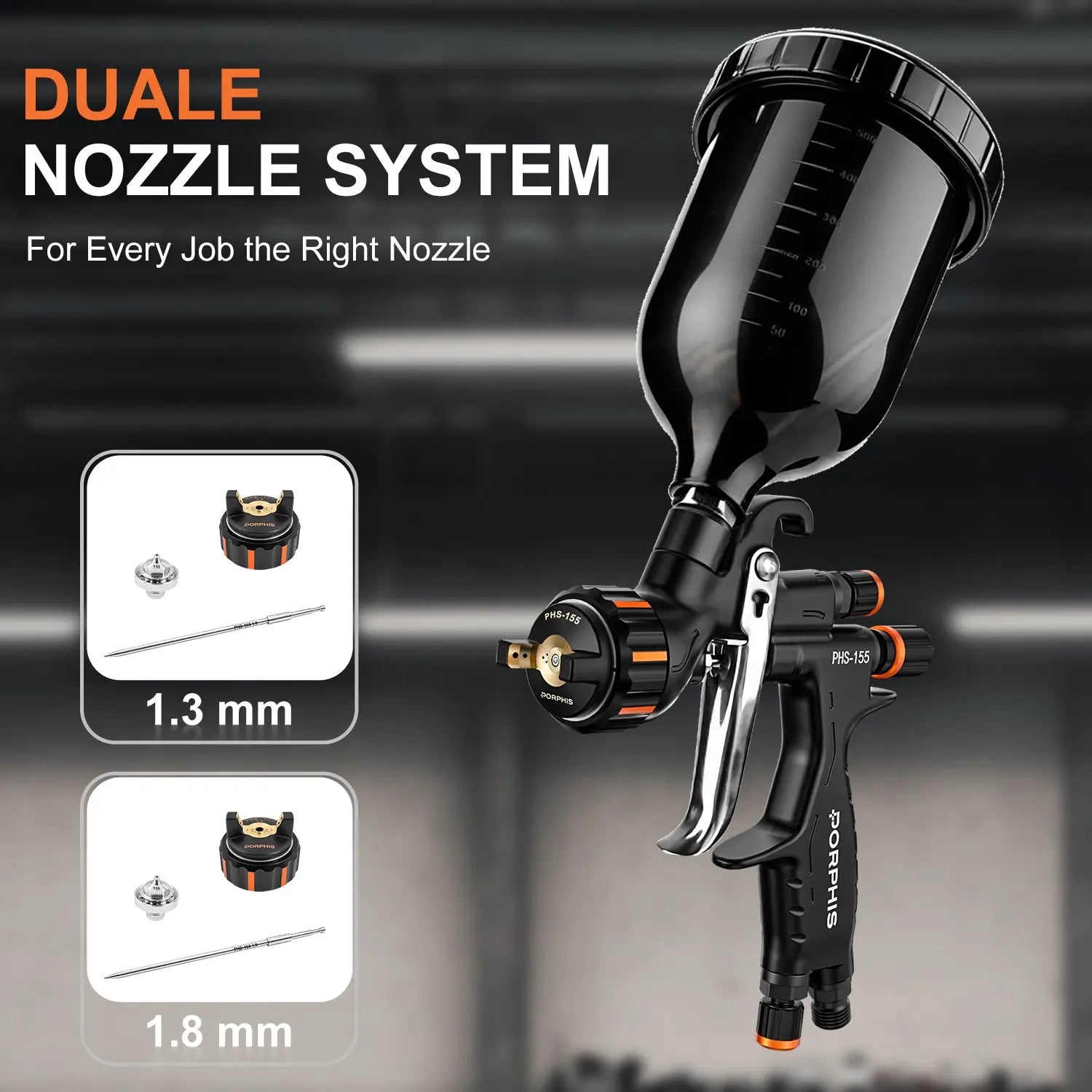
The Right Nozzle for Every Job — Your Choice.
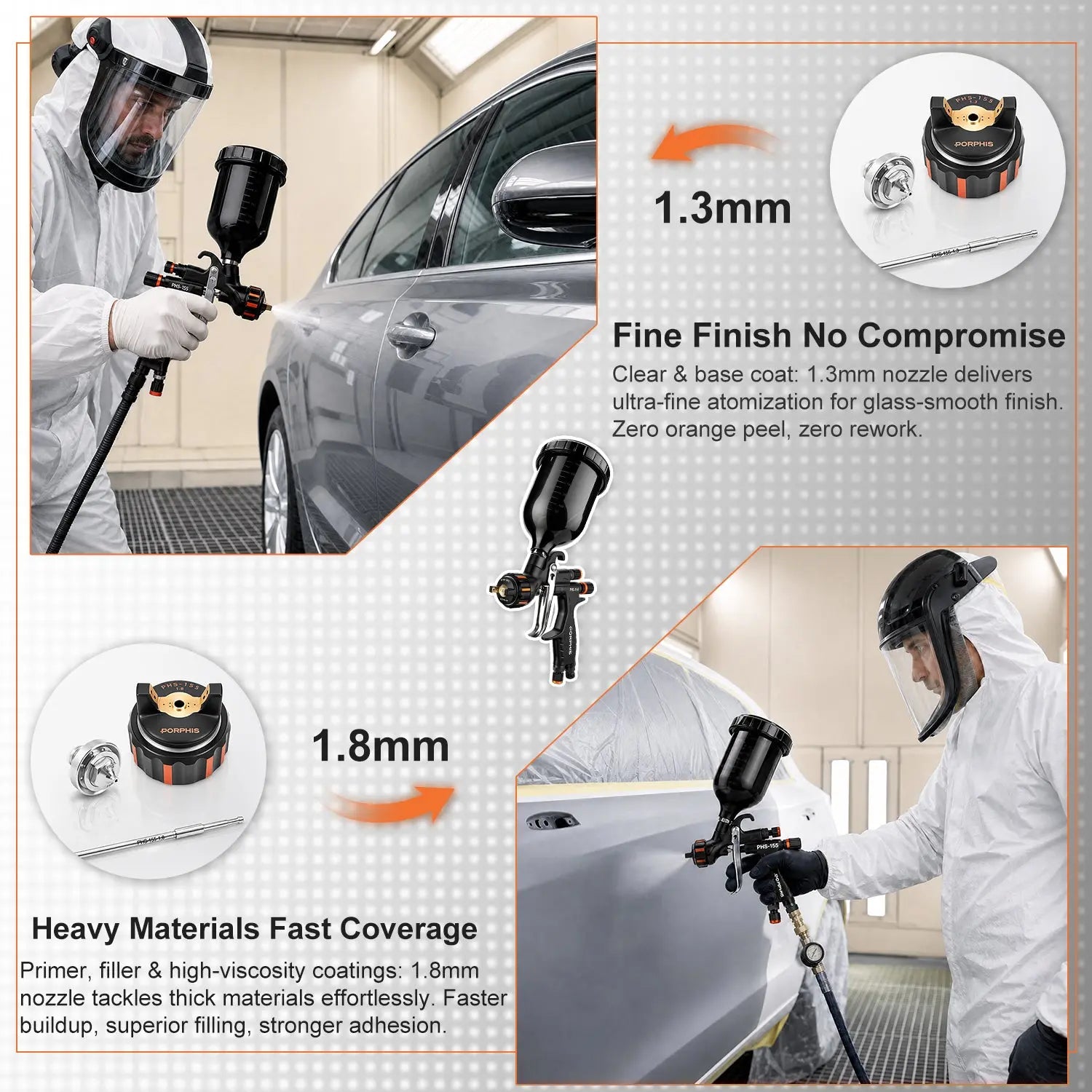
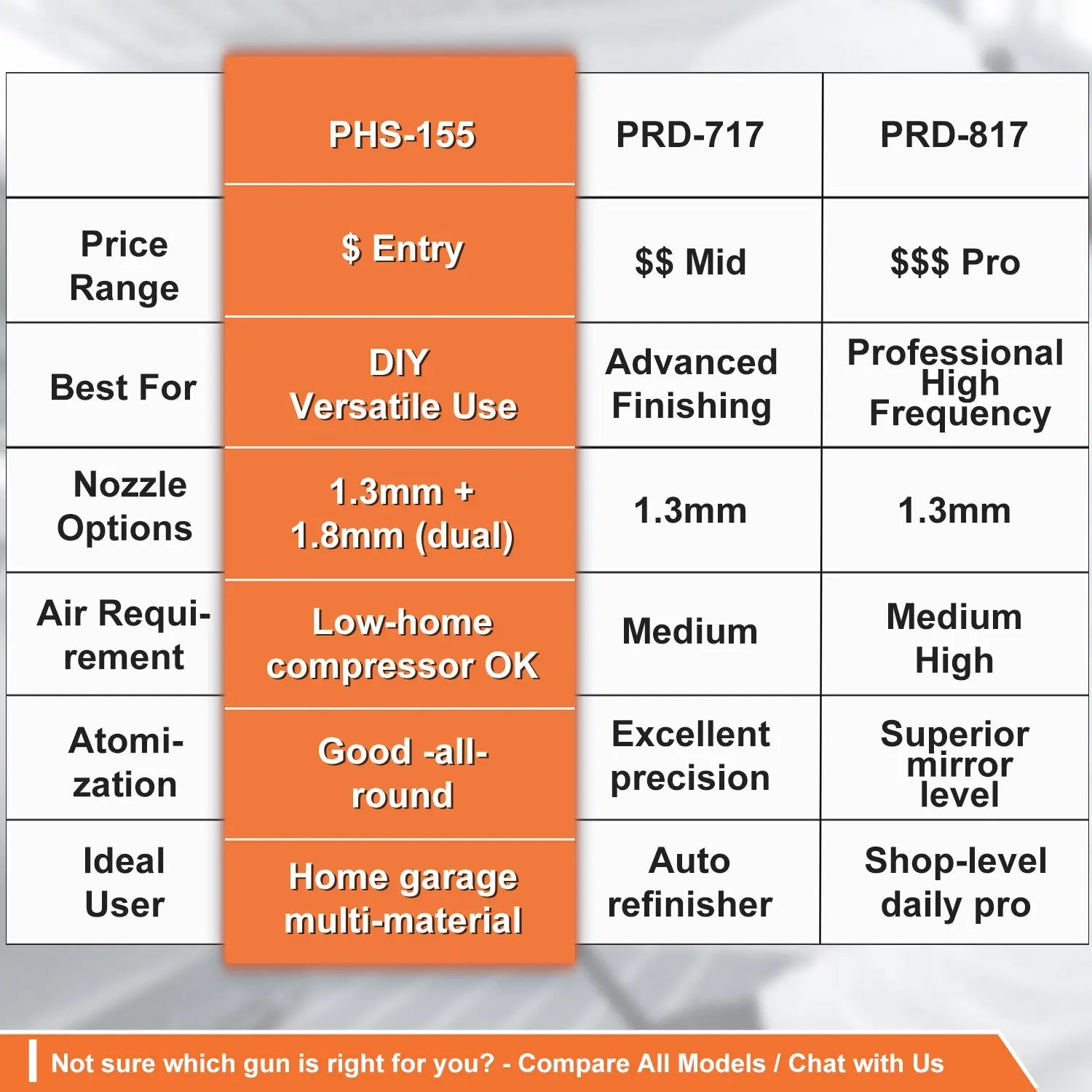
The PHS-155 is available in 1.3mm and 1.8mm nozzle configurations — choose the one that fits your work. 1.3mm for base coat, clear coat, and waterborne finishes. 1.8mm for primer, filler, and high-viscosity materials. Need both? The 1.8mm nozzle set is available as a separate add-on — no need to buy a second gun.
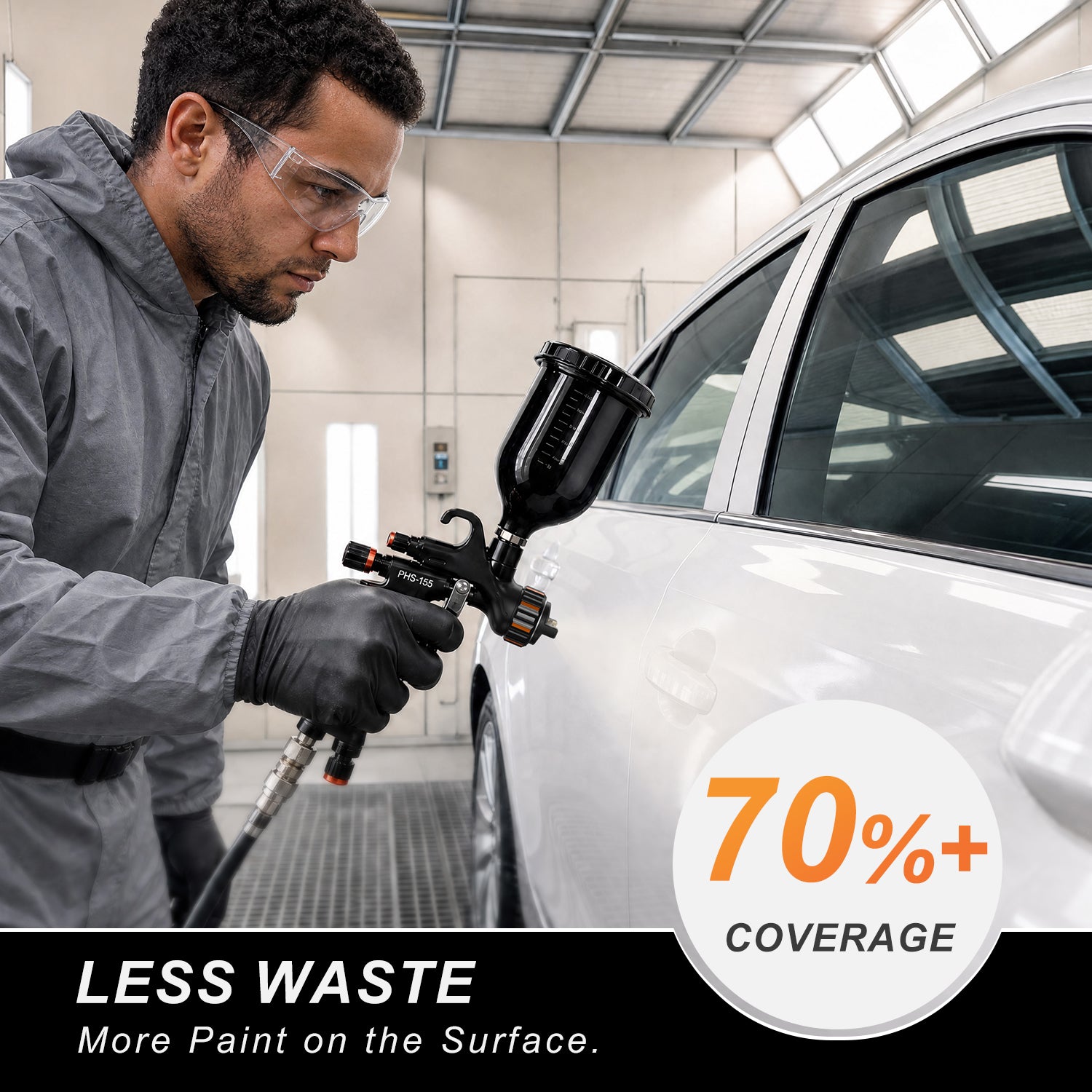
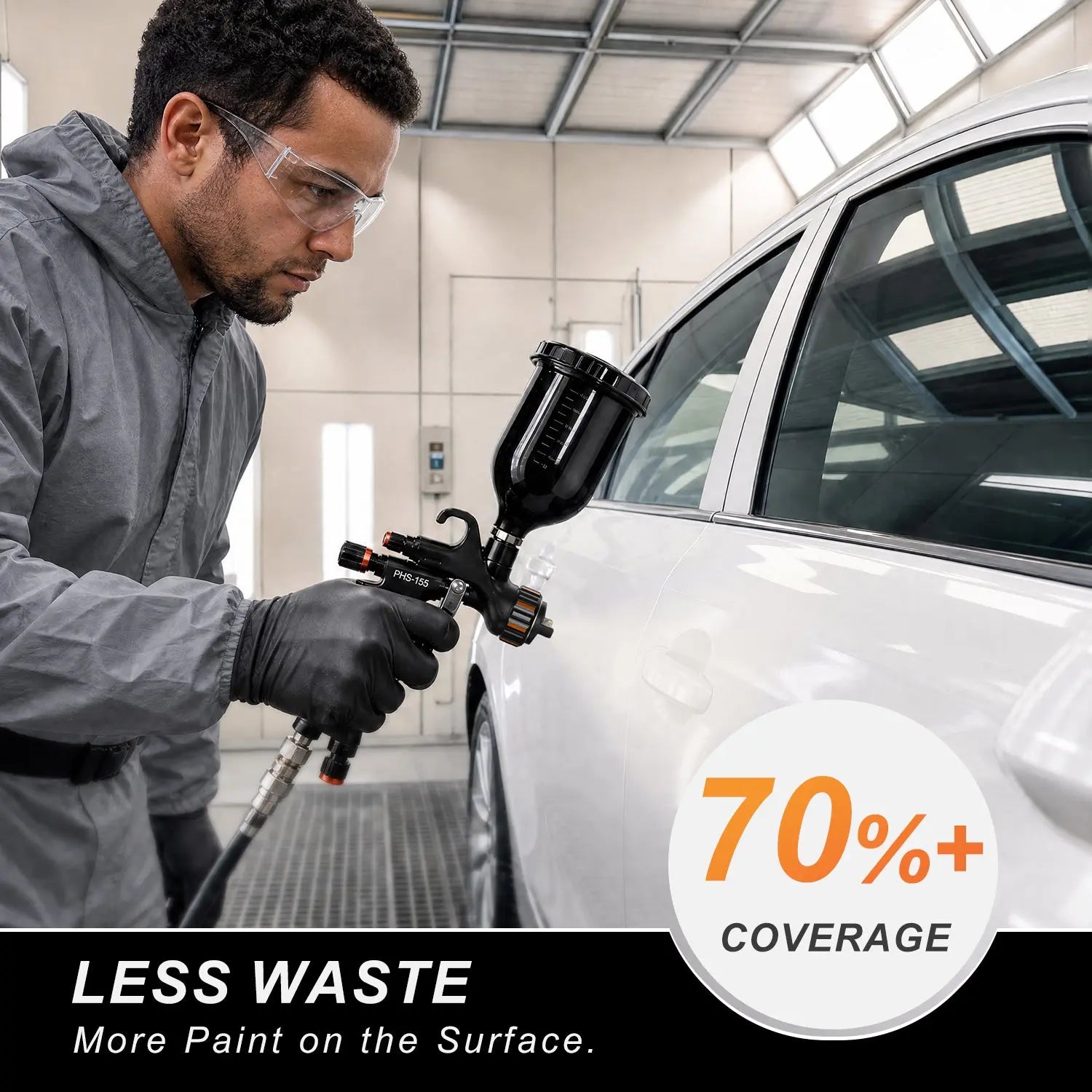
Less Waste. More Paint on the Surface.
High Transfer Efficiency (HTE) technology ensures over 70% of your paint lands exactly where it should — on the workpiece, not in the air. Less overspray means less paint wasted, lower material cost per job, and a cleaner working environment with reduced fume exposure.
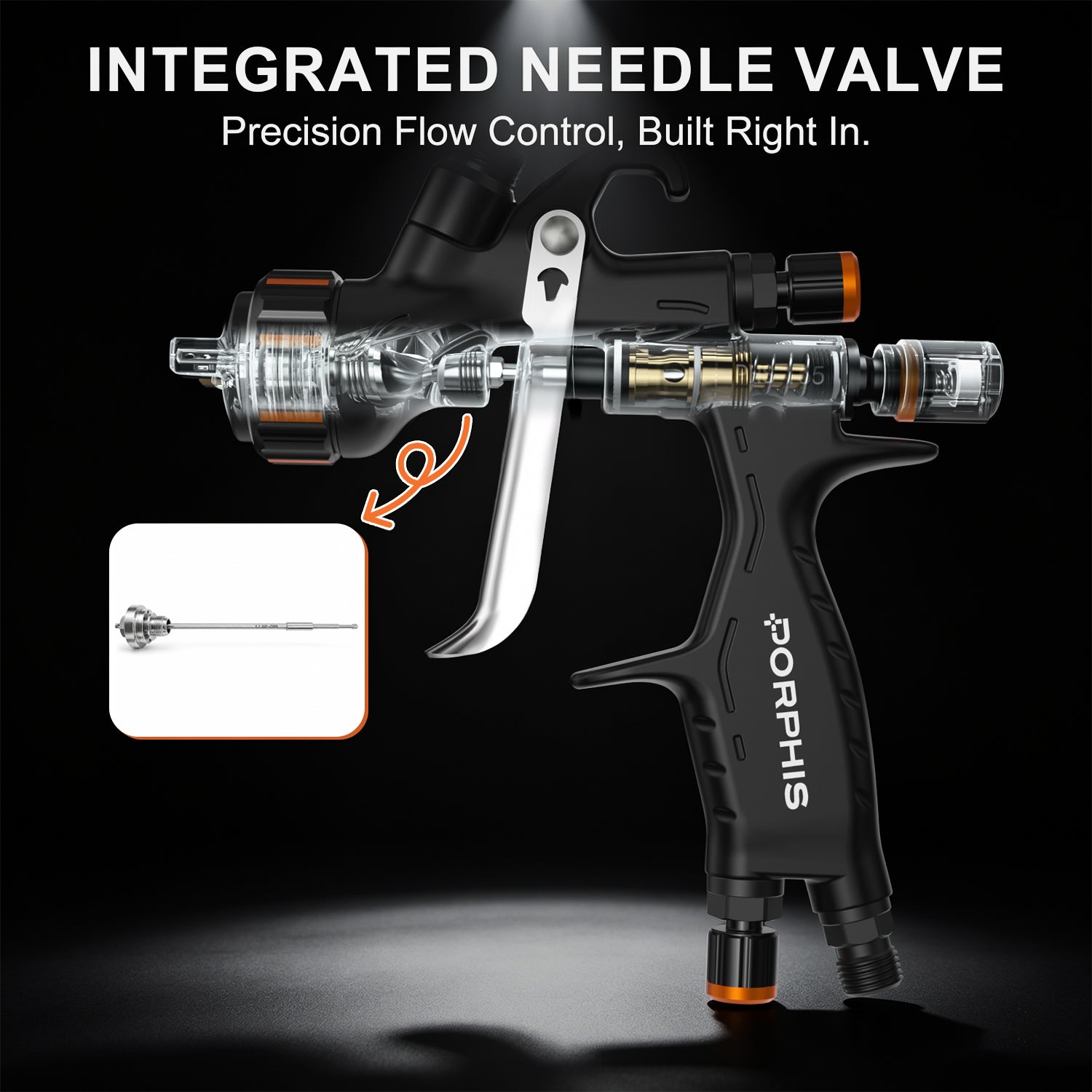
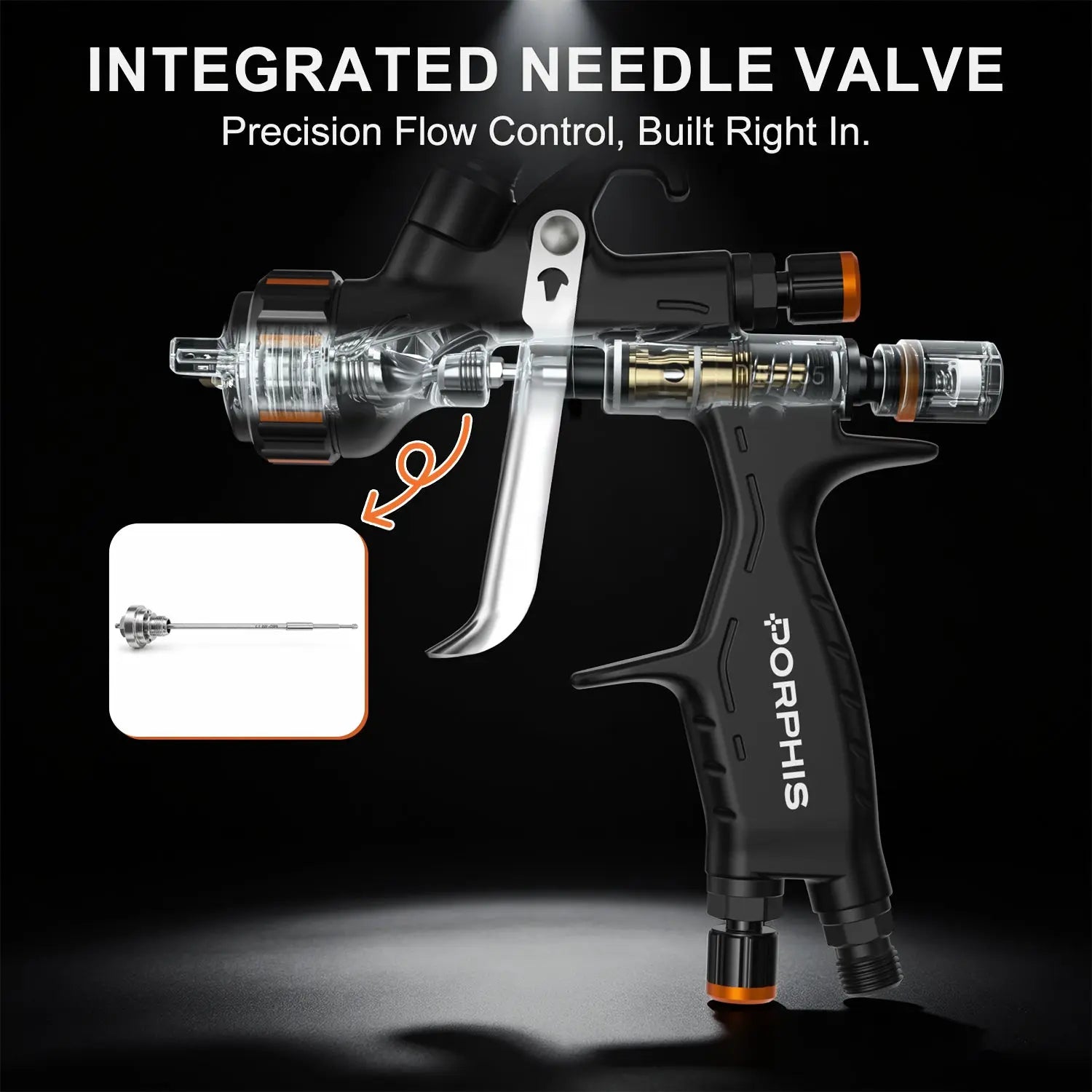
Precision Flow Control, Built Right In.
The integrated needle valve structure gives you direct, fingertip control over fluid output — with a smoother, more consistent response than traditional multi-part assemblies. Fewer components means fewer leak points, easier cleaning, and more reliable long-term performance.
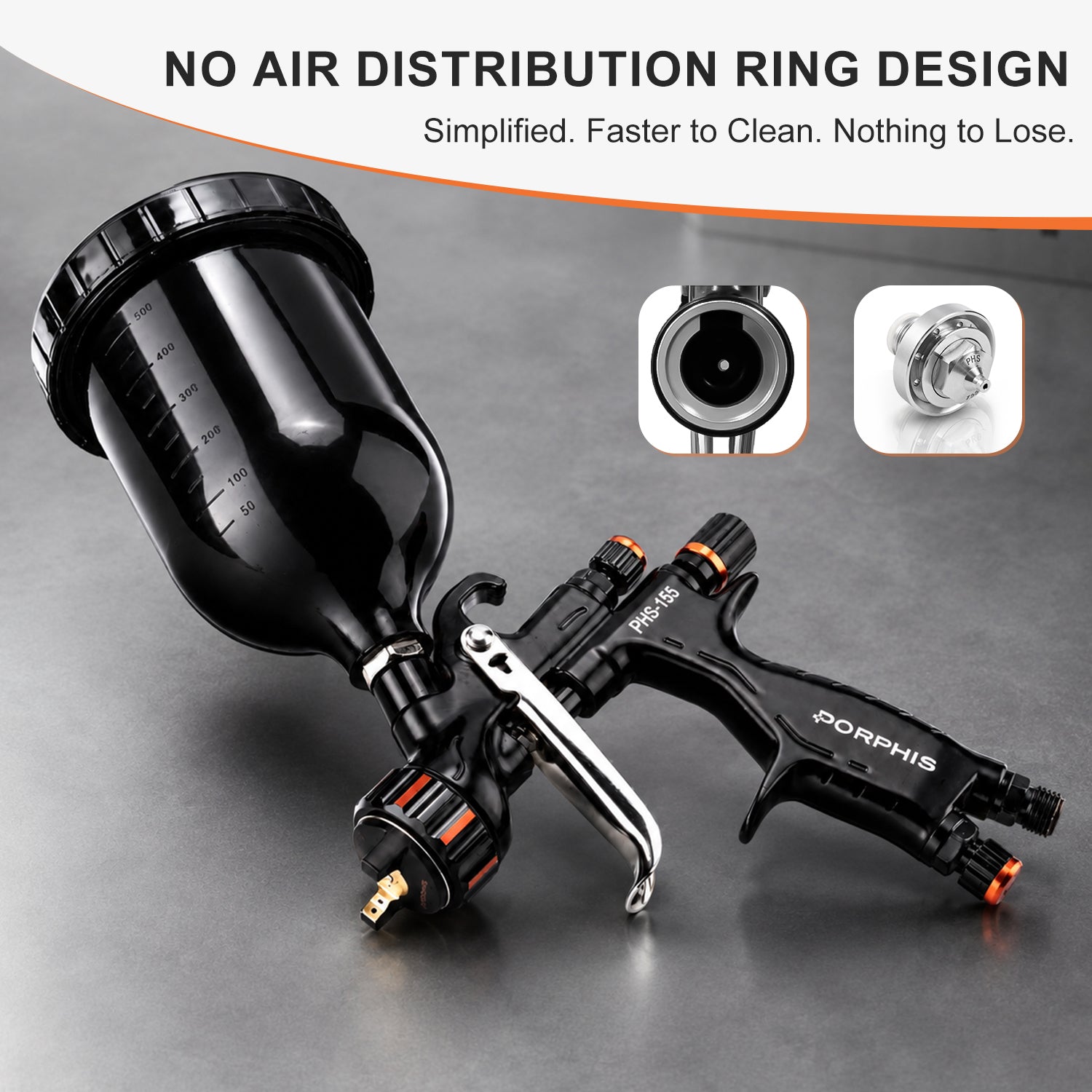
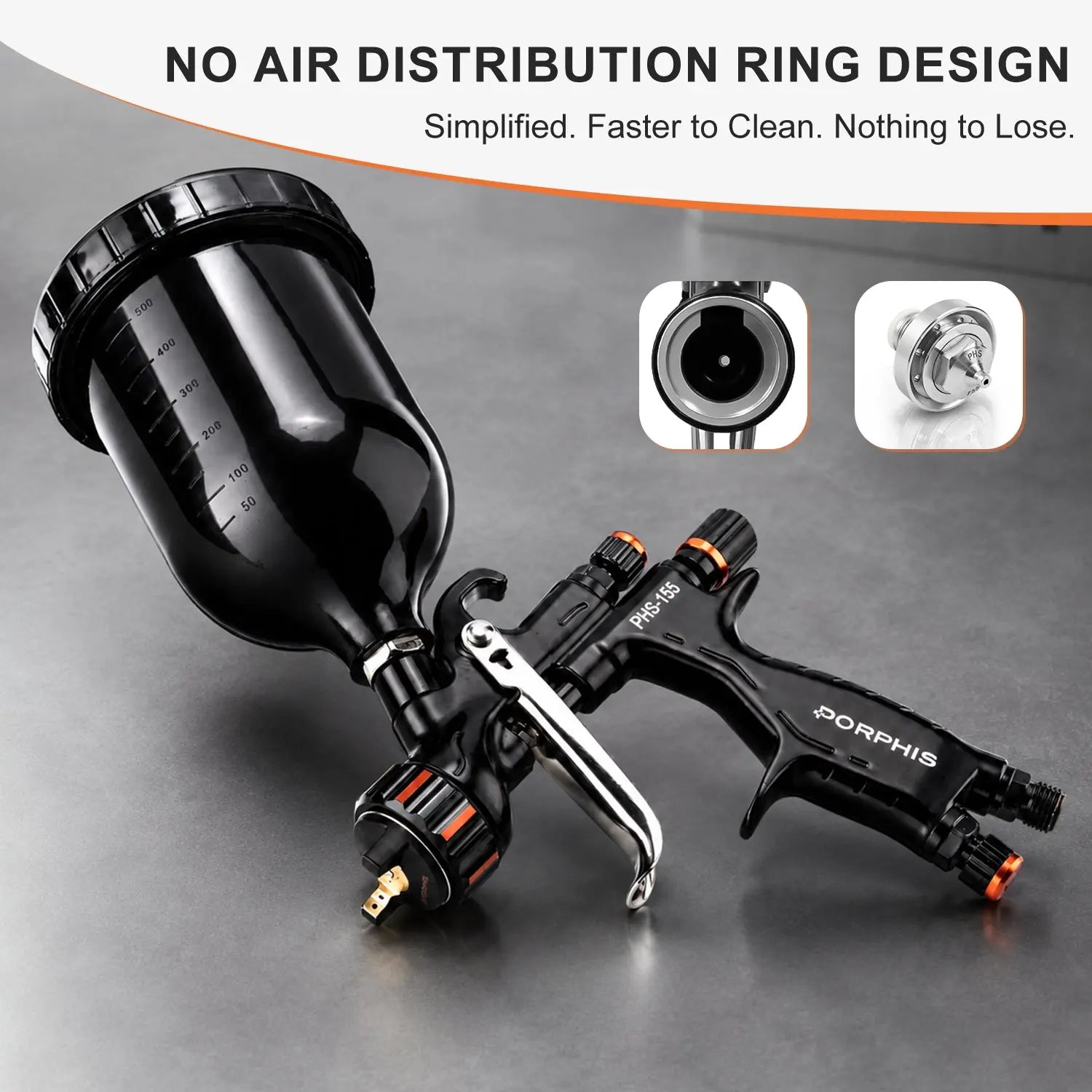
Simplified. Faster to Clean. Nothing to Lose.
Traditional spray guns use an air distribution ring that traps paint residue and adds complexity to disassembly. The PHS-155 eliminates it entirely — fewer parts to clean, fewer parts to replace, and faster turnaround between coats or color changes.


Included in the Box

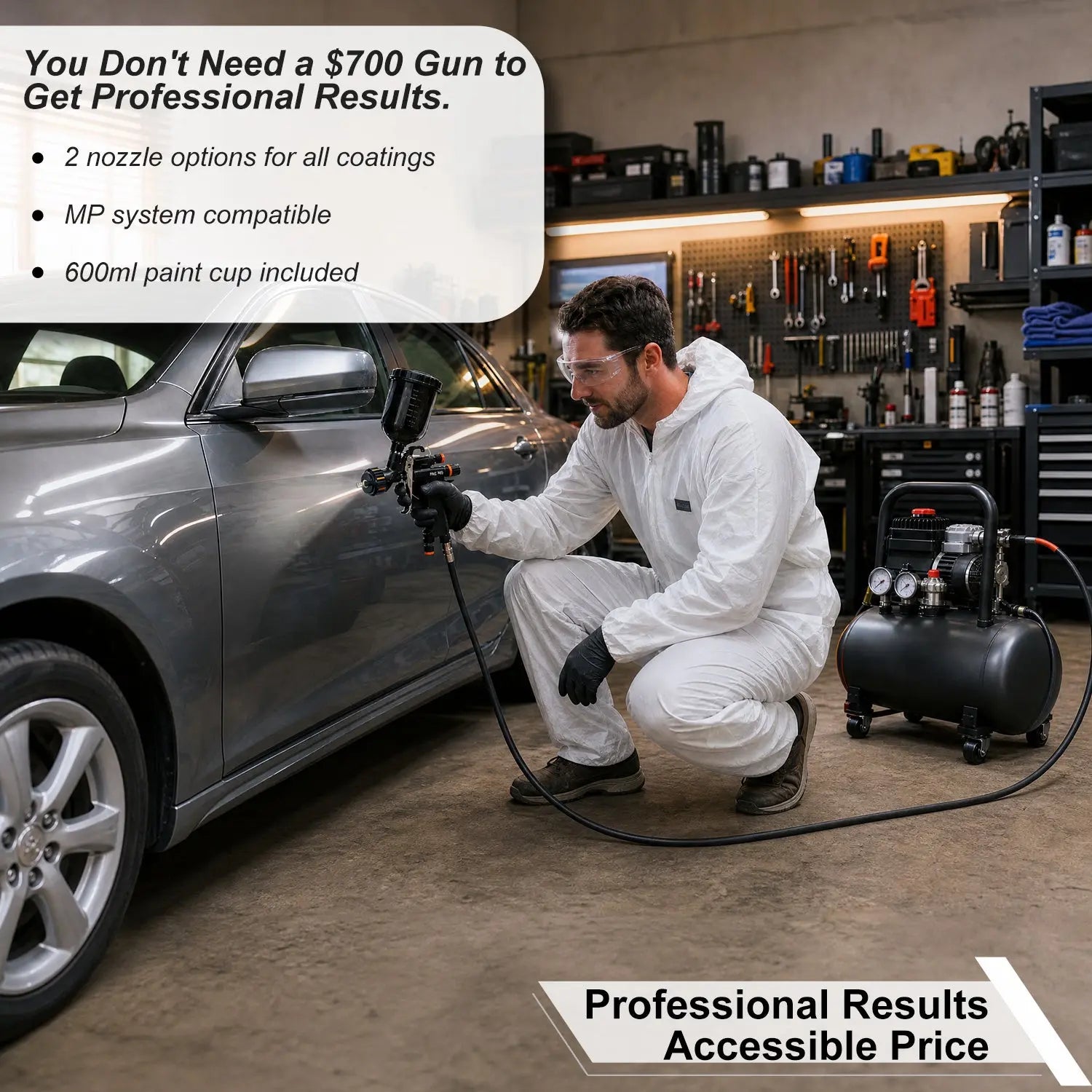
600ml white cup

Manual

Service kit

Spray gun
A: The most immediate difference is spray speed. MP atomization moves more material per pass than HVLP — your passes will cover more surface area faster, and the gun will feel more "responsive" when you pull the trigger. The trade-off is slightly less margin for error: faster material delivery means technique matters more than with HVLP. Most painters upgrading from HVLP to MP adapt within one or two practice sessions. The PHS-155 is specifically designed as this transition gun — its fluid control is linear and forgiving enough to ease the learning curve while giving you the full benefit of MP performance.
A: Yes — this is exactly the problem MP atomization solves compared to HVLP for clear coat. HVLP's slower droplet velocity means clear coat has less momentum to flow out and level on the surface before beginning to flash, which causes the slight texture you're describing. MP atomization produces finer, faster droplets that lay wetter on the surface and flow out more completely before flash-off begins. The result is a smoother, more level clear coat finish that needs less cutting and polishing to achieve gloss. For painters who have been frustrated by HVLP clear coat texture, switching to the PHS-155 is typically a clear and immediate improvement.
A: For someone coming from HVLP, expect one practice session (a test panel or two) to recalibrate your hand speed and distance. MP guns reward slightly faster arm movement than HVLP — you'll move the gun quicker per pass to compensate for the higher material delivery. The PHS-155's variable fluid control lets you reduce material flow below full capacity while you're finding your rhythm, effectively giving you a "training mode" before opening to full delivery. Most users are producing consistent results within their second or third panel.
A: For clear coat application, start at 1.8 bar (26 PSI) at the gun inlet with the fluid control 2 turns open. Your first pass should show a wet, flowing coat without runs — if it's dry or textured, increase pressure slightly to 2.0 bar. If you see runs, reduce fluid control by a quarter turn rather than increasing distance. The optimal clear coat result with the PHS-155 is a wet-looking surface that levels within 2–3 minutes without sagging. Finding this balance on a test panel before the actual job takes 10 minutes and prevents the most common clear coat mistakes.
A: The PHS and PRD series are engineered for different use environments, not different quality levels. The PHS-155 is designed for painters who spray regularly but not in heavy production shop environments — DIY enthusiasts, small body shop operators, refinishing professionals doing varied project types. The PRD series guns (PRD-715, PRD-815) are built for high-frequency, high-volume shop production where the gun runs for 8+ hours daily over years. Internal component standards — atomization quality, seal materials, fluid path precision — are consistent with Porphis engineering criteria across both lines. The 155 is not a step down from PRD; it's a different optimization for a different user.
A: Yes. The PHS-155's stainless steel needle and nozzle with PTFE seal are chemically compatible with both waterborne and solvent-based clear coats. The critical adjustment when switching between them is viscosity — waterborne clears are typically thinner at application viscosity, so reduce fluid control by half a turn when switching from solvent to waterborne to maintain consistent film build. Clean thoroughly between material types: flush with water for waterborne residue, then flush with lacquer thinner before introducing solvent clear. The fluid path seals maintain integrity with both solvent families.
A: For a full vehicle clear coat, a 600ml cup typically covers 2–3 panels per fill — you'll refill 4–6 times for a complete car. This is normal for professional guns in this class. The 600ml aluminum cup is the preferred size for balance reasons: a 1000ml cup adds significant weight when full, causing wrist fatigue during overhead and low-angle work. The trade-off of more frequent refills versus better gun balance is one most experienced painters make deliberately. If you're doing very large surface areas continuously (commercial vehicle sides, large furniture panels), a pressure pot with remote cup eliminates refilling entirely — the PHS-155 is compatible with pressure pot setups..